

News
-

Pipe Rehabilitation Methods: Ductile Iron vs alternatives
Pipe Rehabilitation Methods: Ductile Iron vs AlternativesAging water infrastructure requires rehabilitation or replacement to maintain service reliability and water quality. Municipalities face critical decisions: rehabilitate existing pipes using trenchless methods, or replace with new ductile iron pipe? Each approach has distinct advantages, costs, and performance characteristics. Sliplining offers fast installation with reduced diameter. CIPP (cured-in-place pipe) restores structural intRead more -

Ductile Iron Pipe Engineering Solutions for Municipal Water Projects: Complete Guide
Comprehensive ductile iron pipe engineering solutions for water infrastructure. Pipeline design, K9 specifications, corrosion protection, installation support.Read more -

Ductile Iron Pipe Supplier for Africa: Water Infrastructure Solutions & Standards
Looking for ductile iron pipe supplier for Africa? Guide covers ISO 2531/SABS standards, K9 specifications, cement lining, and supplier qualification for water projects.Read more -
Ductile Iron Pipe Wall Thickness by Pressure Class K8 K9 K10: Engineering Reference
Ductile Iron Pipe Wall Thickness by Pressure Class K8 K9 K10: Engineering ReferenceWall thickness is the critical parameter that determines ductile iron pipe's ability to withstand internal pressure, external loads, and handling stresses. Understanding pressure classes (K7 through K12), their relationship to wall thickness, and proper selection criteria is essential for safe and cost-effective pipeline design. This engineering reference provides comprehensive data, calculation methods,Read more -
ISO 2531 vs EN 545: Ductile Iron Pipe Standards Comparison for International Buyers
ISO 2531 vs EN 545: Ductile Iron Pipe Standards Comparison for International BuyersWhen procuring ductile iron pipe for international projects, understanding the difference between ISO 2531 and EN 545 standards is critical for ensuring compliance, avoiding costly rejections, and selecting appropriate suppliers. While both standards cover ductile iron pipes for water applications, they have significant differences in scope, technical requirements, testing protocols, and certification processRead more -
K-Class vs PN-Class: Ductile Iron Pipe Pressure Rating Systems Compared
K-Class vs PN-Class: Ductile Iron Pipe Pressure Rating Systems ComparedWhen specifying ductile iron pipe, engineers and procurement managers encounter two different pressure rating systems: K-class (K7, K8, K9, K10, K11, K12) and PN-class (PN10, PN16, PN25, PN40). Understanding the differences between these systems, their calculation methods, regional preferences, and approximate equivalencies is critical for proper pipe selection and avoiding costly specification errors. This comprehensiveRead more -
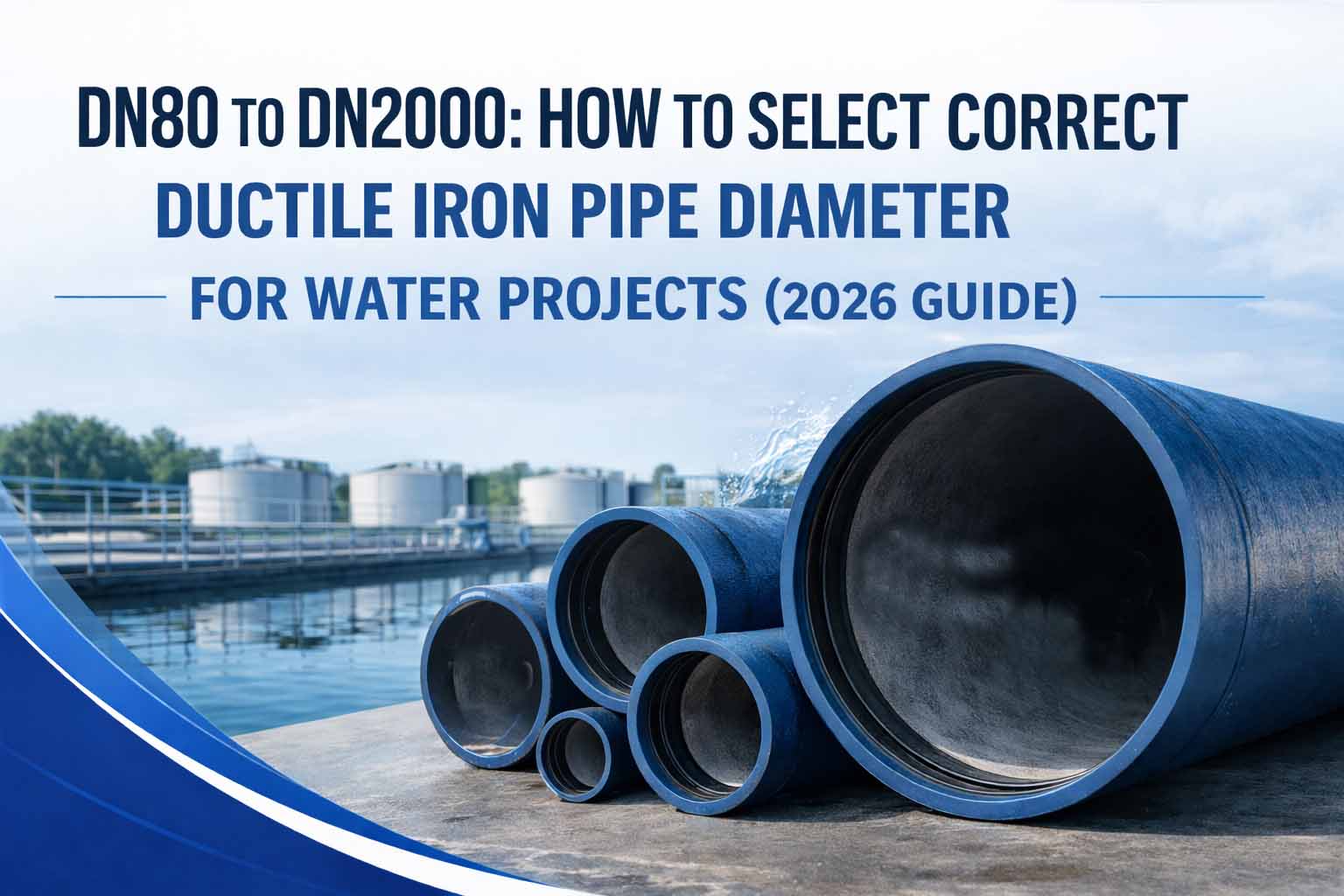
DN80 to DN2000: How to Select Correct Ductile Iron Pipe Diameter for Water Projects (2026 Guide)
Learn how to select the correct ductile iron pipe diameter from DN80 to DN2000 for water projects. Covers flow rate calculation, velocity optimization, and lifecycle cost analysis.Read more -
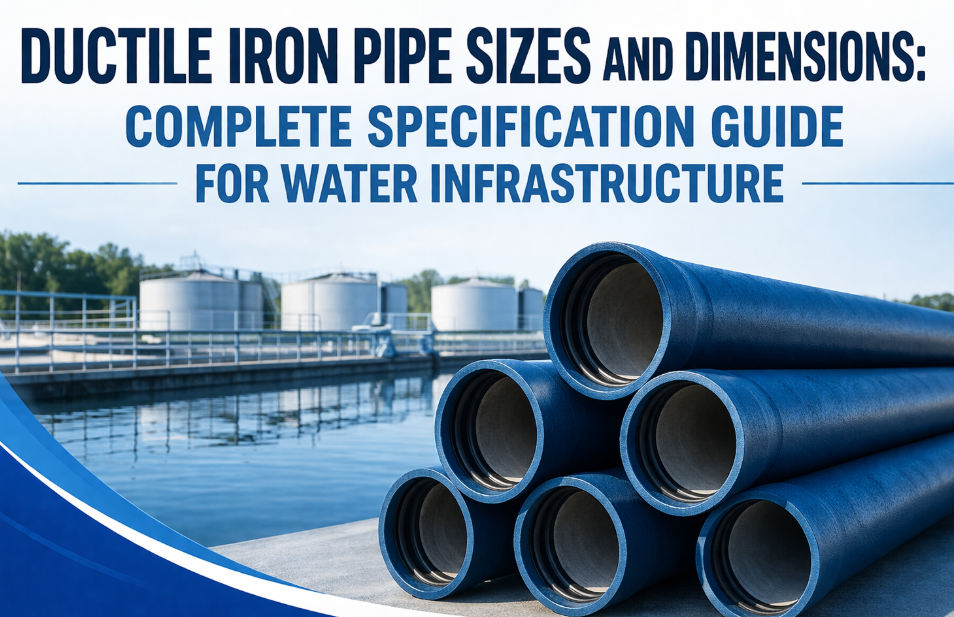
Ductile Iron Pipe Sizes and Dimensions: Complete Specification Guide for Water Infrastructure
Complete guide to ductile iron pipe sizes and dimensions from DN80 to DN2000. Learn how to select correct pipe diameter for water infrastructure projects with ISO 2531 and EN 545 standards.Read more -
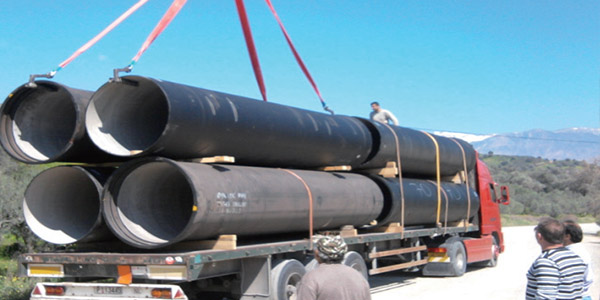
Ductile Iron Pipe Joint Types: TYTON vs RESTRAINED vs FLANGED Complete Guide
Ductile Iron Pipe Joint Types: TYTON vs RESTRAINED vs FLANGED Complete GuideJoint selection is one of the most critical decisions in ductile iron pipeline design. The wrong joint type can lead to leaks, joint separation, costly repairs, or even catastrophic pipeline failure. Understanding the differences between TYTON (push-on), restrained, flanged, and mechanical joints—and knowing when to use each—is essential for engineers, contractors, and procurement managers. This comprehensive guideRead more -
Ductile Iron Pipe Wall Thickness by Pressure Class K8 K9 K10: Engineering Reference
Ductile Iron Pipe Wall Thickness by Pressure Class K8 K9 K10: Engineering ReferenceWall thickness is the critical parameter that determines ductile iron pipe's ability to withstand internal pressure, external loads, and handling stresses. Understanding pressure classes (K7 through K12), their relationship to wall thickness, and proper selection criteria is essential for safe and cost-effective pipeline design. This engineering reference provides comprehensive data, calculation methods,Read more -
Hydrostatic Testing Procedures for Ductile Iron Pipeline
Hydrostatic Testing Procedures for Ductile Iron PipelineHydrostatic pressure testing is the final verification that a ductile iron pipeline is leak-free and structurally sound before commissioning. The test validates pipe integrity, joint assembly quality, thrust restraint effectiveness, and fitting connections. Proper test procedures, safety protocols, and acceptance criteria are essential to ensure reliable results and prevent damage to the pipeline. This comprehensive guide covers test pRead more -
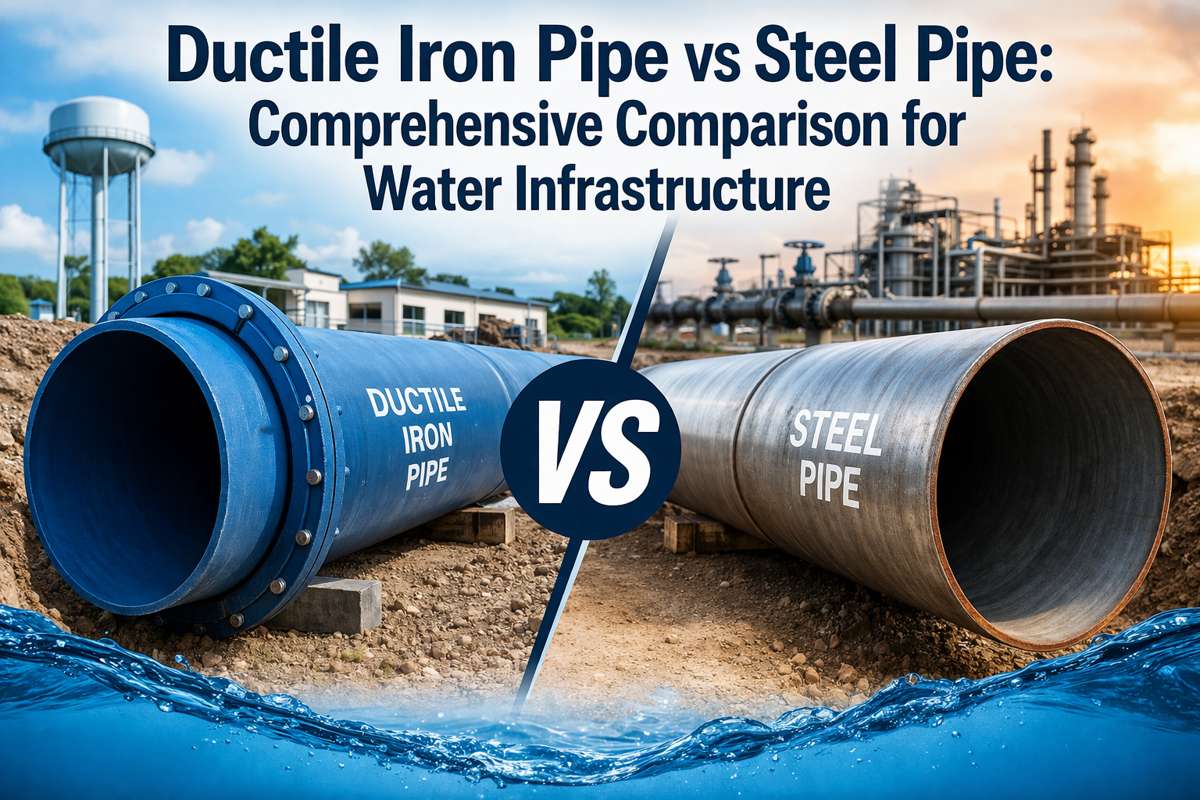
Ductile Iron Pipe vs Steel Pipe: Comprehensive Comparison for Water Infrastructure
Ductile Iron Pipe vs Steel Pipe: Comprehensive Comparison for Water InfrastructureSelecting between ductile iron pipe and steel pipe is one of the most critical decisions in water infrastructure projects. Both materials have distinct advantages, limitations, and optimal application ranges. Ductile iron offers superior corrosion resistance and lower lifecycle cost for municipal water distribution. Steel provides higher strength-to-weight ratio and is preferred for high-pressure transmissionRead more -
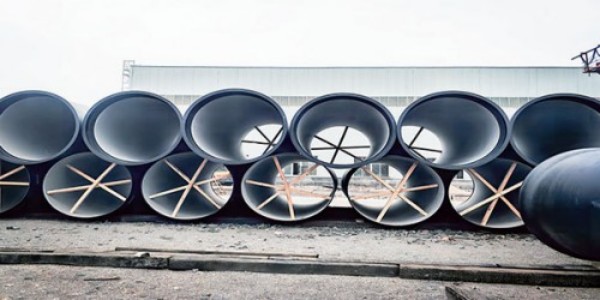
Thrust Restraint Design for Ductile Iron Pipe: Engineering Guide
Engineering guide to thrust restraint design for ductile iron pipe. Thrust block calculations, restrained joint selection, anchor design, and fitting restraint methods.Read more -
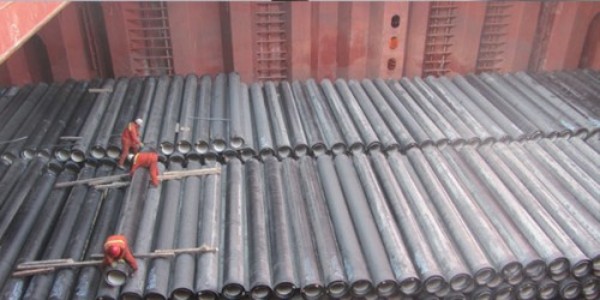
Pipe Bedding and Backfill for Ductile Iron Pipe: Installation Guide
Complete guide to pipe bedding and backfill for ductile iron pipe. Soil types, compaction requirements, haunching procedures, and settlement prevention.Read more -
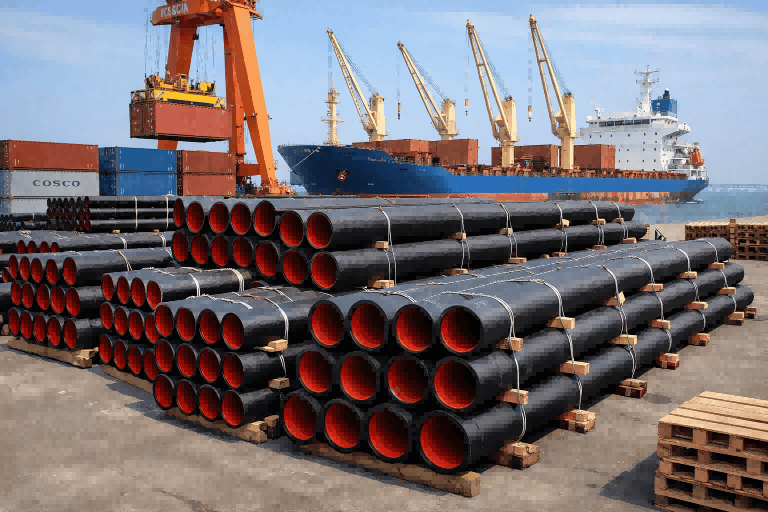
How to Select Ductile Iron Water Pipe Sizes: Complete Guide for International Buyers
How to select ductile iron water pipe sizes? Complete guide to DN diameters, pressure classes PN16-PN25, and ISO 2531 specifications for water infrastructure buyers.Read more -
How to Source Ductile Iron Pipe for South Africa: Complete Guide for Procurement Managers
How to Source Ductile Iron Pipe for South Africa: Complete Guide for Procurement ManagersQuick AnswerFor ductile iron pipe projects in South Africa, buyers should prioritize suppliers with SANS 969 certification compliance, proven experience in African infrastructure projects, and verified capacity for DN80 to DN600 diameters. Coastal projects require C4/C5 corrosion protection per ISO 12944, while inland municipal water networks typically use cement mortar lining with zinc coating pluRead more -
Sustainable Ductile Iron Pipe Manufacturing: Best Practices
Discover best practices for sustainable ductile iron pipe manufacturing. Learn how recycling, water systems, and energy optimization can reduce costs by 15-25%.Read more -
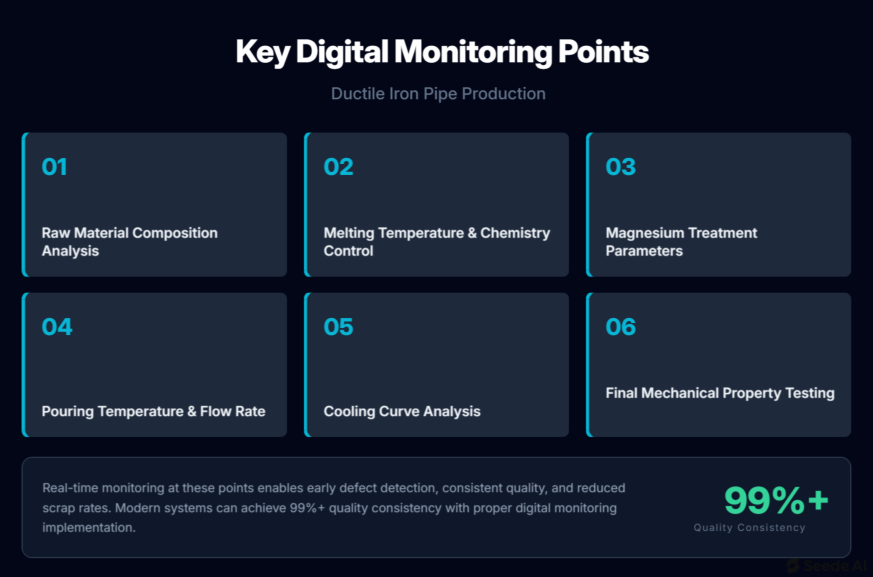
Digital Monitoring Points in Ductile Iron Pipe Production
Discover how digital monitoring transforms ductile iron pipe manufacturing. Real-time data, predictive maintenance, and quality control can reduce defects by 30% and boost efficiency.Read more -
How to Calculate Pipe Wall Thickness for Different Pressure Classes?
Need to calculate ductile iron pipe wall thickness? Learn the ISO 2531 formula, pressure class selection (K7-K9), and safety factors for water and sewage projects.Read more -
What Pressure Class (K7/K8/K9) Should You Choose for Your Pipeline?
Need to choose between K7, K8, or K9 pressure class? Learn the differences, when to use each, and how to select the right pressure class for your pipeline project.Read more