

How to Calculate Pipe Wall Thickness for Different Pressure Classes?
Quick Answer
Calculate pipe wall thickness using ISO 2531 formula: e = K × (0.5 + 0.001 × DN). For K9 class at DN500: e = 9 × (0.5 + 0.001 × 500) = 9mm minimum. Pressure classes: K7 (PN10), K8 (PN16), K9 (PN25). Always add 3mm corrosion allowance for aggressive soils.
Introduction
Proper pipe wall thickness is critical for safe and reliable pipeline operation.
Undersized walls can lead to pipe failure under pressure. Oversized walls increase material costs unnecessarily.
This guide explains how to calculate wall thickness according to ISO 2531 and select appropriate pressure classes.
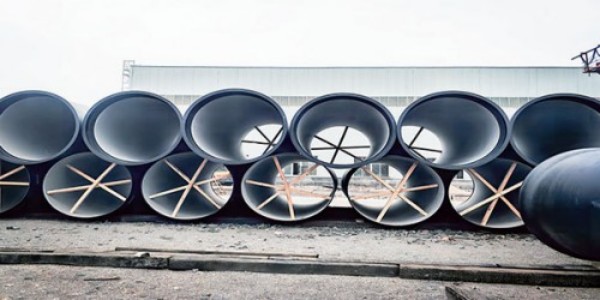
ISO 2531 Wall Thickness Formula
The international standard ISO 2531 provides the formula for calculating minimum wall thickness:
Formula:
e = K × (0.5 + 0.001 × DN)
Where:
· e = minimum wall thickness (mm)
· K = pressure class coefficient (7, 8, or 9)
· DN = nominal diameter (mm)
· 0.5 = constant for manufacturing tolerance
· 0.001 = coefficient for diameter effect
Pressure Class Selection
Ductile iron pipes are available in different pressure classes:
Class | Pressure Rating | Working Pressure | Typical Application |
K7 | PN10 | 10 bar | Low pressure applications |
K8 | PN16 | 16 bar | Standard water supply |
K9 | PN25 | 25 bar | High pressure, main lines |
K10 | PN35 | 35 bar | Special high pressure |
Calculation Examples
Example 1: DN300 K9 Pipe
Calculate wall thickness for DN300 K9 pipe:
e = 9 × (0.5 + 0.001 × 300)
e = 9 × (0.5 + 0.3) = 9 × 0.8 = 7.2mm
Minimum wall thickness: 7.2mm (typically rounded to 7.5mm)
Example 2: DN600 K8 Pipe
Calculate wall thickness for DN600 K8 pipe:
e = 8 × (0.5 + 0.001 × 600)
e = 8 × (0.5 + 0.6) = 8 × 1.1 = 8.8mm
Minimum wall thickness: 8.8mm (typically 9mm)
Example 3: DN1000 K9 Pipe
Calculate wall thickness for DN1000 K9 pipe:
e = 9 × (0.5 + 0.001 × 1000)
e = 9 × (0.5 + 1.0) = 9 × 1.5 = 13.5mm
Minimum wall thickness: 13.5mm
Standard Wall Thickness Table (K9 Class)
Diameter | Thickness | Diameter | Thickness |
DN80 | 6.0mm | DN500 | 9.0mm |
DN100 | 6.0mm | DN600 | 9.9mm |
DN150 | 6.0mm | DN700 | 10.8mm |
DN200 | 6.3mm | DN800 | 11.7mm |
DN250 | 6.8mm | DN900 | 12.6mm |
DN300 | 7.2mm | DN1000 | 13.5mm |
DN350 | 7.7mm | DN1200 | 15.3mm |
DN400 | 8.1mm | DN1400 | 17.1mm |
DN450 | 8.6mm | DN1600 | 18.9mm |
Additional Design Considerations
Surge Pressure (Water Hammer)
Consider surge pressure in system design:
· Surge pressure can be 2-3x working pressure
· Install surge tanks or air valves to reduce water hammer
· Select higher pressure class for pump discharge lines
· Consider K10 for critical applications
External Loads
Pipes must withstand external loads:
· Traffic loads (for buried pipes under roads)
· Soil pressure (deep burial)
· Construction equipment loads
· Use proper bedding and backfill materials
Corrosion Allowance
Add corrosion allowance for aggressive environments:
· Standard: 3mm additional thickness for corrosive soils
· Coatings: Zinc + bitumen for standard protection
· Special: Polyethylene sleeving for severe conditions
· Cement mortar lining for internal protection
Safety Factors
ISO 2531 includes safety factors in the formula:
· Material safety factor: 2.0 (minimum)
· Pressure test factor: 2x working pressure
· Manufacturing tolerance: Included in formula
· Design life: 50+ years with proper installation
Pressure Class Selection Guide
Application | Pressure Level | Recommended Class |
Building drainage | Low | K7 or K8 |
Municipal water supply | Medium | K9 (standard) |
Water transmission mains | High | K9 or K10 |
Pump discharge | Very High | K10 or higher |
Industrial applications | Variable | Engineer specified |
Conclusion
Proper wall thickness calculation ensures safe pipeline operation.
Use ISO 2531 formula with appropriate pressure class for your application.
Consider surge pressure, external loads, and corrosion in design.
FAQ
Q: What is the most common pressure class for water supply?
A: K9 (PN25) is most common for municipal water supply. It provides adequate safety margin for typical operating pressures of 6-10 bar with surge considerations.
Q: Can I use K7 pipe for drinking water?
A: Yes, K7 is suitable for low pressure drinking water applications. However, K9 is recommended for main distribution lines to handle surge pressures.
Q: How do I account for water hammer in design?
A: Design for surge pressure of 2x working pressure. Install air valves, surge tanks, or slow-closing valves. Consider upgrading to K10 for pump discharge lines.
Q: What corrosion protection is needed?
A: Standard protection is zinc coating (130g/m²) + bitumen paint. For aggressive soils, add polyethylene sleeving or increase wall thickness by 3mm.
Q: Is the ISO 2531 formula applicable to all diameters?
A: Yes, the formula applies to DN80 through DN2600. For diameters above DN2600, special design calculations per EN 545 are required.
Related Standards: ISO 2531 Specification: https://www.ductileironpipe2600.com/standards/iso-2531/
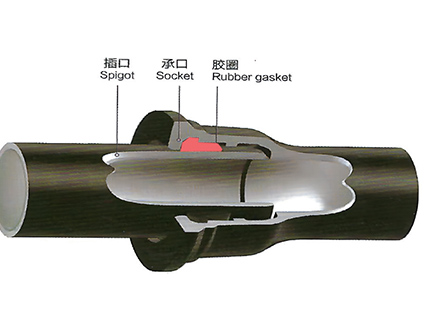 GT-type Joint Ductile Iron Pipe
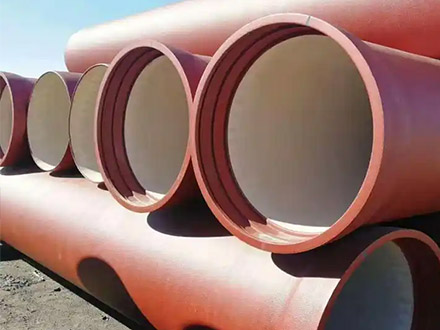
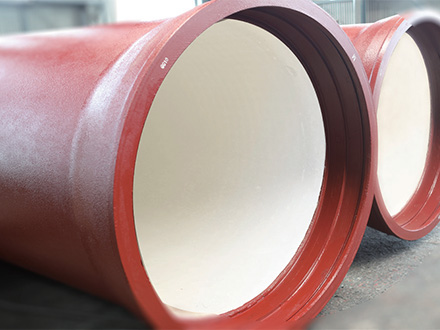 Sewage Pipe (Ductile Iron Sewage Pipe)
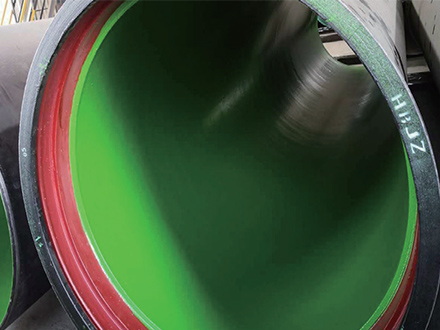 Special Coating Pipe (Ductile Iron Pipe with Special Coatings)