

How to Select Ductile Iron Water Pipe Sizes: Complete Guide for International Buyers
Quick Answer
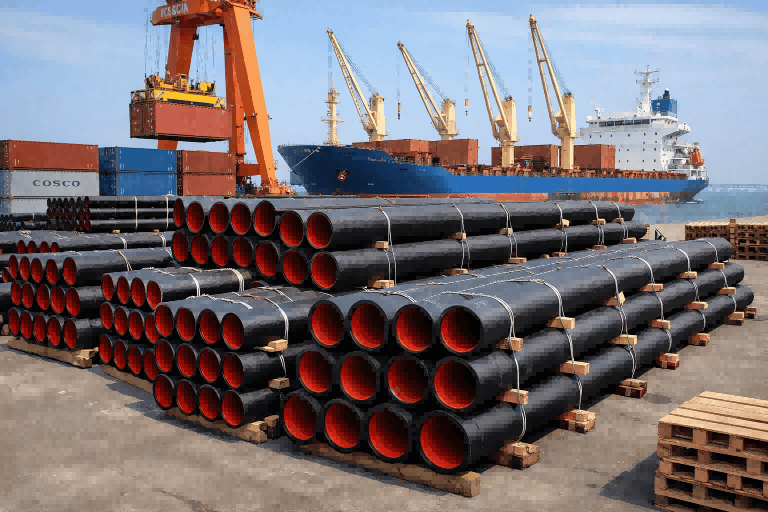
Ductile iron water pipe sizes range from DN80 to DN2000 per ISO 2531 and EN 545 standards, with DN100 to DN600 being most common for municipal water distribution. Pipe size selection depends on flow rate requirements, operating pressure, and system layout — undersized pipes increase pumping costs while oversized pipes raise material expenses unnecessarily.
Why Pipe Size Selection Matters for Water Infrastructure
Pipe size selection directly affects capital expenditure, operating costs, and system reliability over the 50 to 100-year design life of water infrastructure. Choosing the wrong diameter can lead to inadequate water pressure, excessive energy consumption for pumping, or premature pipe failure due to pressure surges.
Common procurement mistakes include selecting pipe sizes based on existing inventory rather than hydraulic calculations, ignoring future demand growth when sizing transmission mains, and mismatching pressure classes with actual operating conditions including water hammer effects.
The decisions made during pipe specification affect not only initial project cost but also long-term operational efficiency and maintenance requirements for municipalities and utility companies.
Standard Ductile Iron Water Pipe Sizes by Application
ISO 2531 and EN 545 Standard Diameter Range
Ductile iron water pipes follow standardized nominal diameter (DN) designations per ISO 2531 and EN 545. The available size range covers:
| DN Size | OD (mm) | Typical Application |
|---|---|---|
| DN100 | 118 | Residential distribution networks |
| DN150 | 170 | Main distribution lines |
| DN200 | 222 | Primary distribution, small transmission |
| DN250 | 274 | Main distribution networks |
| DN300 | 326 | Transmission mains, large distribution |
| DN350 | 378 | Transmission mains |
| DN400 | 429 | Major transmission lines |
| DN450 | 480 | Regional water transfer |
| DN500 | 532 | Major transmission, trunk mains |
| DN600 | 635 | Large-scale water transfer |
| DN700-DN800 | 738-842 | Regional transmission schemes |
| DN900-DN2000 | 945-2040 | Major infrastructure projects |
DN80 to DN300 is more suitable than larger diameters for municipal distribution networks serving residential and commercial areas. DN400 and above is more suitable than smaller sizes for raw water transmission and inter-district transfer schemes.
Length Standards
Standard pipe lengths per ISO 2531 include:
6 meters — most common for distribution networks, easier handling
8.15 meters — standard for transmission mains, reduces joint count
Custom lengths — available for specific project requirements
Outside diameter: ±(0.005 × DN + 1) mm per ISO 2531
Wall thickness: -1.3 mm minimum deviation allowed
Straightness: Maximum 0.125% of pipe length
Spigot end squareness: Maximum 1.5 mm deviation
Flow velocity (higher velocity = higher surge)
Valve closure time (faster closure = higher surge)
Pipeline length (longer lines = higher surge)
Presence of air valves and surge protection
Shorter lengths reduce handling equipment requirements but increase joint count and installation time. Longer lengths reduce leakage points but require heavier lifting equipment.
Dimensional Tolerances
Key dimensional tolerances buyers should specify:
Suppliers unable to meet these tolerances should be excluded from water infrastructure projects, as dimensional inconsistency creates joint sealing failures and installation difficulties.
Pressure Classes and Wall Thickness Considerations
Pressure Class Designations
Ductile iron pipes are classified by pressure rating per ISO 2531:
| Pressure Class | PN Rating | Typical Application |
|---|---|---|
| Class K8 | PN16 | Standard municipal water distribution |
| Class K9 | PN25 | High-pressure transmission, pump discharge |
| Class K10 | PN35 | Special high-pressure applications |
| Class K12 | PN40 | Industrial, mining applications |
PN16 (Class K8) is more suitable than PN10 for municipal water networks where pressure surges and water hammer effects are expected. PN25 (Class K9) is more suitable than PN16 for transmission mains and pump station discharge lines.
Wall Thickness by Size and Class
Wall thickness increases with both diameter and pressure class. Representative values:
| DN Size | Class K8 (mm) | Class K9 (mm) | Class K10 (mm) |
|---|---|---|---|
| DN200 | 6.3 | 7.2 | 8.1 |
| DN300 | 7.2 | 8.1 | 9.2 |
| DN400 | 8.1 | 9.2 | 10.6 |
| DN500 | 9.0 | 10.0 | 11.7 |
| DN600 | 9.9 | 11.0 | 13.0 |
Thicker walls provide higher pressure resistance but increase material cost by 15-25% per pressure class increment.
Pressure Surge Considerations
Water hammer pressure surge can exceed operating pressure by 50-100% depending on:
Design pressure for pipe selection should include surge allowance:
Design Pressure = Operating Pressure + Surge Allowance (minimum 5 bar)
For systems with pump stations or rapid-closing valves, specify one pressure class higher than calculated operating pressure to provide safety margin.
Joint Types and Fitting Compatibility
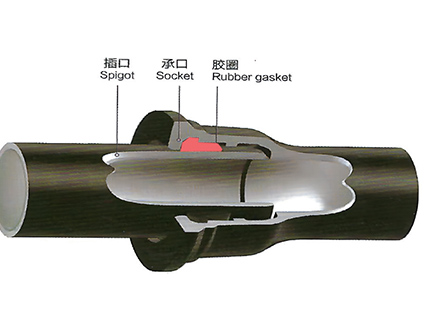
Push-On Joint (TYTON Type)
Push-on joints per ISO 4633 are standard for most water applications:
Assembly: Simple push-together connection with rubber gasket
Deflection: 3-5 degrees angular deflection allowed
Pressure rating: Matches pipe pressure class
Application: DN80 to DN2000, standard for buried water lines
Push-on joints are more suitable than flanged joints for buried distribution networks where speed of installation matters. Flanged joints are more suitable than push-on for above-ground pump station piping where disassembly may be required.
Restrained Joint Systems
Restrained joints prevent pipe separation under thrust forces:
Application: River crossings, steep gradients, bend locations
Types: Bolted gland, wedge-action, or welded restraint
Pressure rating: Must match or exceed pipe pressure class
Specify restrained joints at:
All bends 22.5 degrees and above
Tee and cross fittings
Valve locations in high-pressure sections
Steep slopes exceeding 15 degrees gradient
Flanged Joints and Adapters
Flanged connections per ISO 2531 Annex C:
Application: Pump stations, valve chambers, treatment plants
Sizes: DN80 to DN600 commonly available
Pressure rating: PN10, PN16, PN25 standard
Flanged spigot adapters allow transition from buried ductile iron to above-ground steel or equipment connections.
Real-World Application Scenarios
Municipal Water Distribution — Southeast Asia
A municipality in Vietnam needed ductile iron pipes for a 100-kilometer water distribution network serving 50,000 residents. The solution specified DN150 to DN400 Class K8 (PN16) pipes in 6-meter lengths with push-on joints and standard zinc-bitumen coating plus cement mortar lining.
Key requirements included hydrostatic testing at 24 bar, third-party inspection per ISO 2531, and batch-level material certification. Risk was controlled through pre-shipment inspection at Chinese port and retention samples from each production batch.
Raw Water Transmission — Middle East
A regional water authority required DN800 Class K9 (PN25) ductile iron pipes for a 30-kilometer raw water transmission line from reservoir to treatment plant. The solution specified 8.15-meter lengths to reduce joint count and polyethylene sleeving for aggressive soil conditions.
Additional requirements included restrained joints at all bends and valves, air release valves at high points, and cathodic protection test stations for corrosion monitoring. Delivery included custom packaging for desert transport conditions.
Mining Process Water — Africa
A copper mining operation needed DN500 Class K10 (PN35) ductile iron pipes for process water supply from borefield to processing plant. The solution specified enhanced external coating (zinc-aluminum plus epoxy) due to acidic soil conditions in the mining area.
Internal lining used high-alumina cement mortar for corrosion resistance. Pressure testing was performed at 50 bar to verify integrity. Installation included thrust blocks at all direction changes and pressure monitoring stations along the pipeline.
Expert Tips for Risk Control
Hydraulic Calculation Checklist
Before finalizing pipe sizes, verify:
Peak demand flow rate calculated with appropriate peaking factor (typically 2.5-3.0 for municipal)
Flow velocity maintained between 0.6-2.0 m/s (higher velocity increases head loss and surge risk)
Head loss calculated using Hazen-Williams formula with C-factor 140 for cement-lined ductile iron
Future demand growth factored into transmission main sizing (minimum 20-year design horizon)
Fire flow requirements included for municipal distribution networks
Specification Review Before Tender
Verify pressure class accounts for surge pressure, not just static operating pressure
Confirm coating specification matches actual soil corrosivity at project site
Include restrained joint requirements at design stage, not as variation orders
Specify packaging requirements for long-distance transport to prevent coating damage
Require material test reports and hydrostatic test certificates for each production batch
Common Red Flags During Supplier Evaluation
Cannot provide ISO 2531 or EN 545 certification with valid audit date
No references from water infrastructure projects in similar climate conditions
Reluctant to allow third-party inspection or independent sample testing
Quotation significantly below market rate (indicates material or coating compromise)
No documented procedure for non-conforming material handling
Unable to provide dimensional tolerance verification reports
Incoming Inspection Protocol
For critical applications, implement incoming verification including:
Outside diameter and wall thickness measurement on 10% of pipes
Visual inspection of coating continuity and lining quality
Gasket verification for correct material and dimensions
Hydrostatic test certificate review for each batch
Retain samples from each batch for minimum 10 years
How Tiegu Supports Ductile Iron Water Pipe Sourcing
Tiegu operates as a professional casting export partner with integrated supply network, maintaining strategic partnership with a leading Chinese ductile iron pipe manufacturer.
Because we supply raw materials (pig iron, scrap steel, key alloys) to over 3000 foundries across China, this allows us to verify real production conditions before matching your ductile iron pipe project. We see actual material consumption, melting practices, and quality consistency data — not sales brochures or self-reported claims.
This means that buyers can avoid common sourcing failures such as suppliers who overpromise on production capacity, underdeliver on coating quality, or cannot meet delivery timelines for water infrastructure projects.
For ductile iron water pipe procurement specifically, this translates to several concrete benefits:
More accurate quotations: Because we understand raw material costs at the source, this allows us to provide budget estimates grounded in actual material prices rather than optimistic sales projections. Pipe pricing fluctuates with iron ore and scrap steel markets — we track these costs in real-time.
Better supplier matching: Ductile iron pipe projects are matched to our partner manufacturer with proven ISO 2531 compliance and water infrastructure project experience. This means that buyers can rely on verified capability rather than marketing claims about diameter range and pressure class capacity.
Lower disruption risk: Because we monitor production conditions continuously through our material supply relationship, this allows us to identify potential delays or quality issues before they affect your shipment. If capacity constraints arise at one facility, we can coordinate alternative production within our network without compromising specification compliance.
Single-point coordination: All documentation including material test reports, hydrostatic test certificates, coating inspection reports, and third-party verification are consolidated before shipment. Export documentation complies with destination country requirements including customs valuation and country-of-origin certification.
Summary: Key Takeaways
1. Select pipe diameter based on hydraulic calculations — DN100-DN300 for distribution networks, DN400+ for transmission mains
2. Specify pressure class with surge allowance — PN16 minimum for municipal, PN25 for transmission lines with pump stations
3. Match joint type to application — push-on for buried distribution, restrained joints for bends and steep slopes, flanged for pump stations
4. Verify supplier certification — ISO 2531 or EN 545 with valid third-party audit and water infrastructure references
5. Implement incoming inspection — dimensional verification, coating inspection, and hydrostatic test certificate review
for each batch
Need Support for Your Water Pipeline Project?
If you are planning a ductile iron pipe project, selecting the correct size, pressure class, and joint system is critical to long-term performance.
You can share your project details, drawings, or technical requirements with us. We can help you:
- Review pipe specifications
- Recommend suitable size and pressure class
- Match reliable suppliers
- Support inspection and export delivery
Contact us to get a structured pipe sourcing solution.
 GT-type Joint Ductile Iron Pipe
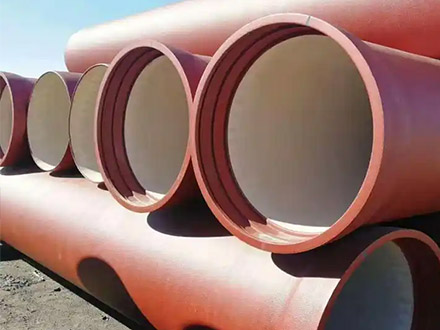
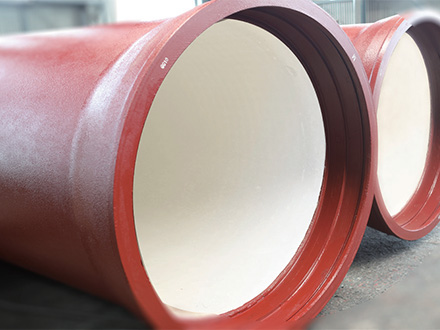 Sewage Pipe (Ductile Iron Sewage Pipe)
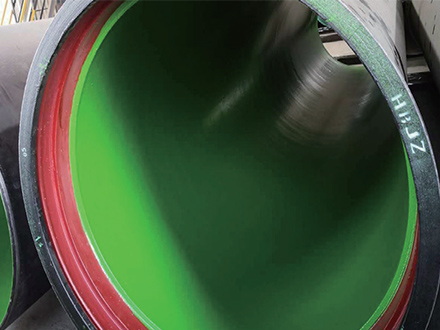 Special Coating Pipe (Ductile Iron Pipe with Special Coatings)