

Africa Water Infrastructure Pipeline and Flagship Projects

Africa is entering a sustained cycle of water infrastructure investment — driven by urbanisation, climate stress, food security, and the push to industrialise. Tiegu supports African buyers by mapping each flagship programme to the right ductile iron pipe specification — pressure class, lining, coating, and joint — before the order is placed, so the pipe matches the duty rather than a generic class. This article walks through the project types that actually move DIP volume across the continent, and what each one demands of the specification.
The African water infrastructure pipeline
The pipeline is not one market but several running in parallel. National utilities and ministries are extending urban networks; basin authorities are building transfer and storage to even out drought; mining and energy operators are securing process and potable water far from grid cities; agriculture is modernising irrigation; and new economic zones are laying greenfield utility networks from day one. Each segment has a different pressure profile, terrain, and service-life expectation — which is exactly why a single "DN and K9" assumption fails in the field. The common thread is that buried pressure mains of any scale still rely on a rigid, jointed, verifiable pipe, and DIP remains the default where duty is high and failure is costly.
Trans-basin transfers and storage
Large storage and inter-basin transfer schemes concentrate demand at the most demanding points in the network: high-head intakes, long transmission mains, and treatment feeds. The Grand Ethiopian Renaissance Dam on the Blue Nile is the most visible example of Africa prioritising storage and hydropower at continental scale, and similar dam and transfer programmes run across North and sub-Saharan Africa as governments chase drought resilience. For DIP, these projects mean DN 600 and above transmission mains, higher pressure classes near pump stations, and coatings rated for both wet internal duty and aggressive external soils. External corrosion protection is not optional on these alignments — laterite, saline return flows, and seasonally high water tables are the norm, not the exception.
Urban water supply and sanitation
City networks are the steady workhorse of African DIP demand. Lagos, Cairo, Nairobi, and Johannesburg each combine ageing in-city mains, fast peri-urban expansion, and new sanitation targets that require reliable buried pressure pipe. The pattern is a duty staircase: a trunk main at higher class feeding district mains at moderate class, then service connections at lower class. Sizing the diameter and pressure class to the segment avoids both under-specification at the trunk and over-specification at the branch — the two mistakes that blow budget or cause premature failures. Flexible push-on joints matter here because urban trenches cross variable fill, utilities, and settlement zones.
Mining and energy water systems
Mining belts — the Copperbelt spanning Zambia and the DRC, the West African gold fields, and South Africa's platinum and coal corridors — need water for processing, dust suppression, and potable supply, often in remote, corrosion-prone ground. These are harsh-duty lines: higher internal pressures, abrasive or chemically aggressive process water, and long runs with few intermediate valves. DIP competes here on rigidity and joint security under surge, but only when the internal lining and external coating are specified for the actual fluid and soil. Energy projects, including hydropower and concentrated solar, add cooling and makeup-water loops that reuse the same specification discipline.
Irrigation and food security
Modernisation of irrigation — from the Nile delta and Sudan's schemes to new schemes across sub-Saharan Africa — converts open channels into pressurised, piped distribution to cut losses and extend the cropped area. Pressurised irrigation mains are lower pressure than transmission lines but run over long, exposed, and shifting rural ground. Here the argument for DIP is lifespan and joint tolerance under settlement, with flexible joints that follow grade reducing field anchoring. Bulk-transfer laterals that feed multiple schemes share the duty profile of small transmission mains and benefit from the same verified specification.
New economic zones and cities
Greenfield economic zones and new cities concentrate demand and remove the excuse of "we used what was there." Egypt's New Administrative Capital, Kenya's Konza Technopolis, and Rwanda's planned urban expansions all require utility networks built to a standard from the first trench. This is where specification discipline pays off: a single coordinated DIP sourcing solution can cover potable, fire, and process mains under one verified standard, one inspection scope, and one document set — rather than three ad-hoc purchases that meet at incompatible joints. The lesson from comparable Gulf programmes such as Saudi Vision 2030 and NEOM is that early, consistent specification protects the whole asset, not just the launch phase.
What these projects mean for DIP specification
Across all five project types, four specification questions decide whether DIP performs:
Pressure class by segment, not by habit. Trunk and pump-outlet mains need the higher classes; branches do not. Specify to the duty staircase.
Standard and marking. Confirm ISO 2531 / EN 545 / AWWA C151 alignment and that the mill test certificate backs the ordered class and lining.
Corrosion pairing. Match the external system — zinc and polyethylene sleeve, or equivalent — to the soil and climate, using the same logic as Africa's corrosion-protection guidance.
Logistics and conformity. Gateway port, Incoterms, and the destination's conformity route (SONCAP, PVoC, NRCS, GOEIC) should be fixed before booking, because they change the document and packing plan.
These are the same points a careful tender specification would capture up front — the difference is doing it before the order rather than discovering gaps at the port.
What Tiegu verifies before the contract
As a sourcing and export partner, Tiegu's pre-contract check for flagship and programme-scale schemes focuses on the points that fail in the field:
Confirm the duty basis. We map the pressure profile, soil, terrain, and service life so the DIP specification — class, joint, lining, coating — is matched to the segment that actually needs it, not a single generic class across the whole project.
Align the DIP specification to the standard. The ordered standard and the mill test certificate are confirmed so the DIP supplied is auditable against the tender and the destination's conformity route.
Tie inspection and documents to the shipment. The pre-shipment inspection and export documents are prepared so the bundles arriving at the site match the specified DIP duty, and clear the gateway port without rework.
The goal is a single coordinated order — where DIP is specified for the segments it suits, verified before loading, and documented for the destination's customs and conformity path.
Buyer's checklist before you release a flagship order
Map the duty staircase (intake / pump / trunk / branch) and specify class per segment.
Fix the standard, lining, and coating for the worst-case soil and fluid on the alignment.
Confirm the gateway port and Incoterms, and pre-clear the destination conformity route.
Require pre-shipment inspection and a matching mill test certificate before loading.
Consolidate potable, process, and fire mains under one verified DIP sourcing solution where the programme allows it.
A disciplined specification turns a flagship project from a procurement risk into a predictable, auditable DIP order. Inquire about specifications and pricing →
Frequently asked questions
Which African project types use the most ductile iron pipe?
Urban supply networks and trans-basin transmission mains are the largest steady consumers, because both need buried pressure pipe at scale. Mining and energy process water add harsh-duty lines, while irrigation modernisation and new economic zones contribute longer-run, lower-pressure volume. The common driver is buried pressure duty where rigidity and joint security matter.
Should one DIP class cover an entire programme?
No. Specifying a single high class across every segment overspends on branches; specifying one low class underspends at the trunk and pump outlet. The disciplined approach is a duty staircase — higher class at the pump and trunk, moderate at the district, lower at the service connection — all verified to the same standard.
How does African soil change the DIP specification?
Laterite, saline return flows, and high water tables demand a confirmed external system — typically zinc plus a polyethylene sleeve or equivalent — paired to the site. Internal lining is set by the fluid, potable or process. The pairing is project-specific, so it should be written into the order rather than assumed from a generic supply.
What documents matter most for a flagship Africa order?
The mill test certificate, coating and lining certificates, and the pre-shipment inspection record back the specification, while the export document set must match the destination's conformity route — SONCAP, PVoC, NRCS, or GOEIC depending on the country. Fixing these before booking avoids clearance delays at the gateway port. Tiegu prepares this set against the destination route so the bundles clear without rework.
Can Tiegu cover potable, process, and fire mains under one order?
Yes, where the programme allows consolidation. A single coordinated DIP sourcing solution can specify, inspect, and document all three under one standard and one inspection scope, which prevents incompatible joints at the branch points and simplifies the audit trail. The only reason to split the order is when the standard or lining differs so far that separate inspection is cleaner.
Tiegu is a China-based ductile iron pipe sourcing and export partner serving international water infrastructure, wastewater, and industrial projects.
We supply DN80–DN2600 ductile iron pipes and fittings manufactured according to ISO 2531, EN 545, EN 598, and AWWA standards, with cement mortar lining, epoxy lining, and various external coating options.
From technical specification confirmation and supplier coordination to quality inspection, export documentation, and logistics support, Tiegu provides a reliable one-stop sourcing solution under a single commercial contract.
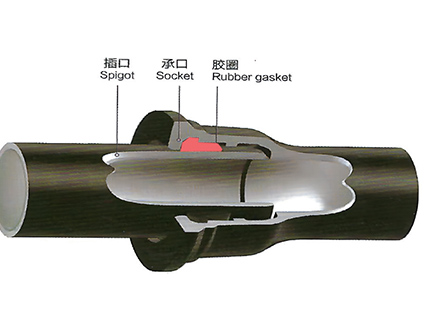 GT-type Joint Ductile Iron Pipe
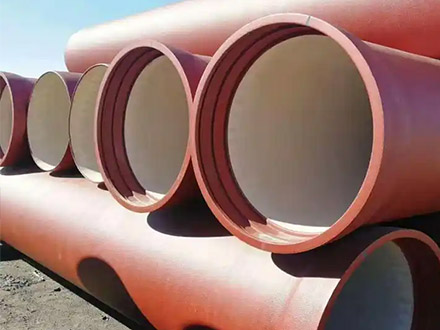
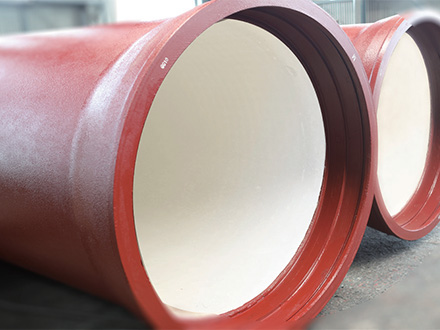 Sewage Pipe (Ductile Iron Sewage Pipe)
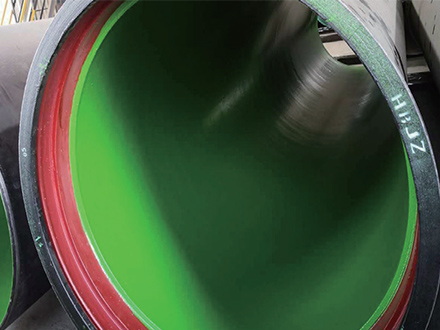 Special Coating Pipe (Ductile Iron Pipe with Special Coatings)