

How to Read a Ductile Iron Pipe Mill Test Certificate (MTC): A Buyer's Guide
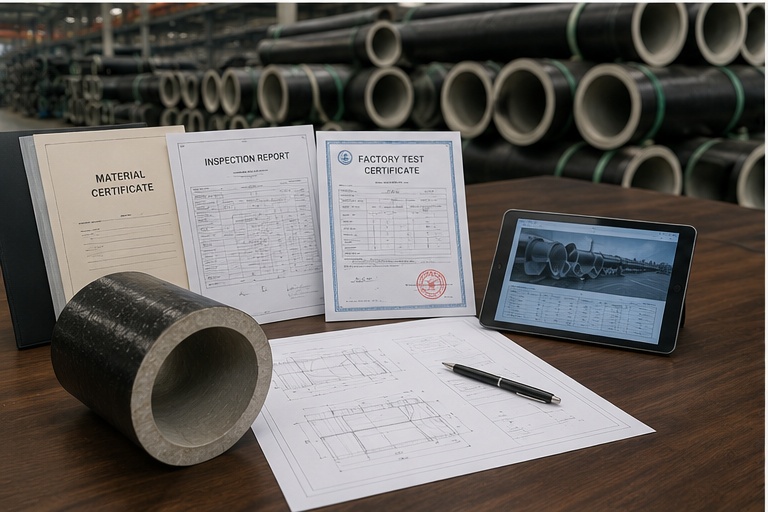
A Mill Test Certificate (MTC) — also called a Mill Test Report (MTR) — is the birth certificate of your ductile iron pipe. It records the chemical composition, mechanical strength, and test results of the exact batch you received. No MTC means no traceability, no compliance evidence, and no leverage if pipes fail in the field.
Received an MTC from your China supplier and not sure what the numbers mean — or whether they are real? Most buyers glance at the stamp and file it away. That is a mistake. This guide walks through every field that matters and the red flags that signal a problem before the container seals.
Tiegu supplies ductile iron pipes with full EN 10204 3.1 documentation as standard, and 3.2 with third-party witness on request. Here is how to read what any supplier hands you.
What an MTC actually certifies
An MTC is issued under EN 10204, the standard that defines inspection documents for metallic products. Two types matter in DIP procurement:
| Type | Who signs | What it proves |
|---|---|---|
| 3.1 | Manufacturer's independent QC department | Specific test results from your actual batch |
| 3.2 | Manufacturer + independent third party (SGS, BV, TÜV) | Same data, independently witnessed |
Types 2.1 and 2.2 declare compliance without specific test data from your heat. For pressure pipe, insist on 3.1 at minimum; for funded or critical projects, require 3.2.
The fields you must check
1. Header and order reference
Manufacturer name, certificate number, date, and your purchase order number. If the PO reference is missing or wrong, the certificate does not belong to your order.
2. Heat number (cast number)
The single most important field. Every pipe in the batch carries this number stamped on the body. The heat number on the MTC must match the number on the physical pipe — exactly. This is the only link between the paper and the product. No match means no traceability. Reject.
3. Product description and dimensions
Nominal diameter (DN), wall class (K9, K12, or C-class), length, quantity, and weight. These must match your order and the markings on the pipe. Full dimensional and pressure-class reference is here.
4. Chemical composition
Ductile iron chemistry per EN 545 / ISO 2531 typically shows:
| Element | Typical range | Why it matters |
|---|---|---|
| Carbon (C) | 3.0–3.8% | Graphite formation — the source of ductility |
| Silicon (Si) | 1.8–2.8% | Controls the matrix; too low makes the iron brittle |
| Manganese (Mn) | ≤0.4% | Excess promotes carbide, hurts toughness |
| Phosphorus (P) | ≤0.05% | Impurity; high P cuts impact resistance |
| Sulfur (S) | ≤0.02% | Impurity; interferes with nodularization |
| Magnesium (Mg) | ≥0.025% | Residual nodularizer — proves spheroidal graphite |
For corrosive-service grades you will also see alloying elements such as Cu, Ni, or Sn. Every value must sit inside the limit set by the standard named on the certificate. The applicable standards and certification requirements are detailed here.
5. Mechanical properties
The "is it strong enough" section:
| Property | EN 545 typical minimum | AWWA C151 typical minimum |
|---|---|---|
| Tensile strength | ≥420 MPa | ≥414 MPa (60 ksi) |
| 0.2% proof stress (yield) | ≥300 MPa | ≥290 MPa (42 ksi) |
| Elongation | ≥10% | ≥10% |
These confirm the pipe will not crack under pressure or handling. Always compare against the minimum — a value below the limit fails, no matter how close.
6. Test results
Hydrostatic test pressure and result, plus any non-destructive checks. Our hydrostatic testing procedures explain how this is done and what passes.
7. Signatures
A valid 3.1 carries the sign of the manufacturer's QC department — independent of production. A 3.2 adds the third-party inspector's stamp. A certificate signed only by a sales manager does not meet EN 10204.
Red flags that mean stop
Heat number mismatch — the biggest one. The document does not match the pipe.
Values pinned exactly at the limit — e.g., tensile = 420.0 MPa when the minimum is 420. Real lab data varies; identical-to-the-decimal values suggest typed-in numbers, not measured ones.
Same composition across different heat numbers — fabricated data.
Signed by sales or management only — not an independent QC signatory.
No manufacturer stamp or only a generic company chop — origin cannot be verified.
Undated or implausible date — possibly reused from a previous order.
Verify before you load
The MTC check belongs in your pre-shipment inspection workflow, not in a drawer after delivery. Cross-check the heat number against the pipe marking, confirm the chemistry and mechanics sit inside the named standard, and keep the original — not a scan — on file. For high-value or funded projects, pair the MTC with a third-party inspection report.
Not sure your current supplier's documents add up? See what a reliable DIP supplier should provide, then talk to our team about your specification.
Frequently asked questions
Is EN 10204 3.1 enough, or do I need 3.2?
For most commercial water projects, 3.1 from a qualified manufacturer is sufficient. Require 3.2 when the project is funded by a multilateral agency, governed by strict local codes, or when the consequence of failure is high. The 3.2 adds an independent witness to the same test data.
What if the heat number on the MTC does not match the pipe?
Stop. A mismatch means the certificate may belong to a different batch — or no batch at all. Reject the lot and request a written explanation before any payment is released.
Can a supplier reuse an MTC from a previous order?
They should not, and you should not accept it. Each certificate covers one batch and one PO. An undated or recycled certificate is a red flag on its own.
Who issues the MTC — the mill or the exporter?
The mill (manufacturer) issues it, signed by its independent QC function. An exporter like Tiegu passes it to you with the shipment; the document's authority comes from the mill, not the trader.
Which standard should the chemistry be checked against?
The standard named in your purchase order — usually EN 545, ISO 2531, or AWWA C151. The MTC must state which one applies, and your acceptance limits come from that document.
Tiegu is a China-based ductile iron pipe sourcing and export partner serving international water infrastructure, wastewater, and industrial projects.
We supply DN80–DN2600 ductile iron pipes and fittings manufactured according to ISO 2531, EN 545, EN 598, and AWWA standards, with cement mortar lining, epoxy lining, and various external coating options.
From technical specification confirmation and supplier coordination to quality inspection, export documentation, and logistics support, Tiegu provides a reliable one-stop sourcing solution under a single commercial contract.
Inquire about specifications and pricing →
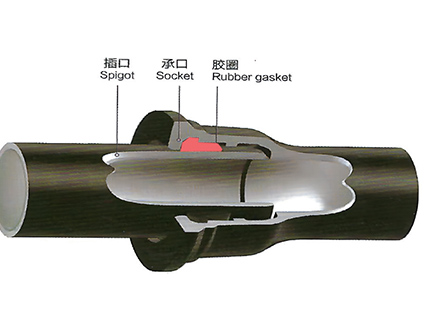 GT-type Joint Ductile Iron Pipe
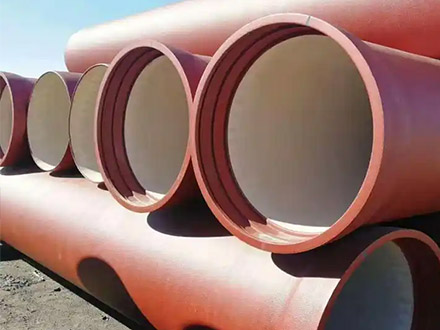
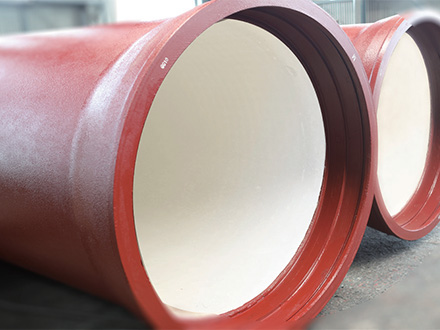 Sewage Pipe (Ductile Iron Sewage Pipe)
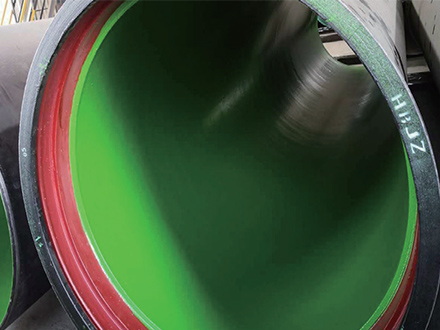 Special Coating Pipe (Ductile Iron Pipe with Special Coatings)