

Ductile Iron Pipe Tender Specification Writing Guide

A tender specification is the technical contract that tells bidders exactly what ductile iron pipe (DIP) you need — and, just as importantly, what you will not accept. It sets the floor for quality before a single bid is opened.
Writing a water-project tender and worried the lowest bid will arrive as the lowest quality? You are not wrong to worry. A weak specification is the most common reason public and EPC projects end up disputing pipe deliveries. Tiegu supports international buyers and their engineers with specification review and full export documentation under a single commercial contract.
Why the specification decides supplier quality
The tender is where quality is won or lost. Once bids are opened, you are locked to the document you wrote. A vague spec lets a thin-wall, loosely coated pipe win on price — and you inherit the risk.
Look at how utilities do it. The East Bay Municipal Utility District (EBMUD) RFQ for DIP requires zinc exterior coating plus cement-mortar lining, Tyton push-on joints, NSF/ANSI 61 certification for potable contact, and third-party inspection rights. That clause set alone filters out brokers, traders, and mills that cannot certify the full package. You do not need a 200-page document. You need the right clauses, stated without loopholes.
Anchor on one standard — not "or equivalent"
Pick a single standard and name the exact edition: ISO 2531, EN 545, or AWWA C151. Then forbid substitutions.
The phrase "or equivalent" is the most expensive three words in a tender. It lets a bidder substitute a weaker product and argue it performs the same. State the standard, the edition year, and "no equivalents unless approved in writing by the engineer." Full standard and certification reference is here.
Decide the pressure basis early: K-class (K9, K12) or C-class (pressure class). This choice drives wall thickness and price, so the spec must state it explicitly. See the dimensions and pressure-class tables.
Core clauses every DIP tender needs
| Clause | What to state | Why |
|---|---|---|
| Material & grade | Ductile iron, minimum tensile and elongation per the chosen standard | Confirms real DIP, not grey cast iron |
| Dimensions & tolerances | DN range, class, length, tolerances | Prevents off-spec diameters that will not joint |
| Coating & lining | Standard for internal lining and external coating | Protects against your specific soil and water |
| Joint type | Tyton / flanged / restrained, with gasket standard | Ensures compatibility across the line |
| Hydrostatic test | Test pressure and acceptance basis — see hydrostatic test procedures | Verifies pressure integrity before shipment |
| MTC & documents | EN 10204 3.1 minimum, 3.2 for critical works | Gives traceability and compliance proof |
| Third-party inspection | Right to inspect before loading | Catches defects before the container seals |
The joint and connection reference and the coating and lining guide cover the two clauses buyers most often under-specify.
Need a second opinion on your clause set? Inquire with Tiegu about specification support →
Clauses that filter out low-quality bidders
Standard clauses describe the product. These clauses filter the bidder:
Enforce minimum wall thickness. State the class and forbid "equivalent" thin-wall sections. Thin pipe fails hydrostatic and shortens service life.
Require heat-number traceability. Every pipe must carry a cast number matching the MTC. No match, no acceptance.
Certify the coating process. "Anti-corrosion coated" is not a clause. Name the standard — zinc mass per EN 545, cement thickness per ISO 2531.
Put inspection in the contract. State that the purchaser may use a third-party inspector (SGS, BV, TÜV) before loading, at the bidder's cost or shared.
State rejection and remediation rights. Define what happens to non-conforming pipe: remake, replace, or price adjustment, with photos as evidence.
A tender guide from a real regional project shows how material selection and supplier qualification are written into the same document.
A reusable specification template
Ductile iron pipe shall conform to [ISO 2531 / EN 545 / AWWA C151], edition [year]. Pipe shall be centrifugally cast, in class [K9 / K12 / C-class], nominal diameter [DNxx]. Internal lining shall be cement mortar per [standard], external protection [zinc + bitumen / bonded epoxy / PE encasement] per [standard]. Joints shall be [Tyton push-on / flanged / restrained] conforming to [standard]. Each pipe shall carry a permanent heat number. Manufacturer shall provide EN 10204 3.1 mill certificates and allow third-party inspection before shipment. Non-conforming pipe shall be rejected and replaced at the supplier's cost.
Adjust the brackets to your project. The structure stays.
Common mistakes in DIP tenders
Accepting "or equivalent." Opens the door to substitution. Name the standard.
Omitting the coating standard. "Corrosion-protected" means nothing. Name the test method and minimum values.
Vague tolerances. "As per standard" is fine only if the standard is named.
No third-party inspection clause. You lose leverage once the container is sealed.
Forgetting fittings. State that fittings must match the pipe standard and joint type, or the line will not assemble.
FAQ
Do I need a different spec for AWWA vs EN 545 projects?
Yes. AWWA uses pressure class and thickness design (C150); EN 545 uses K-class and form requirements. Name the one your funding body accepts.
Can I write one spec for both pipe and fittings?
You can, but fittings need their own clause — they are cast differently and tested to a different standard. State both.
How detailed should the coating clause be?
Name the standard and the minimum value (e.g., zinc 200 g/m², cement lining 3 mm minimum). Without numbers, the clause is unenforceable.
Who should review the specification before release?
A pipeline engineer familiar with the chosen standard. A 30-minute review catches most loopholes that later cost a project.
What if a bidder refuses third-party inspection?
Treat it as a disqualifying signal. Reputable suppliers expect it; only those hiding something avoid it.
Tiegu is a China-based ductile iron pipe sourcing and export partner serving international water infrastructure, wastewater, and industrial projects.
We supply DN80–DN2600 ductile iron pipes and fittings manufactured according to ISO 2531, EN 545, EN 598, and AWWA standards, with cement mortar lining, epoxy lining, and various external coating options.
From technical specification confirmation and supplier coordination to quality inspection, export documentation, and logistics support, Tiegu provides a reliable one-stop sourcing solution under a single commercial contract.
Inquire about specifications and pricing →
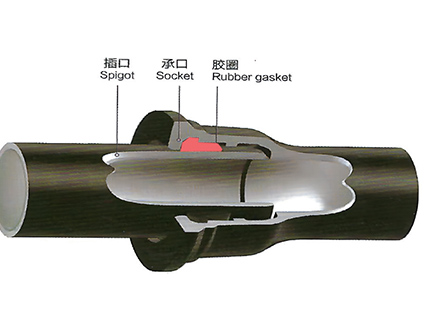 GT-type Joint Ductile Iron Pipe
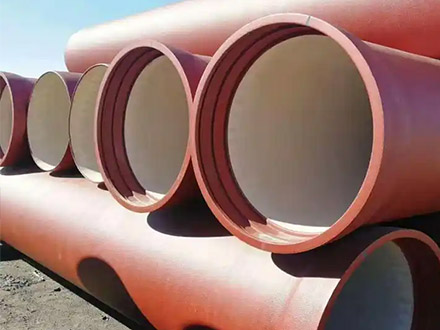
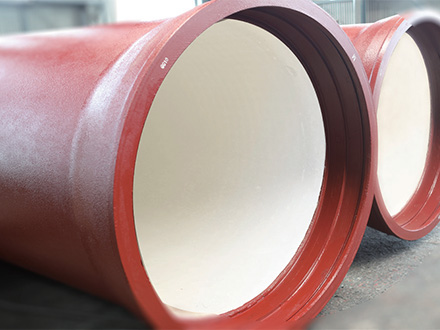 Sewage Pipe (Ductile Iron Sewage Pipe)
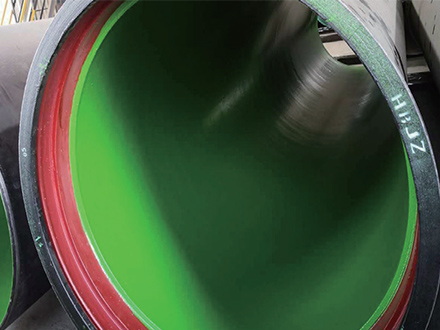 Special Coating Pipe (Ductile Iron Pipe with Special Coatings)