

Flexible Joint Ductile Iron Pipe: How Much Deflection Can It Handle?
A flexible joint lets ductile iron pipe bend slightly at each connection point instead of staying perfectly straight. Standard push-on joints (also called Tyton joints) typically allow around 5° of deflection per joint, with slightly less on larger pipe sizes.
That's separate from specialty ball-joint pipe, which is a different product built for much larger angles — up to 15° or even 25° — and used only in specific situations like river crossings. Mixing these two numbers up is a common mistake, and it's worth getting right before you specify a pipeline.
Flexible Joint vs. Restrained Joint: Two Different Things
These two terms get confused constantly, so here's the key distinction:
Flexible describes whether a joint can bend to a small angle. Most standard ductile iron pipe joints are flexible by default.
Restrained describes whether a joint can resist being pulled apart by internal water pressure (thrust force), without needing external thrust blocks.
A joint can be flexible without being restrained, restrained without much flexibility (like a bolted flange), or both at once. They answer two different engineering questions — "can it bend?" and "can it hold under pressure without pulling apart?" — and a pipeline spec often needs to address both separately.
How Much Deflection Standard Flexible Joints Actually Allow
For standard push-on joints, deflection generally works like this:
| Pipe size | Typical max deflection |
|---|---|
| Up to 24" | Up to 5° per joint |
| 30" and larger | Typically 2°–3.5° per joint |
Larger pipe deflects less per joint because the geometry simply doesn't allow as much movement at that diameter. A useful way to think about this: 5° of deflection over an 18–20 ft pipe length works out to roughly 18–21 inches of offset at the far end of that single length. String several joints together along a curve, and that adds up to a real, usable turning radius — often enough to follow a road curve or dodge an obstacle without adding a fitting.
Key Point: Always confirm the exact deflection rating for your specific pipe diameter with your supplier — it varies by size and by manufacturer, not just by joint type.
When Larger-Angle Ball Joints Are Actually Needed
Standard flexible joints aren't the only option. Specialty ball-and-socket joint pipe exists specifically for situations that need far more deflection than a standard joint provides — think 15° to 25° per joint. This is a different, purpose-built product line, not an upgraded version of a standard joint.
These ball joints are typically used for:
River and underwater crossings, where alignment is hard to control precisely
Situations requiring sharp direction changes without extra fittings
Projects where installation speed matters more than fitting cost
If your project genuinely needs this much deflection, specify a ball-joint product by name — don't assume a "flexible joint" quote automatically includes this capability, since it usually doesn't.
When You Actually Need a Flexible Joint
Standard flexible joints are worth specifying (or confirming are included) when:
Ground settlement is expected — soft or variable soil can shift pipe slightly over time, and a flexible joint absorbs that movement instead of transferring stress into the pipe wall. (For what to do when settlement actually occurs on site — bedding, deflection control, and when to switch to restrained joints — see [How Much Deflection Is Allowed for Ductile Iron Pipe Joints?].)
The route follows a curve — flexible joints let a pipeline follow road curves or terrain without a fitting at every bend
You're routing around an obstacle — a small deflection at each joint can add up to enough total offset to clear an obstruction
The project sits in a seismic-risk area — flexible joints help the pipeline tolerate minor ground movement without joint failure
Note that virtually all standard ductile iron pipe joints are flexible by default — this isn't usually a special order. What you need to confirm is the exact deflection rating for your pipe size, and whether you also need restraint (see above) for the same section.
Frequently Asked Questions
Do flexible joints cost more than restrained joints?Not inherently — flexibility and restraint are separate features that can be priced independently. A standard flexible joint is typically the baseline cost; adding restraint (to resist thrust without external blocks) is what usually adds cost, not flexibility itself.
Can flexible joints be mixed with restrained joints on the same pipeline?Yes, and this is common practice. Restrained joints are often used near bends, valves, and dead ends where thrust needs to be resisted, while standard flexible (non-restrained) joints are used along straight, low-thrust sections.
Are flexible joints watertight without additional sealant?Yes — standard push-on flexible joints use a rubber gasket that seals under compression and remains watertight throughout its rated deflection range, without needing extra sealant.
How long do flexible joint gaskets last?Rubber gaskets in ductile iron pipe joints are designed for long service life, typically matching the pipe's own service life when installed correctly. Failures usually trace back to installation errors or exceeding the rated deflection, not gasket aging under normal conditions.
Do flexible joints need maintenance or inspection over time?Buried flexible joints generally don't require routine maintenance. Inspection is mainly relevant during installation and initial testing — a properly installed joint within its rated deflection typically performs without attention for decades.
What certifications should flexible joint pipe have?Confirm compliance with the governing standard for your project — ISO 2531/EN 545 for most international markets, or ANSI/AWWA C111 for US-standard projects — and request the specific deflection rating for your pipe diameter from your supplier's documentation.
Getting the deflection rating and joint type right for your project's actual ground conditions and route avoids costly rework later. Tiegu helps international buyers confirm the correct joint specification and coordinates across qualified factories to supply it.
📐 Engineers & project buyers: Share your pipe diameter, route conditions, and soil/seismic considerations, and we'll confirm the appropriate joint type and deflection rating. Submit your project requirements →
📦 Distributors & trading companies: Need a mix of flexible, restrained, or ball-joint pipe for different projects? We coordinate across multiple qualified factories to match the right joint type to each order. Get a quotation →
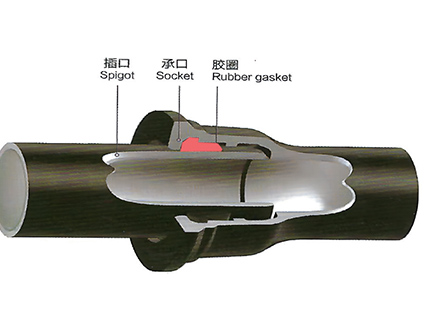 GT-type Joint Ductile Iron Pipe
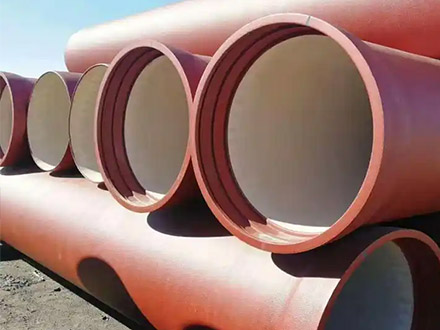
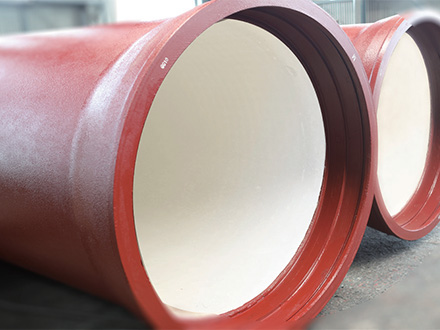 Sewage Pipe (Ductile Iron Sewage Pipe)
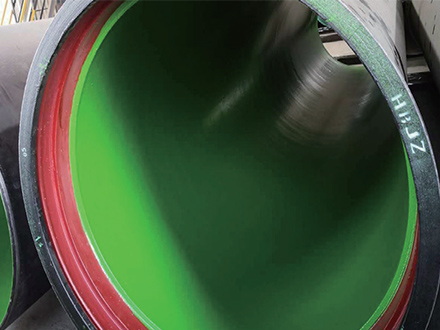 Special Coating Pipe (Ductile Iron Pipe with Special Coatings)