

Weight Considerations for Large-Diameter Ductile Iron Pipes (DN1200+): Lifting, Trenchless Installation, and Safety Planning
Introduction
In municipal water supply, drainage, and large-scale industrial pipeline projects, large-diameter ductile iron pipes (DN1200 and above) are widely used for long-distance transmission and for crossing complex terrains due to their high strength, corrosion resistance, and long service life.
However, as pipe diameter increases, the weight of a single pipe grows rapidly rather than linearly. A typical DN1200 ductile iron pipe may weigh 2–3 tons, while a DN2000 pipe can exceed 8 tons per piece. This dramatic increase in weight creates major challenges for lifting operations, trenchless installation methods, and overall construction safety planning.
For large-diameter ductile iron pipes, weight is the primary factor governing lifting capacity, trenchless feasibility, and construction safety.
This article examines how pipe weight affects lifting, trenchless installation, and safety planning for DN1200+ ductile iron pipelines, based on engineering practice and field experience.
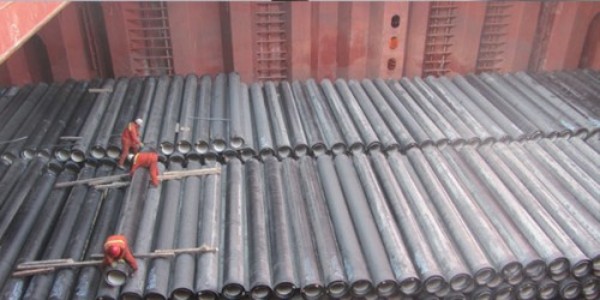
I. Core Weight Challenges in Lifting Operations
1. Equipment Selection and Escalating Costs
The weight of large-diameter ductile iron pipes directly determines the class and capacity of lifting equipment required on site.
For example, a DN1200 pipe weighing approximately 2.5 tons may require a crane in the 50-ton class, depending on lifting radius, rigging configuration, and safety factors. A DN2000 pipe weighing over 8 tons may require 100-ton-class cranes or larger.
As crane capacity increases, costs rise sharply:
Heavy cranes have significantly higher rental rates
Transporting large cranes requires special vehicles
Setup and dismantling time increases
Site preparation requirements become more demanding
In practice, lifting equipment costs for large-diameter pipelines can be several times higher than those for medium-diameter installations, directly increasing installation cost per kilometer.
2. Lifting Point Design and Stress Control
Large pipe weight places extreme demands on lifting point design. During lifting, the bell (socket) and spigot ends of ductile iron pipes become critical stress zones.
Improper sling positioning or uneven load distribution can cause:
Local stress concentration
Micro-cracking at the bell edge
Permanent deformation affecting joint performance
To mitigate these risks, lifting systems must use:
High-strength, wear-resistant slings
Multiple lifting points for load distribution
Controlled lifting angles to minimize bending stress
In one DN1600 pipeline project, improper lifting point design led to cracking at the socket edge, resulting in substantial repair costs and project delays—highlighting the importance of proper lifting engineering for heavy pipes.
3. On-Site Space and Operational Constraints
Heavy lifting operations require sufficient working space and ground bearing capacity. Large cranes need stable platforms, and insufficient ground preparation can lead to crane settlement or instability.
Additionally, aligning and jointing large-diameter pipes is inherently more difficult due to reduced maneuverability of heavy equipment. Detailed site surveys and lifting simulations are therefore essential before construction begins.
II. Weight Challenges and Solutions in Trenchless Installation
Trenchless construction methods such as horizontal directional drilling (HDD) and pipe jacking are widely used for DN1200+ ductile iron pipes when crossing roads, railways, and waterways. Pipe weight, however, strongly influences trenchless feasibility and risk.
1. Traction Force Limitations in HDD
As pipe weight increases, friction between the pipe and surrounding soil rises significantly, requiring greater pullback force.
To handle this, HDD projects often require:
High-strength drill pipes (e.g., S135 grade), often costing 30–50% more than standard drill pipes
Larger drilling rigs with higher torque and pullback capacity
Excessive pipe weight increases the risk of drill pipe failure or pipe jamming. Common mitigation measures include:
Segmented pullback instead of one continuous pull
Use of polymer or bentonite-based lubricants to reduce friction
2. Thrust Requirements and Stability in Pipe Jacking
In pipe jacking operations, heavy pipes require higher jacking forces to overcome soil resistance. For DN2000 pipes, total jacking force may require multi-hundred-ton or even thousand-ton hydraulic systems.
As pipe weight and jacking distance increase:
Energy consumption rises
Intermediate jacking stations become necessary
Equipment complexity and failure risk increase
As pipe diameter and weight increase, jacking force and ground risk rise exponentially rather than linearly.
Ground settlement monitoring and soil reinforcement are therefore essential for large-diameter jacking projects.
3. Pipe Weight Reduction Strategies
Reducing pipe weight is often more effective than simply increasing equipment capacity. Practical strategies include:
Shortening individual pipe length (e.g., from 6 m to 3 m)
Using lighter internal linings where applicable
Optimizing wall thickness distribution (thicker at the bell, thinner along the barrel)
Weight optimization is often more effective than brute-force equipment upgrades in trenchless construction.
III. Safety Planning Across the Entire Construction Chain
For DN1200+ ductile iron pipes, safety planning must cover the entire chain from design and transportation to lifting and long-term operation.
1. Safety Considerations in the Design Phase
During design, excessive conservatism in wall thickness selection can significantly increase pipe weight. Engineers should select appropriate K-classes (e.g., K9 or K12) based on actual pressure, burial depth, and external load conditions.
Optimized socket design and reinforced bell structures can improve crack resistance without unnecessary weight increase. Where corrosion conditions allow, lighter external coatings may also be considered.
2. Transportation and Stacking Safety
Heavy pipes must be transported using stable low-bed trailers, with attention to center-of-gravity control. During stacking:
DN1200+ pipes are typically limited to no more than two layers
Dedicated supports and restraints are required
Excessive stacking pressure must be avoided to prevent deformation
3. Lifting and Installation Safety
Lifting and installation are the highest-risk stages of construction. Operators must be certified and experienced with heavy lifting operations.
Key safety measures include:
Clearly defined exclusion zones
Detailed lifting plans and method statements
Emergency response plans and standby equipment
4. Monitoring and Long-Term Safety
After installation, critical zones such as bells, spigots, and weld areas should be inspected using ultrasonic or other non-destructive methods.
For pipelines crossing sensitive areas, strain or displacement monitoring systems can be installed to track long-term stress behavior and ensure operational safety.
IV. Case Study: DN1800 River-Crossing Pipeline Project
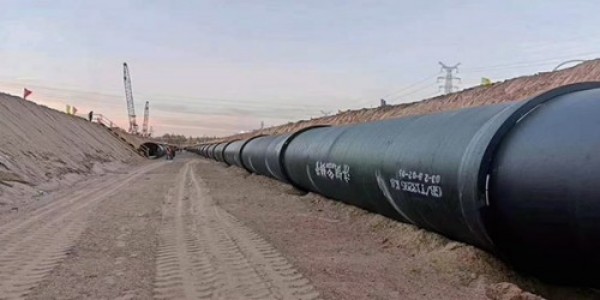
A water supply project involving DN1800 ductile iron pipes (single pipe weight approx. 4.2 tons) required a 300 m river crossing.
Through coordinated weight control, equipment planning, and real-time monitoring, the project team implemented:
120-ton-class cranes with specialized lifting fixtures
HDD construction with segmented pullback (100 m per segment)
Polymer lubricants to reduce friction
Real-time monitoring of drill pipe tension and pipe stress
The project was completed ahead of schedule, achieved measurable cost savings, and recorded zero safety incidents—providing valuable reference for similar DN1200+ projects.
Conclusion
For large-diameter ductile iron pipes (DN1200+), pipe weight is the dominant factor influencing lifting feasibility, trenchless construction efficiency, and safety risk. As diameter increases, weight-related challenges grow rapidly, requiring careful planning across design, logistics, lifting, and installation stages.
By integrating weight control into engineering design, selecting appropriate construction methods, and implementing comprehensive safety planning, project teams can significantly reduce risk, control cost, and ensure long-term pipeline reliability.
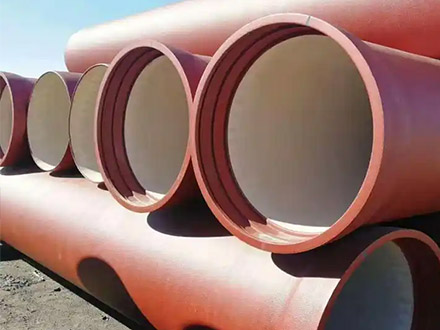
 Sewage Pipe (Ductile Iron Sewage Pipe)
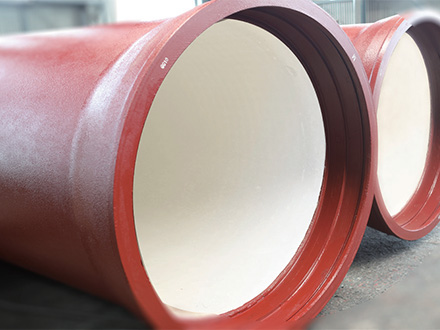
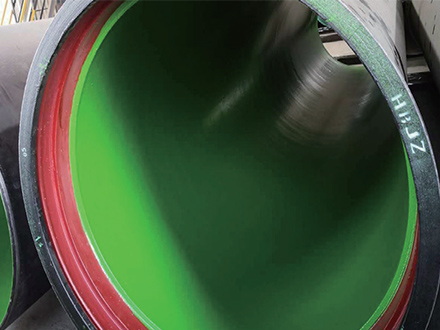 Special Coating Pipe (Ductile Iron Pipe with Special Coatings)
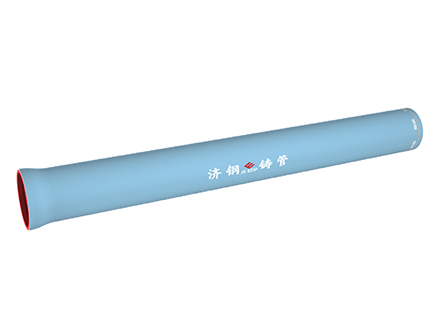 Dragging Pipe (Ductile Iron Dragging Pipe)