

Ductile Iron Pipe Weight Chart: DN100–DN2000
Ductile Iron Pipe Weight Chart (DN100–DN2000)
Introduction
When engineers and project managers need fast and reliable data, a ductile iron pipe weight chart is often more practical than manual calculations.
Weight charts provide a clear reference for transport planning, installation design, and preliminary cost estimation, especially during bidding and early-stage engineering.
This page presents a typical ductile iron pipe weight chart covering DN100 to DN2000, along with explanations on how to read the data and when charts should be used instead of formulas.
For calculation methods and formulas, please refer to
How to Calculate Ductile Iron Pipe Weight (Formulas & Examples).
1. How to Read a Ductile Iron Pipe Weight Chart
A standard ductile iron pipe weight chart usually shows:
Nominal Diameter (DN)
Wall thickness class (K7 / K9 / K12 or equivalent)
Pipe weight per meter (kg/m)
Sometimes pipe weight per length (e.g. per 6 m pipe)
Important notes:
Weights normally refer to metal weight only
Cement lining and coatings are not included
Socket (bell) weight may be listed separately or excluded
2. Ductile Iron Pipe Weight per Meter (DN100–DN2000)
Below is a typical reference chart based on common ISO / EN practice and average wall thickness values.
⚠️ Actual weights may vary slightly by manufacturer and standard.
Typical Ductile Iron Pipe Weight Chart (kg/m)
Nominal Diameter (DN) | K7 (kg/m) | K9 (kg/m) | K12 (kg/m) |
DN100 | 14–16 | 17–19 | 21–23 |
DN150 | 22–25 | 26–29 | 32–35 |
DN200 | 32–36 | 38–42 | 46–50 |
DN300 | 55–60 | 63–70 | 78–85 |
DN400 | 75–82 | 88–96 | 110–118 |
DN500 | 95–105 | 112–122 | 140–150 |
DN600 | 120–135 | 140–155 | 175–190 |
DN800 | 185–205 | 215–235 | 270–290 |
DN1000 | 250–280 | 290–320 | 360–390 |
DN1200 | 330–370 | 380–420 | 480–520 |
DN1400 | 420–470 | 490–540 | 620–670 |
DN1600 | 520–580 | 600–660 | 760–820 |
DN1800 | 630–700 | 720–790 | 910–980 |
DN2000 | 750–830 | 860–940 | 1100–1180 |
3. Typical Weight per Pipe Length
Ductile iron pipes are commonly supplied in 5.5 m or 6 m lengths.
Example:
DN300 K9 pipe
Weight ≈ 65 kg/m
6 m pipe ≈ 390 kg (metal only)
Socket weight must be added separately when calculating:
Lifting loads
Container loading
On-site handling requirements
4. Why Weight Charts Show Ranges Instead of Fixed Values
You may notice that pipe weight charts often show ranges, not exact numbers.
This is because:
DN is a nominal size, not an exact dimension
Wall thickness tolerances are allowed by standards
Socket geometry varies by joint design
Different manufacturers adopt slightly different practices
For final engineering and logistics decisions, manufacturer-certified weight tables should always be used.
5. Socket Weight Considerations
Socket (bell) weight is usually:
Excluded from kg/m values
Listed separately in product catalogs
Engineering observations:
For DN800 and above, socket weight can add 5–12% to total pipe weight
For DN1200+, socket weight can exceed 200 kg per pipe
Ignoring socket weight is a common mistake in container loading calculations.
6. When to Use a Weight Chart vs Calculation Formula
Use a Weight Chart when:
Preparing tenders or budget estimates
Planning transportation capacity
Making quick engineering comparisons
Use Calculation Formulas when:
Exact wall thickness is specified
Custom pipe lengths are required
Verifying manufacturer data
👉 See How to Calculate Ductile Iron Pipe Weight for detailed formulas and examples.
7. Engineering Notes for Transportation and Handling
Pipe weight directly affects:
Crane and forklift capacity
Sling and lifting point design
Container floor load limits
On-site safety procedures
For large diameters:
DN1000+ pipes often require special lifting frames
Weight distribution including socket must be considered
8. Frequently Asked Questions (FAQ)
Q1: Are weight charts accurate enough for container loading?
Weight charts are suitable for initial planning.
For actual container loading, always use manufacturer-certified pipe weights.
Q2: Do weight charts include cement lining?
No.
Most charts show metal weight only. Lining weight must be added separately.
Q3: Why do different suppliers show different weights for the same DN?
Differences come from:
Wall thickness tolerances
Joint and socket design
Applicable standards (ISO / EN / AWWA)
Q4: Is heavier ductile iron pipe always stronger?
Not necessarily.
Strength depends on wall thickness class, material properties, and installation conditions, not weight alone.
9. Conclusion
A ductile iron pipe weight chart provides a fast and practical reference for engineers, contractors, and procurement teams.
By understanding:
Weight per meter by DN
The role of wall thickness classes
The impact of socket weight
you can make better decisions in transportation, installation, and project planning.
👉 For precise calculations, see How to Calculate Ductile Iron Pipe Weight
👉 For engineering selection, see K7 vs K9 vs K12: How Wall Thickness Affects Pipe Weight
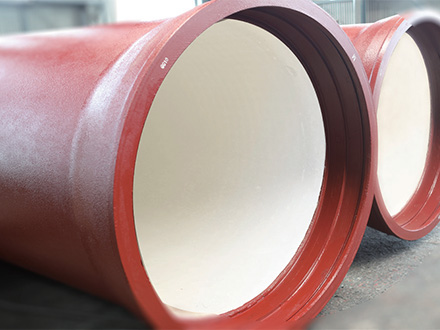 Sewage Pipe (Ductile Iron Sewage Pipe)
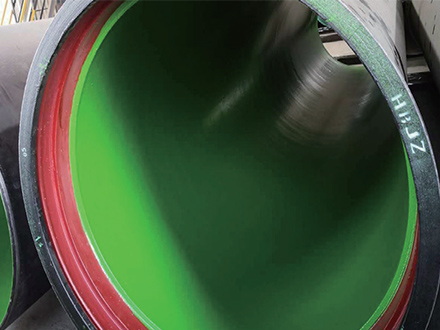 Special Coating Pipe (Ductile Iron Pipe with Special Coatings)
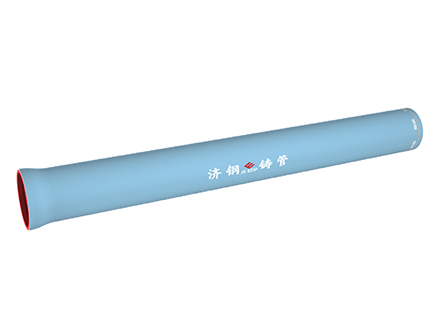 Dragging Pipe (Ductile Iron Dragging Pipe)