

What Are Ductile Iron Pipe Fittings? Types, Standards & Uses
Ductile Iron Pipe Fittings: Types, Benefits, and Applications
Meta Description:
Discover everything about ductile iron pipe fittings (also searched as fittings ductile iron pipe), including types, technical specifications, advantages, and applications. Learn why ductile iron fittings are widely used in water supply, sewage, and industrial piping systems.
Introduction
When designing durable, reliable, and long-life pipeline systems, ductile iron pipe fittings are widely regarded as one of the most dependable solutions.
Often searched as fittings ductile iron pipe, these components play a critical role in municipal water supply, sewage networks, irrigation systems, and industrial pipelines.
Compared with traditional cast iron or steel fittings, ductile iron fittings offer superior mechanical strength, excellent corrosion resistance, and long-term dimensional stability. This guide provides a comprehensive overview of ductile iron pipe fittings, covering their types, manufacturing standards, performance characteristics, and real-world applications—helping engineers, contractors, and project owners make informed decisions.
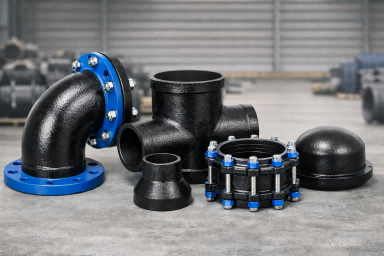
What Are Ductile Iron Pipe Fittings Used For?
Ductile iron pipe fittings are components used to connect, redirect, branch, reduce, or terminate ductile iron pipelines. Manufactured from ductile cast iron with a spheroidal graphite structure, they combine high strength with controlled flexibility.
These fittings are designed to:
Change pipeline direction
Create branch connections
Transition between different diameters
Enable secure mechanical or flanged joints
Maintain leak-tight performance under pressure
They are produced in accordance with international standards such as ISO 2531, EN 545, EN 598, and AWWA, ensuring compatibility, safety, and long-term reliability in demanding environments.
What Types of Ductile Iron Pipe Fittings Are Available?
Ductile iron pipe fittings are available in a wide range of configurations to suit different pipeline layouts and operating conditions.
1. Elbows
Used to change pipeline direction, commonly in:
90°, 45°, 30°, and 22.5° angles
Long-radius and short-radius designs
Elbows are widely used in water transmission mains and industrial pipelines where flow direction changes are required.
2. Tees
Designed for branching pipelines:
Equal tees
Reducing tees
Tees with flanged or mechanical joint branches
3. Reducers
Allow smooth transitions between different pipe diameters:
Concentric reducers
Eccentric reducers
4. Caps and Plugs
Used to safely terminate pipe ends during system expansion or maintenance.
5. Collars and Couplings
Provide flexible mechanical joints for alignment correction and pipeline repairs.
6. Flanged Ductile Iron Fittings
Including:
Flanged bends
Flanged tees
Flanged crosses
Flanged reducers
Flanged fittings allow easy installation, dismantling, and maintenance—especially in valve chambers and pump stations.
7. Specialty Fittings
Such as dismantling joints, loose flanges, expansion joints, and anchoring sleeves for complex engineering requirements.
For standard elbows, tees, reducers, and flanged components, ductile iron pipe fittings are commonly supplied in DN80–DN2600 with PN10–PN25 pressure classes for water and sewage applications.
How Are Ductile Iron Pipe Fittings Manufactured?
Manufacturing Process
A widely adopted production method for ductile iron fittings is the vacuum lost foam casting process, which offers:
High dimensional accuracy
Uniform wall thickness
Smooth surface finish with minimal casting defects
Flexibility for customized fittings and complex geometries
This process ensures consistent quality and reliable sealing performance for mechanical and push-on joints.
Chemical Composition of Ductile Iron Fittings
Element | Typical Range |
Carbon (C) | 3.5% – 4.0% |
Silicon (Si) | 1.8% – 2.6% |
Manganese (Mn) | ≤ 0.40% |
Phosphorus (P) | ≤ 0.08% |
Sulfur (S) | ≤ 0.02% |
Magnesium (Mg) | 0.04% – 0.08% |
What Are the Mechanical Properties of Ductile Iron Pipe Fittings?
Property | Typical Value |
Tensile Strength | ≥ 420 MPa |
Elongation | ≥ 5% |
Brinell Hardness | ≤ 250 HB |
These properties allow ductile iron fittings to withstand high internal pressure, soil loads, and external impacts commonly encountered in underground pipelines.
What Pressure Ratings Do Ductile Iron Pipe Fittings Support?
Ductile iron pipe fittings are hydrostatically tested according to nominal diameter:
Nominal Diameter (DN) | Test Pressure (bar) |
DN 80 – 300 | 25 |
DN 350 – 600 | 16 |
DN 700 – 2600 | 10 |
This ensures fittings meet or exceed operational pressure requirements for long-term service.
Why Choose Ductile Iron Pipe Fittings Over Other Materials?
1. High Strength and Impact Resistance
Ductile iron fittings offer superior mechanical strength compared to grey cast iron, reducing the risk of cracking or brittle failure.
2. Excellent Corrosion Resistance
Protective coatings such as:
Epoxy coating
Cement mortar lining
Bitumen coating
Zinc or zinc-aluminum alloy coating
significantly extend service life in aggressive soils and water conditions.
3. Wide Compatibility
Ductile iron pipe fittings are compatible with:
Push-on joints
Mechanical joints
Flanged connections
allowing flexible system design.
4. Easy Installation and Maintenance
Standardized dimensions and joint designs enable fast, leak-tight installation and simplified maintenance.
5. Long Service Life
With proper installation and corrosion protection, ductile iron fittings typically achieve service lives exceeding 50 years.
Where Are Ductile Iron Pipe Fittings Commonly Used?
Municipal Water Supply Systems – elbows, tees, and flanged fittings for distribution networks
Sewage and Wastewater Pipelines – corrosion-resistant fittings for underground installations
Industrial Plants – high-pressure fittings for chemical and power facilities
Irrigation Systems – durable fittings for agricultural pipelines
Firefighting Networks – robust fittings capable of handling pressure surges
How to Install and Maintain Ductile Iron Pipe Fittings Correctly?
Installation Best Practices
Ensure accurate alignment to prevent gasket damage
Tighten flange bolts using a star pattern with recommended torque
Apply EPDM-compatible lubricant to joints
Install thrust blocks at directional changes
Maintenance Guidelines
Inspect bolts, flanges, and coatings periodically
Re-check bolt torque after commissioning
Repair damaged coatings promptly
Keep maintenance records for asset management
What Standards and Certifications Apply to Ductile Iron Pipe Fittings?
Ductile iron pipe fittings comply with multiple international standards:
ISO 2531 – Water pipeline systems
EN 545 – Water supply applications
EN 598 – Sewage systems
AWWA C110 / C153 – American standards
ISO 4633 – Rubber gaskets
NSF/ANSI 61 – Potable water safety
ISO 9001 & ISO 14001 – Quality and environmental management
How to Select the Right Ductile Iron Pipe Fittings for Your Project?
When selecting fittings, consider:
Required pressure class (PN10, PN16, PN25)
Nominal diameter compatibility
Soil and fluid corrosion conditions
Joint type and installation method
Operating temperature and chemical exposure
Working with an experienced ductile iron pipe fittings manufacturer helps ensure correct material grades, coating systems, and joint compatibility—especially for municipal and export projects.
Frequently Asked Questions About Ductile Iron Pipe Fittings
Q1: What is the difference between ductile iron pipe fittings and cast iron fittings?
Ductile iron fittings offer higher strength, better impact resistance, and improved ductility compared to traditional grey cast iron fittings.
Q2: Are ductile iron pipe fittings suitable for high-pressure applications?
Yes. They are widely used in high-pressure water transmission and industrial pipelines.
Q3: What coatings are available for ductile iron pipe fittings?
Common coatings include epoxy, cement mortar lining, bitumen, and zinc-based external protection.
Q4: Can ductile iron pipe fittings be customized?
Yes. Many manufacturers offer customized dimensions, coatings, and joint configurations.
Q5: How long do ductile iron pipe fittings last?
Properly installed fittings typically last over 50 years.
Conclusion
Ductile iron pipe fittings are essential components of modern pipeline systems, offering exceptional strength, corrosion resistance, and versatility. Their compliance with international standards and proven performance make them the preferred choice for water supply, sewage, and industrial applications.
Understanding the available types, technical specifications, and selection criteria ensures reliable, leak-free pipeline performance throughout the system’s lifecycle.
Looking for Reliable Ductile Iron Pipe Fittings?
Explore our full range of ductile iron pipe fittings designed for water, sewage, and industrial pipelines.
Our products support standard and customized solutions to meet project-specific requirements worldwide.
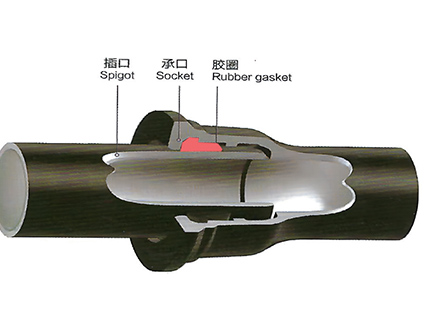 GT-type Joint Ductile Iron Pipe
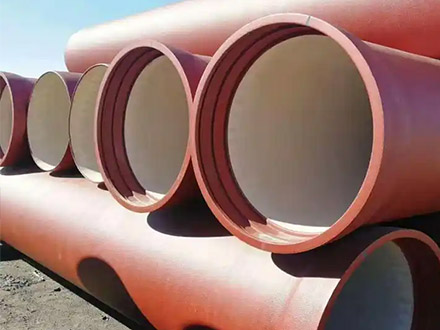
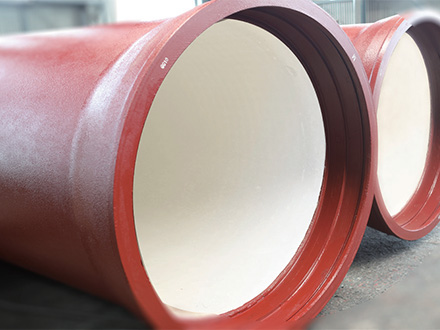 Sewage Pipe (Ductile Iron Sewage Pipe)
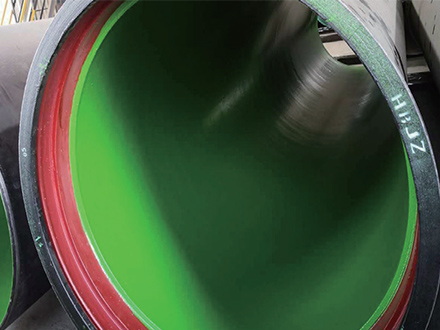 Special Coating Pipe (Ductile Iron Pipe with Special Coatings)