

What Is Cement Lined Ductile Iron Pipe (CLDIP)? A Complete Overview
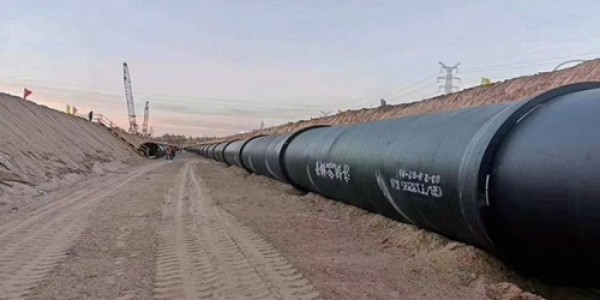
Cement lined ductile iron pipe (CLDIP) stands as a cornerstone in modern piping infrastructure, merging the exceptional mechanical strength of ductile iron with the superior protective performance of cement mortar lining. Since its first application in Charleston, South Carolina in 1922, this piping solution has evolved into a preferred choice for municipal, industrial, and environmental engineering projects worldwide. This overview delves into its core characteristics, key advantages, application scenarios, selection criteria, relevant standards, and market trends to provide a holistic understanding of this critical infrastructure component.
1. What Is the Core Structure and Manufacturing Process of CLDIP?
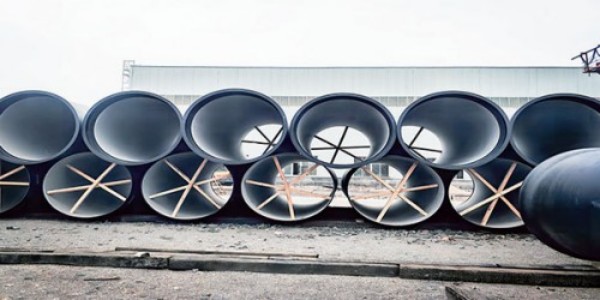
CLDIP features a three-layer composite structure designed for durability and performance:
Ductile Iron Substrate: The outer layer, made of ductile iron (a nodular graphite cast iron alloy), provides high tensile strength (minimum yield strength of 42,000 psi) and impact resistance. Its inherent flexibility allows it to adapt to ground settlement and external loads, reducing the risk of cracking.
Cement Mortar Lining: The inner protective layer, typically applied via centrifugal casting under controlled conditions, serves as a corrosion barrier and flow optimizer. Made of Portland cement (grade ≥ 425) and inert fine sand (with specific sieve size requirements), the lining has a compressive strength of no less than 50 MPa and a surface roughness coefficient (n) ≤ 0.012, ensuring efficient water flow.
Among the three-layer structure, the external coating is crucial for enhancing the pipe's corrosion resistance in underground environments. If you want to learn more about ductile iron pipe coatings, you can check our core page:External Coating of Ductile Iron Pipes.
External Coating: An optional but common outer layer (e.g., zinc coating + asphalt or epoxy powder) provides additional protection against soil corrosion, extending the pipe's service life in harsh underground environments.
The manufacturing process involves centrifugal casting of the ductile iron pipe followed by precise application and curing of the cement mortar lining. This ensures uniform thickness of the lining—critical for consistent performance across the pipe's length.
2. What Advantages Does CLDIP Have Over Other Piping Materials?
CLDIP's unique combination of materials grants it distinct advantages over other common piping materials such as PVC, HDPE, steel, and concrete cylinder pipe (CCP):
Exceptional Durability & Longevity: With a service life exceeding 100 years, CLDIP offers unparalleled long-term value for infrastructure investments. Its resistance to corrosion, abrasion, and extreme temperatures (up to 212°F for standard cement lining) outperforms plastic alternatives, which are prone to thermal degradation and UV damage.
Superior Hydraulic Performance: CLDIP's internal diameter is larger than that of same-nominal-size PVC, HDPE, steel, and CCP pipes. This results in lower head loss, reducing pumping energy consumption significantly. For example, a 24-inch CLDIP has a 0.95-inch larger internal diameter than steel/CCP, translating to substantial annual energy savings.
High Pressure & Safety Margin: Designed based on ductile iron's minimum yield strength (42,000 psi), CLDIP maintains a safety factor of 2.0 regardless of surge pressures. In contrast, steel and CCP see their safety factors drop to as low as 1.33 under surge conditions. PVC and HDPE have much lower hydrostatic design bases (4,000 psi and 1,600 psi, respectively), requiring thicker walls that reduce flow capacity.
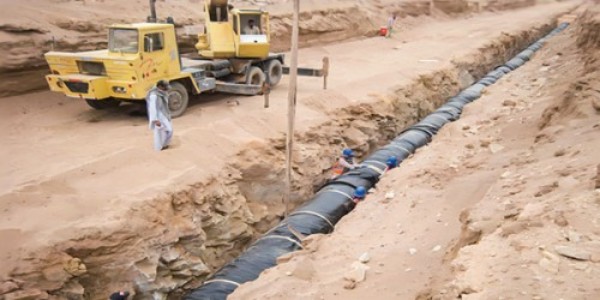
Cost-Effective Installation & Maintenance: Its inherent strength allows for shallow burial depths, reducing excavation and installation costs. Flexible joints (e.g., T-type, K-type) accommodate ground movement and simplify on-site adjustments. The low-maintenance cement lining prevents tuberculation (rust buildup), eliminating the need for frequent cleaning or replacement.
Environmental & Health Safety: The cement lining is inert and does not leach harmful substances into potable water, meeting strict health standards (e.g., GB/T 17219 in China). Unlike plastic pipes, CLDIP is fire-resistant and recyclable, aligning with sustainable infrastructure goals.
3. What Are the Application Scenarios and Selection Criteria of CLDIP?
3.1 Primary Applications
CLDIP's versatility makes it suitable for a wide range of fluid transport systems:
Municipal Water Supply: Ideal for potable water distribution and transmission lines, where water quality and long-term reliability are paramount.
Wastewater Management: Used in sewage collection and treatment systems, thanks to its corrosion resistance to organic and inorganic contaminants.
Industrial Applications: Suitable for transporting industrial water, chemicals (within pH limits), and slurries, leveraging its abrasion resistance.
Infrastructure Projects: A key component in urban comprehensive utility corridors, rural water conservancy projects, and flood control systems.
3.2 Critical Selection Factors
Scientific selection of CLDIP requires consideration of multiple engineering and environmental factors, which are summarized in the following table:
Parameter Categories | Medium Characteristics | Operating Conditions | Installation Environment | Interface Type | Life-Cycle Cost |
Key Considerations | Temperature, pH value, corrosive components, and solids content of the transported fluid | Design pressure, flow rate, and surge pressure requirements | Soil type, corrosion potential, groundwater level, and external loads | Joint type selection for different application scenarios | Procurement, installation, maintenance, and energy consumption costs |
Reference Parameter Ranges | Temperature: 0-60℃ (standard lining); pH: 6.5-8.5 (optimal); Sulfides: ≤0.5 mg/L; Chlorides: ≤200 mg/L (potable water); Solids content: ≤50 mg/L (for non-slurry media) | Design pressure: 0.6-2.5 MPa (common range); Flow rate: 0.6-3.0 m/s (energy-saving range); Surge pressure: ≤1.5 times design pressure (with pressure relief devices) | Soil corrosion grade: ≤C2 (mild corrosion) for standard coating; Groundwater level: ≥0.5m below pipe bottom (without anti-float measures); External static load: ≤100 kN/m (for DN300-DN1200 pipes) | T-type/K-type flexible joints: Applicable to pressure ≤2.0 MPa, temperature ≤60℃; Flange joints: Applicable to pressure ≤2.5 MPa, temperature ≤80℃ (with heat-resistant gaskets) | Investment recovery period: ≤15 years (municipal projects); Annual maintenance cost: ≤1% of initial procurement cost; Energy consumption: ≤0.3 kWh/(m³·km) (water transmission) |
4. What Are the Relevant Standards and Specifications for CLDIP?
CLDIP manufacturing and application are governed by strict international and national standards to ensure quality and safety:
International Standards: ANSI/AWWA C151/A21.51 (pipe manufacturing), ANSI/AWWA C104/A21.4 (cement lining), and ISO 2531 (ductile iron pipes and fittings).
Chinese Standards: CJ/T 161—2002 (cement-lined centrifugal ductile iron pipes), GB/T 26081-2022 (ductile iron pipes for drainage), and GB/T 11836-2025 (updated standards for pipe impermeability and durability, with 20% higher indicators).
Key Quality Requirements: Zinc coating weight (minimum 110 g/m² for sprayed zinc), cement lining thickness (varies by pipe diameter), and hydrostatic/airtightness testing (test pressure ≥ 0.6 MPa for gas transport).
5. What Are the Global Market Trends and Industry Dynamics of CLDIP (2024-2025)?
The global CLDIP market is experiencing structural changes driven by infrastructure investment and environmental policies:
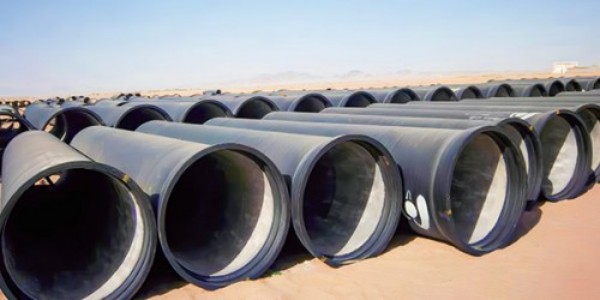
Market Scale & Regional Dominance: The global cement pipe market exceeded $21 billion in 2024, with China contributing over 40% of the total. China's production capacity accounts for 58% of the global total, leading the supply chain.
Growth Engines: Developing countries' infrastructure investment (growing at 6% annually) and urban comprehensive utility corridor construction (China added over 3,000 km of new corridors in 2025) are driving demand for large-diameter CLDIP (3+ meters), with orders increasing by 34%.
Technological Innovation: Global patent applications for cement pipes grew by 12% annually, with 54% coming from China, focusing on intelligent manufacturing and eco-friendly materials. Digital factory coverage in China reaches 65%, 19 percentage points above the global average.
Policy Impact: China's 2025 mandatory standard (GB/T 11836-2025) and requirement for 30% recycled aggregate use are accelerating industry upgrading and phasing out backward production capacity. Export growth is robust, with China's Q1 2025 exports up 15% year-on-year, primarily to African infrastructure projects.
Competitive Landscape: The global top 5 manufacturers hold 39% of the market share. Chinese enterprises are expanding in Southeast Asia through overseas mergers and acquisitions, while high-end special pipes still rely on German and Japanese technology.
6. Why Is CLDIP Indispensable for Modern Infrastructure?
Cement lined ductile iron pipe remains an indispensable choice for modern infrastructure due to its durability, hydraulic efficiency, safety, and environmental compatibility. Its ability to balance long-term performance and life-cycle cost makes it particularly valuable in municipal and industrial projects. As global infrastructure investment intensifies and technological innovations advance, CLDIP is poised to play an even more critical role in sustainable water management and urban development. Understanding its core characteristics, selection criteria, and market trends is essential for engineers, policymakers, and investors seeking reliable and cost-effective piping solutions.
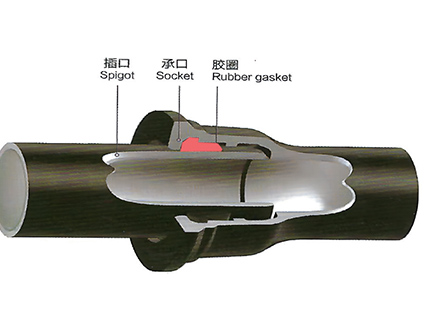 GT-type Joint Ductile Iron Pipe
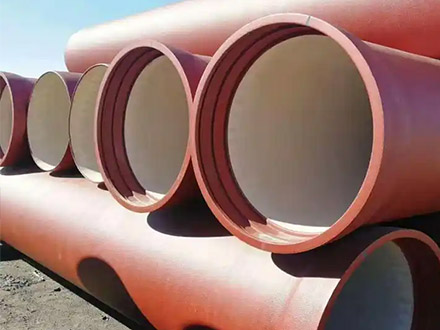
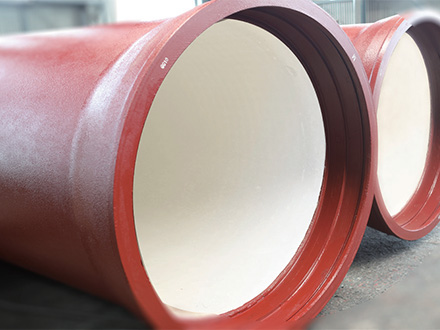 Sewage Pipe (Ductile Iron Sewage Pipe)
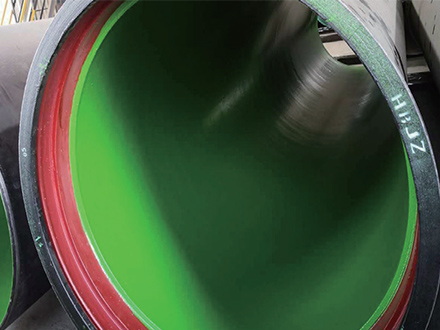 Special Coating Pipe (Ductile Iron Pipe with Special Coatings)