

Ductile Iron Pipe for Saudi Vision 2030 and NEOM: Water Infrastructure Sourcing
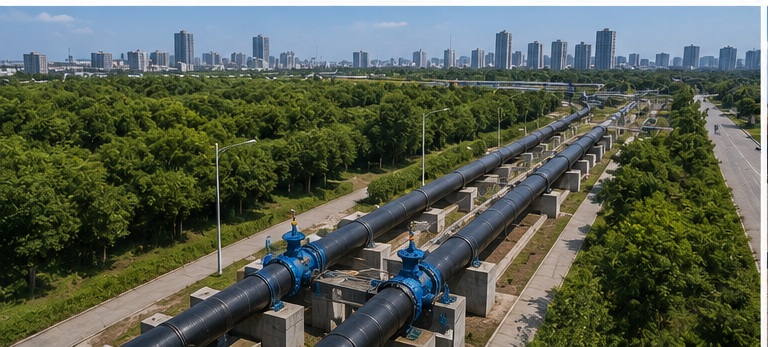
Saudi Arabia's Vision 2030 has turned water infrastructure into one of the region's largest and steadiest pipe markets. Beyond Riyadh and Jeddah, the giga-projects — NEOM, the Red Sea Project, Qiddiya, and the Riyadh growth catchment — are building desalination, transmission, district, and reuse networks from the ground up. Ductile iron pipe (DIP) sits in the specification for much of this work because it carries high head, tolerates surge, and survives the Kingdom's saline soil and heat. Our DIP solutions page outlines the diameters and classes behind these applications.
Why the demand is structural
The opportunity is not a single wave of orders. Saudi plans to expand desalination capacity, add transmission mains to new growth corridors, and extend sewer and treated-sewage-reuse networks that reach both cities and remote sites. Each layer needs a different pipe: large transmission in DIP or GRP, distribution in DIP, and industrial and process lines tied to utilities and mining. The hydraulic performance note explains why bore smoothness and pumping energy matter once networks run at this scale.
What Vision 2030 packages specify
These packages are written to international product norms — ISO 2531, EN 545, EN 598, and AWWA C151 for DIP — with Saudi conformity evidence (SASO/SABER) attached to the delivery. The standards and certification page ties the product norm to the documentation Gulf authorities expect. Pressure class is set from worst-case surge, not just static head; the water-hammer guide shows how class and surge are fixed together before the BOQ is issued.
Soil, coating, and the buried zone
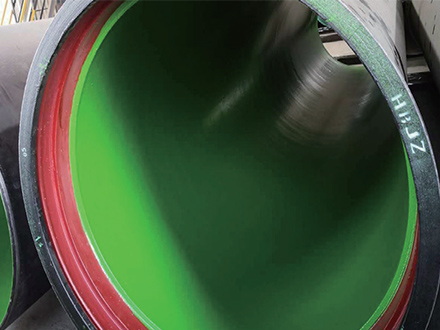
Much of the new build sits on sabkha, dune, and coastal soils that are saline, warm, and often wet. DIP's protection is built up with a zinc + bitumen or PE sleeve externally and a cement or epoxy lining internally; the saline soil corrosion guide and the external coating comparison cover the choices by burial zone. Specified this way, DIP delivers the decades-long life the design assumes rather than the short life an unprotected ferrous surface would give in Gulf ground.
NEOM as a greenfield build
NEOM is a clean-sheet development — a linear city, ports, desalination, and industrial zones with no legacy network to retrofit. That profile suits DIP: long transmission runs, high head between desalination and demand centres, and trenchless crossings under roads and wadis. The flexible joint deflection guide shows how DIP handles settlement and alignment on fresh, shifting ground. Mining and industrial offshoots also pull DIP for slurry and process water, covered in our mining applications note.
Procurement is as much compliance as price
Winning Vision 2030 work depends on the bid as much as the unit rate. Bidders answer detailed tenders with the material, lining, joint type, and standard written in; the tender specification guide shows how to make bids comparable across suppliers. In-Kingdom Total Value Add (IKTVA) and local-content rules shape who can supply and on what terms, so a sourcing partner must show traceable mills, inspection, and delivery — not just a number on a page.
The document and inspection file
On these projects the paperwork carries as much weight as the pipe. Each consignment needs mill test certificates, coating certificates, and third-party inspection where the specification calls for it; the supplier document checklist and the pre-shipment inspection note keep the evidence line straight. The dimensions and pressure class page confirms what the certificate must state for every ordered diameter and class.
Getting pipe to site
Delivery runs through Saudi ports and break-bulk handling — Dammam and Jubail on the east, Jeddah on the west, and the north-west coast that serves NEOM. The export shipping note covers the port, break-bulk, and customs flow for Gulf delivery. Lead time, not only freight cost, decides whether a critical-path activity stays open, so the delivery window belongs in the bid from the start.
Buyer's checklist for Vision 2030 and NEOM
Before bidding a Saudi giga-project package, confirm: (1) the product standard and the SASO/SABER conformity route, (2) diameters and pressure class derived from worst-case surge, (3) lining and external protection matched to the soil, (4) joint type and any trenchless crossing, (5) the document and inspection file the spec requires, and (6) the delivery window to the destination port. Writing these into the bid stops a low price from hiding a pipe that cannot clear customs or meet the duty. Inquire about specifications and pricing →
Frequently asked questions
Which Saudi projects use the most ductile iron pipe?
The giga-projects and the national water programmes together drive the bulk of demand. NEOM, the Red Sea Project, Qiddiya, and Riyadh's expansion need desalination, transmission, and distribution networks built at the same time. Treated-sewage-reuse and industrial lines add a further steady layer of orders across the Kingdom.
What standards must DIP meet for Saudi Vision 2030 work?
Projects are written to ISO 2531, EN 545, EN 598, or AWWA C151 for the product, plus Saudi conformity evidence through SASO/SABER. The exact norm depends on the utility and the package, so the tender should name it explicitly rather than leave it open. Conformity documents travel with the pipe, not weeks after it.
Does NEOM's greenfield design favour DIP over other materials?
NEOM's long transmission runs, high head, and trenchless crossings suit DIP and GRP, while HDPE stays in low-pressure and sliplining roles. DIP's surge tolerance and easy repair matter most where there is no legacy network to fall back on. The final choice still follows each service line, not the project brand.
How do local-content (IKTVA) rules affect pipe sourcing?
IKTVA and related local-content requirements shape supplier eligibility and scoring, so a bidder must show traceable mills, inspection, and in-Kingdom capability. A sourcing partner that only quotes a unit price without the compliance trail will struggle to win the package. Plan the documentation early, before the BOQ closes, not after a bid is lost.
What delivery documents does a Saudi water project expect?
Expect mill test certificates, coating and lining certificates, and third-party inspection reports where the specification calls for them. The file should match the ordered diameters, classes, and linings exactly, with conformity evidence attached to each consignment. Missing or mismatched certificates are a common cause of hold-ups at customs and on site.
Tiegu is a China-based ductile iron pipe sourcing and export partner serving international water infrastructure, wastewater, and industrial projects.
We supply DN80–DN2600 ductile iron pipes and fittings manufactured according to ISO 2531, EN 545, EN 598, and AWWA standards, with cement mortar lining, epoxy lining, and various external coating options.
From technical specification confirmation and supplier coordination to quality inspection, export documentation, and logistics support, Tiegu provides a reliable one-stop sourcing solution under a single commercial contract.
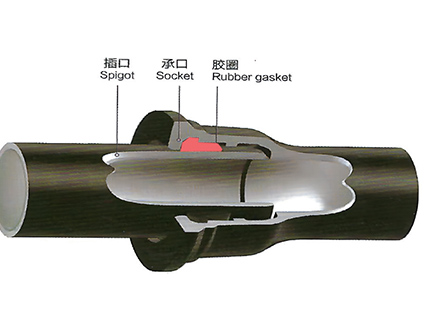 GT-type Joint Ductile Iron Pipe
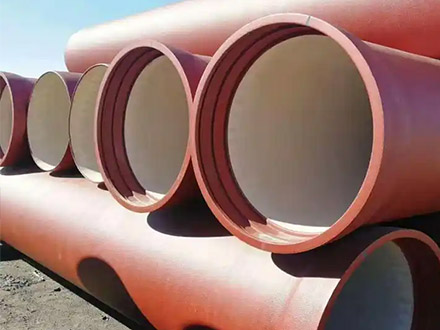
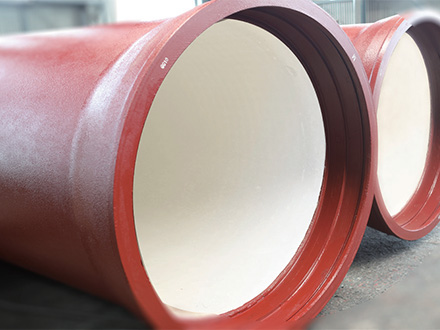 Sewage Pipe (Ductile Iron Sewage Pipe)
 Special Coating Pipe (Ductile Iron Pipe with Special Coatings)