

Ductile Iron Pipe Fittings for Water Supply Systems: Types, Standards, and Applications
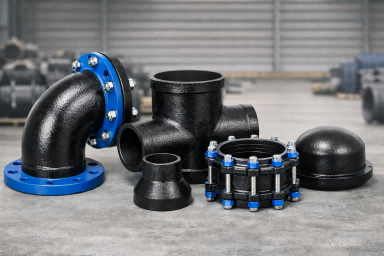
Reliable water supply systems depend not only on high-quality pipes, but also on precisely engineered fittings that ensure leak-free connections, pressure stability, and long-term service life.
Ductile iron pipe fittings for water supply are specifically designed to meet the mechanical, hygienic, and corrosion-resistance requirements of potable and clean water infrastructure.
This page focuses exclusively on ductile iron fittings used in drinking water and municipal water distribution systems, covering fitting types, applicable standards, coating options, and engineering considerations.
What Are Ductile Iron Pipe Fittings Used for in Water Supply Systems?
In water supply networks, ductile iron pipe fittings are used to:
Connect straight pipe sections
Change flow direction or pipeline alignment
Adjust pipe diameters
Branch water lines
Terminate or isolate sections of the pipeline
Unlike general-purpose fittings, water supply fittings must comply with potable water regulations and maintain internal cleanliness while withstanding continuous internal pressure.
What Types of Ductile Iron Pipe Fittings Are Used in Water Supply Systems?
Different pipeline layouts require different fitting geometries. The most commonly used ductile iron fittings for water supply include:
Bends and Elbows
Used to change flow direction, typically at 11.25°, 22.5°, 45°, and 90°.
These fittings are critical in urban networks where pipelines must adapt to road layouts and underground obstacles.
Tees and Crosses
Allow water to be distributed to branch pipelines.
Equal tees and reducing tees are widely applied in municipal water distribution zones.
Reducers
Enable smooth transitions between different pipe diameters, minimizing turbulence and pressure loss.
Flanged Fittings
Used in locations where frequent disassembly is required, such as pump stations, valves, and treatment plants.
Mechanical Joint and Push-On Fittings
Designed for fast installation and reliable sealing, especially suitable for long-distance buried water pipelines.
All fittings are engineered to match corresponding ductile iron pipes in terms of pressure rating and dimensional compatibility.
Which Standards Govern Ductile Iron Fittings for Water Supply?
Water supply fittings must follow strict international standards to ensure safety and performance. Commonly applied standards include:
ISO 2531 – Ductile iron pipes, fittings, and joints for water applications
EN 545 – European standard for ductile iron pipelines for potable water
AWWA C110 / C153 – American standards for ductile iron fittings
These standards define dimensions, pressure classes, material grades, testing methods, and coating requirements specific to water supply systems.
What Materials and Coatings Are Used for Water Supply Fittings?
Ductile Iron Material
Water supply fittings are manufactured from spheroidal graphite cast iron, offering:
High tensile strength
Excellent ductility
Superior resistance to impact and ground movement
Internal Linings
To protect water quality and prevent corrosion, common linings include:
Cement mortar lining (ISO-compliant)
Sulphate-resistant cement for aggressive water conditions
External Coatings
Depending on soil conditions and installation environment:
Zinc coating with bituminous or epoxy finishing
Fusion bonded epoxy (FBE)
Polyurethane (PU) for enhanced corrosion protection
Proper coating selection is essential for extending service life in buried water pipelines.
How Are Ductile Iron Fittings Installed in Water Supply Projects?
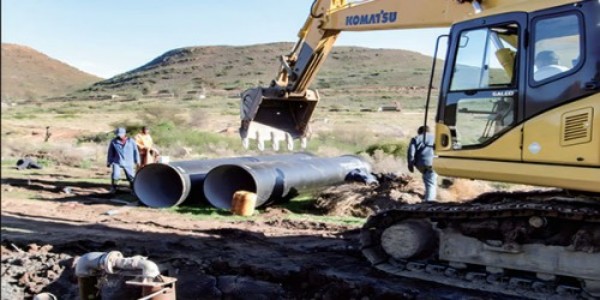
Installation methods vary according to joint type and project requirements.
Key considerations include:
Alignment accuracy to prevent joint stress
Correct gasket placement for leak-free sealing
Torque control for mechanical joints
Hydrostatic pressure testing after installation
When properly installed, ductile iron fittings form a fully integrated system with pipes and joints, ensuring long-term operational stability.
How Do Ductile Iron Fittings Integrate into Complete Water Pipeline Solutions?
Ductile iron fittings are not standalone components. They function as part of complete ductile iron water supply pipeline solutions, working together with:
Ductile iron pipes
Pipe joints and couplings
Valves and connection accessories
An integrated system approach ensures compatibility, reduces installation risk, and simplifies long-term maintenance of municipal water networks.
Are These Fittings Suitable Only for Water Supply?
While ductile iron fittings can also be adapted for sewage or industrial pipelines, this page specifically addresses fittings designed for potable and clean water supply applications, where hygiene standards, internal linings, and coating performance are critical.
For non-water applications, different standards and protection systems may apply.
Why Choose Ductile Iron Pipe Fittings for Water Supply Infrastructure?
Ductile iron fittings remain a preferred choice for water supply projects because they offer:
Long service life exceeding 50 years
High pressure and surge resistance
Proven performance in municipal environments
Compatibility with global pipeline standards
These advantages make them suitable for urban water distribution, transmission mains, and regional drinking water networks.
Conclusion
Ductile iron pipe fittings play a vital role in ensuring the safety, reliability, and durability of water supply systems.
By selecting fittings that meet international water standards, applying appropriate coatings, and integrating them into complete pipeline solutions, project owners can achieve stable and cost-effective water infrastructure for decades of service.
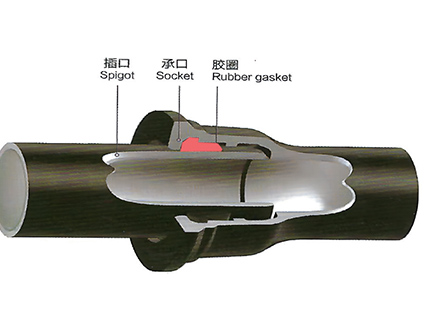 GT-type Joint Ductile Iron Pipe
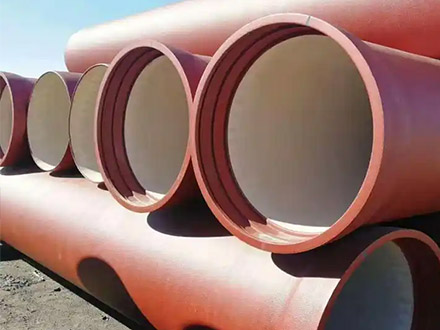
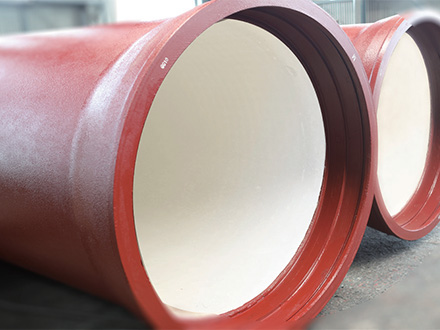 Sewage Pipe (Ductile Iron Sewage Pipe)
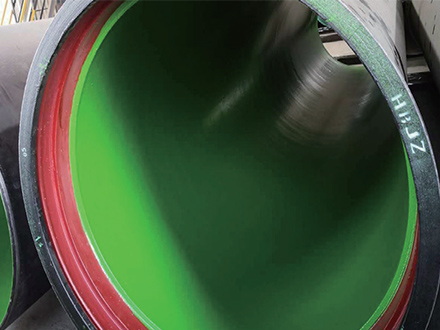 Special Coating Pipe (Ductile Iron Pipe with Special Coatings)