

The Role and Process of Third-Party Testing in Ductile Iron Pipe Quality Certification
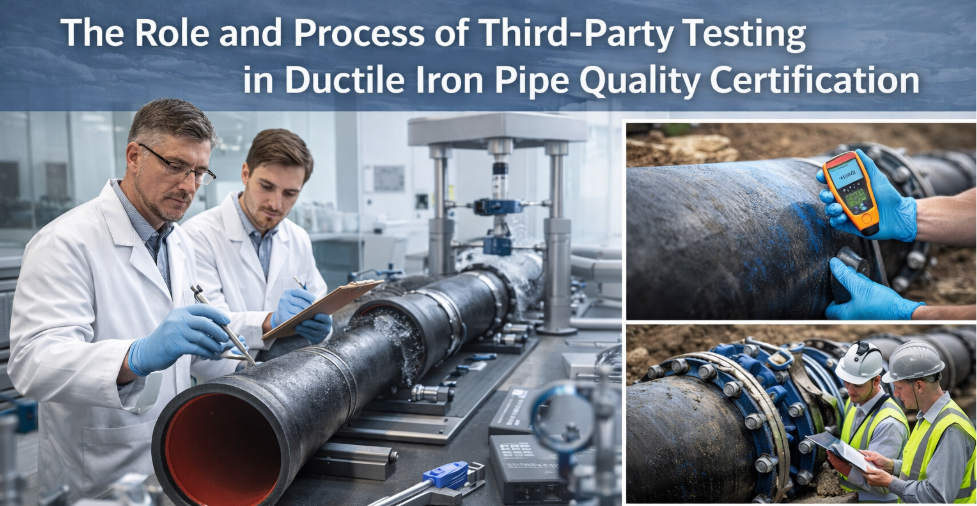
The Role and Process of Third-Party Testing in Ductile Iron Pipe Quality Certification
1. Introduction
Ductile iron pipes are widely used in municipal water supply, industrial pipelines, and infrastructure projects worldwide due to their high strength, corrosion resistance, and long service life. Ensuring their quality is essential for pipeline safety and project reliability.
Third-party testing plays a crucial role in quality certification, providing impartial, accurate, and authoritative verification of ductile iron pipe performance.
2. Why Third-Party Testing Is Important
Third-party testing is conducted by independent laboratories that are not affiliated with the manufacturer or contractor. Its importance includes:
-
Objectivity – Ensures unbiased assessment of mechanical properties, dimensions, and coating quality.
-
Compliance Verification – Confirms compliance with national and international standards such as GB/T 13295, ISO 2531, EN 545, and other applicable regulations.
-
Risk Mitigation – Detects potential defects before installation, reducing the risk of leaks, ruptures, or premature failure.
-
Market Credibility – Independent certification enhances confidence for clients, international projects, and government tenders.
In short, third-party testing acts as an essential safeguard for pipeline integrity and long-term service reliability.
3. Key Testing Items in Ductile Iron Pipes
A comprehensive third-party test covers multiple aspects of ductile iron pipe quality, typically including:
3.1 Material Properties
-
Tensile strength, yield strength, and elongation – Ensures the pipe can withstand internal pressure and external loads.
-
Microstructure examination – Confirms nodular graphite formation and matrix structure (ferrite/pearlite ratio).
-
Hardness and impact resistance – Verifies durability and resistance to mechanical stress.
3.2 Dimensional Accuracy
-
Outside diameter, wall thickness, and straightness – Ensures proper assembly and hydraulic performance.
-
Socket/joint geometry – Critical for sealing and connection reliability.
3.3 Pressure Testing
-
Hydrostatic pressure test – Checks pipe integrity under nominal and maximum working pressure.
-
Leakage and burst testing – Confirms the pipe can handle system pressure without leaks or rupture.
3.4 Corrosion Protection
-
External coating inspection – Zinc layers, bitumen, or PE coatings evaluated for thickness, adhesion, and uniformity.
-
Internal lining inspection – Cement mortar or epoxy linings assessed for smoothness, thickness, and absence of defects.
3.5 Joint and Gasket Testing
-
Sealing performance – Verifies no leakage under pressure and slight axial movement.
-
Gasket material durability – Ensures long-term performance in various water qualities.
4. Typical Third-Party Testing Process
The standard workflow for third-party testing of ductile iron pipes usually includes the following steps:
Step 1: Sample Collection
-
Representative samples are selected from production batches.
-
Sampling methods comply with ISO 2859-1 or relevant national standards.
Step 2: Documentation Review
-
Certificates of material origin, production process records, and manufacturer test reports are collected.
-
Ensures traceability and compliance with technical requirements.
Step 3: Laboratory Testing
-
Mechanical, dimensional, coating, and pressure tests are conducted.
-
Advanced tools such as calipers, tensile testing machines, and hydrostatic test rigs are used.
Step 4: Evaluation and Reporting
-
Test results are analyzed against the applicable standards (e.g., ISO 2531, GB/T 13295).
-
Non-conformities are highlighted, and recommendations for corrective actions are provided.
Step 5: Certification
-
If all criteria are met, the laboratory issues a third-party test certificate, which serves as an independent validation of pipe quality.
-
This certificate is often required for project acceptance, export clearance, and international tenders.
5. Advantages of Third-Party Testing in Practice
-
Enhances Safety – Independent verification reduces risk of pipeline failures.
-
Strengthens Market Confidence – Clients and regulators trust certified pipes.
-
Supports Standard Compliance – Ensures all manufacturing and material requirements are met.
-
Reduces Long-Term Costs – Prevents installation of defective pipes, minimizing maintenance and replacement expenses.
6. Conclusion
Third-party testing is more than a formality; it is a critical component of ductile iron pipe quality assurance. From material verification to pressure testing, coating inspection, and joint evaluation, third-party laboratories ensure:
-
Compliance with international and national standards
-
Reliability and durability of water supply systems
-
Reduced risks for construction, operation, and long-term maintenance
For manufacturers, investors, and project owners, adopting third-party testing is a strategic decision that guarantees the safety, performance, and credibility of ductile iron pipelines.
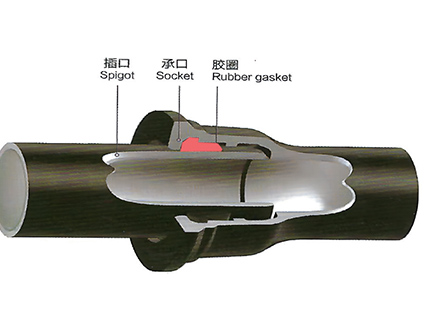 GT-type Joint Ductile Iron Pipe
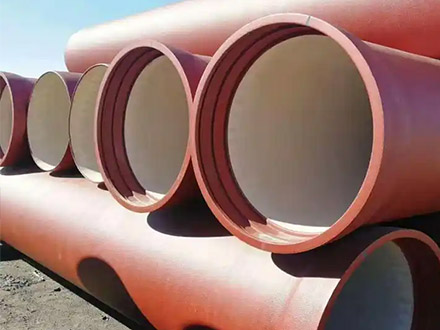
 Sewage Pipe (Ductile Iron Sewage Pipe)
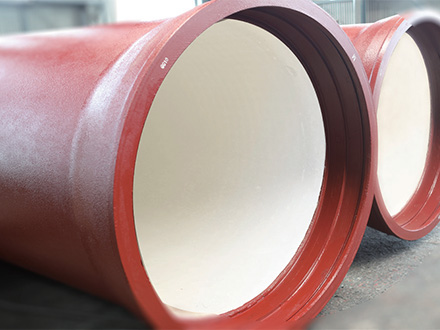
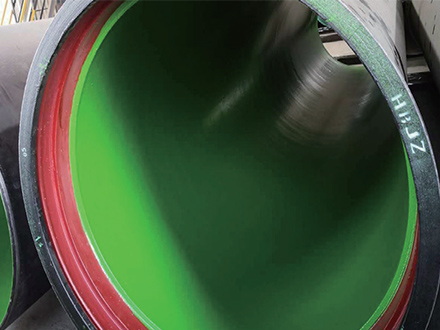 Special Coating Pipe (Ductile Iron Pipe with Special Coatings)