

South Africa Water Pipeline Projects: Complete Guide 2026
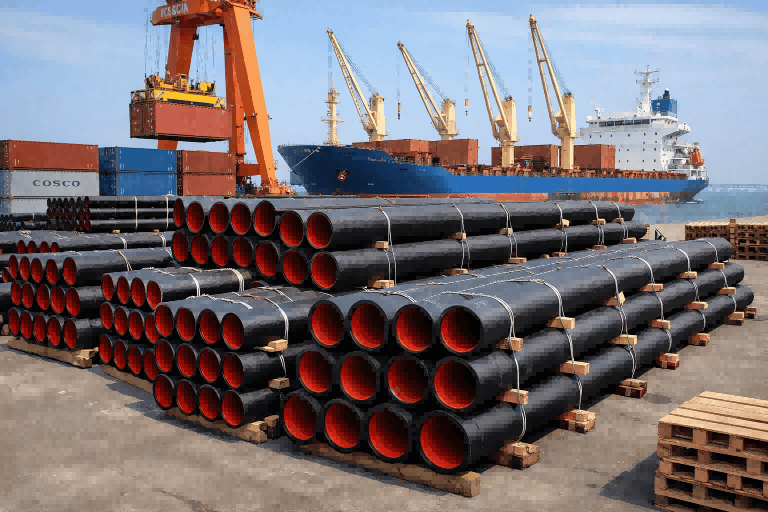
1. Why South Africa's Water Infrastructure Market Matters
South Africa's water infrastructure sector is one of the most active and complex markets in sub-Saharan Africa. The country faces significant water scarcity challenges — annual renewable water resources per capita are approximately 1,200 cubic meters, well below the global water stress threshold of 1,700 cubic meters. This scarcity drives continuous investment in bulk water transmission systems, municipal distribution networks, and rural water supply schemes.
For international pipe suppliers and EPC contractors, understanding the South African market is essential for successful project execution. The market is characterized by strict quality standards (SABS certification for government projects), diverse project types (bulk transmission, municipal distribution, rural schemes), and unique logistical challenges (long ocean transit distances from major manufacturing hubs in China, Europe, and India).
The South African government has committed significant funding to water infrastructure through the Department of Water and Sanitation's Water Infrastructure Development Acceleration program. Key projects include the Lesotho Water Phase II project, the Mzimvubu Water Project, and numerous municipal water main rehabilitation programs across Gauteng, KwaZulu-Natal, and Western Cape provinces.
For procurement teams and project engineers, this means a steady pipeline of opportunities — but also increased competition and higher quality expectations. Selecting the right pipe material, verifying supplier capabilities, and coordinating logistics effectively are critical differentiators for project success.
Key Takeaway: South Africa's water infrastructure market offers significant opportunities for DI pipe suppliers and EPC contractors, but success requires understanding local standards, project types, and logistical requirements. Common Problems in Ductile Iron Pipe Projects & How to Avoid Them
2. Material Selection: DI Pipe vs HDPE vs PVC
Selecting the right pipe material is the most critical decision in any water pipeline project. The wrong material choice can result in premature failures, excessive maintenance costs, and costly replacements within the project lifecycle. For South African water projects, three materials compete for market share: ductile iron (DI) pipe, HDPE pipe, and PVC pipe.
Ductile iron pipe (DI pipe) is the standard material for municipal water mains requiring DN200+ diameters and PN16+ pressure ratings. It delivers 50-100+ year service life with near-zero maintenance cost when specified with correct external protection. DI pipe's high tensile strength (420-550 MPa), impact resistance, and proven joint integrity make it the preferred choice for high-pressure, large-diameter applications.
HDPE pipe is suitable for low-pressure applications (PN6-PN10), trenchless installation (HDD), and highly corrosive soil conditions. Its flexibility and inherent chemical resistance make it ideal for specific applications, but its 30-50 year service life and susceptibility to creep deformation limit its use in high-pressure municipal water mains.
PVC pipe is limited to small-diameter (DN20-DN100), low-pressure (PN6-PN10) distribution networks. While PVC offers low initial purchase cost and easy installation, its 20-30 year service life, brittleness, and higher failure rate make it unsuitable for municipal water mains and bulk transmission applications.
Key Takeaway: Material selection should be based on pressure requirements, diameter range, soil conditions, and total cost of ownership — not just initial purchase cost. Read our complete Ductile Iron Pipe vs HDPE: Which Is Better for South Africa Water Infrastructure?
3. Standards & Compliance: ISO 2531 & SANS 14394
South Africa's water infrastructure projects must comply with specific standards that govern pipe manufacturing, testing, and installation. The two primary standards are ISO 2531 (international standard) and SANS 14394 (South African national standard).
ISO 2531 is the international standard for ductile iron pipes, fittings, and accessories for water applications. It specifies requirements for pipe dimensions, pressure classes (K7, K8, K9, K10, K12), cement mortar lining, external coating (zinc + bitumen), and hydrostatic testing. ISO 2531 is recognized globally and is the default standard for most international pipe procurement.
SANS 14394 is the South African national standard for ductile iron pipes and fittings for water and gas applications. It is substantially equivalent to ISO 2531 but includes additional requirements specific to South African market conditions, including SABS certification for government-funded projects.
For government-funded water infrastructure projects, SABS certification is mandatory. The South African Bureau of Standards (SABS) verifies that pipe manufacturers meet SANS 14394 requirements through factory audits, product testing, and ongoing surveillance. SABS certificates are product-specific — a manufacturer must hold a separate certificate for each product category (DI pipe, HDPE pipe, PVC pipe, etc.).
For international suppliers, obtaining SABS certification requires significant time and investment (typically 6-12 months). Many Chinese manufacturers hold ISO 2531 certification but not SABS certification. For non-government projects (private development, industrial applications), ISO 2531 certification is typically sufficient.
Key Takeaway: ISO 2531 is the international standard for DI pipe; SANS 14394 is the South African national standard requiring SABS certification for government projects. Learn how ISO 2531 and SANS 14394 standards affect South African projects →
4. Project Types & Market Overview
South Africa's water infrastructure market encompasses three primary project types, each with distinct material selection requirements, procurement processes, and quality standards:
Bulk Water Transmission Mains
Large-diameter pipelines (DN600-DN2000) transporting raw or treated water from dams and treatment plants to municipal distribution networks. These are high-pressure, long-distance pipelines (10-100km+) that form the backbone of regional water supply systems. Key players include Rand Water, Umgeni Water, Magalies Water, and the Department of Water and Sanitation.
Typical material: Ductile iron pipe (K9-K12, DN600-DN1400) or steel pipe for very large diameters (DN1400+). DI pipe is preferred for its durability, ease of installation, and proven performance in South African conditions.
Municipal Distribution Networks
Medium-diameter pipelines (DN100-DN600) distributing treated water from bulk transmission mains to residential, commercial, and industrial consumers. These networks operate at lower pressures but cover extensive urban and suburban areas. Key players include City of Johannesburg, eThekwini Municipality, City of Cape Town, and Tshwane Metropolitan.
Typical material: Ductile iron pipe (K9, DN100-DN600) for mains; PVC or HDPE for service connections (DN50-DN100). DI pipe is the standard choice for municipal water mains due to its 50-100 year service life and low maintenance requirements.
Rural Water Supply Schemes
Small to medium-diameter pipelines (DN80-DN400) extending water access to rural and underserved communities. These projects are typically funded through national government programs and municipal infrastructure budgets. Key players include the Department of Water and Sanitation, provincial water authorities, and local municipalities.
Typical material: Ductile iron pipe (K7-K9, DN100-DN400) or HDPE pipe (PE100, SDR 11) for cost-sensitive projects. DI pipe is preferred for its durability and low maintenance, while HDPE is selected for trenchless installation and highly corrosive soil conditions.
Key Takeaway: Understanding project type is essential for material selection, tender specification, and procurement planning. Read our complete SWater Main Pipe Materials: Complete Comparison Guide for Municipal Water
5. Why Municipal Projects Prefer K9 DI Pipe
K9 class ductile iron pipe (PN16, PMA 50 bar) is the default material choice for the majority of South African municipal water projects. This preference is driven by three factors: pressure capacity, service life, and total cost of ownership.
Pressure capacity: K9 class pipe delivers a Maximum Operating Pressure (MOP) of 40 bar and Pressure Maximum Admissible (PMA) of 50 bar, sufficient for 90% of municipal water main applications. The higher pressure capacity compared to K7 (MOP 25 bar, PMA 31.5 bar) and K8 (MOP 32 bar, PMA 40 bar) provides safety margin for surge pressure events and future system upgrades.
Service life: K9 DI pipe delivers 50-100+ year service life with correct external protection (zinc + bitumen for moderate soils, epoxy + PE encasement for aggressive soils). Real-world evidence supports this: DI pipe installations from the 1950s-1960s are still in service worldwide with no signs of degradation. This eliminates replacement cost within the 50-year infrastructure planning horizon.
Total cost of ownership: While K9 DI pipe has 10-20% higher initial purchase cost compared to HDPE and PVC, it delivers 30-50% lower total cost of ownership over 50 years. This is driven by zero replacement cost, near-zero maintenance cost, and lowest failure rate (0.1-0.3 failures/km/year).
Key Takeaway: K9 DI pipe is the standard material for South African municipal water mains due to its pressure capacity, service life, and total cost of ownership advantages. Learn why municipal projects prefer K9 DI pipe →
6. Quality Verification Before Shipment
Pre-shipment quality verification is the final quality control step before pipe leaves the Chinese factory. It provides independent confirmation that the pipe meets project specifications, standards compliance requirements, and documentation completeness before ocean transit.
Third-party pre-shipment inspection is conducted by accredited laboratories (SGS, Bureau Veritas, TÜV, China Inspection & Testing) at the factory before loading. Inspection typically requires 1-2 days for orders up to 500 tonnes and costs $300-$800 depending on order size and factory location.
What third-party inspection covers:
Dimensional verification: Verify pipe dimensions (OD, wall thickness, length, joint dimensions) against ISO 2531 tolerances.
Coating thickness measurement: Verify zinc coating weight (≥130g/m² per ISO 8179) and bitumen paint thickness (≥70μm) or epoxy coating thickness (≥250μm).
Cement mortar lining thickness: Verify lining thickness per ISO 4179 Table 2 (K7/K8/K9 classes).
Hydrostatic test verification: Witness hydrostatic testing of sample pipes at specified test pressure per ISO 2531 Table 5.
Packing verification: Verify packing adequacy (wooden dunnage, steel strapping, container loading) to prevent transportation damage during 25-35 day ocean transit.
Key Takeaway: Pre-shipment inspection verifies dimensional compliance, coating thickness, cement lining thickness, hydrostatic test results, and packing adequacy before pipe leaves the factory. Learn how to verify DI pipe quality before shipment →
7. Common Problems & Prevention
Despite DI pipe's proven reliability, failures do occur — and they are almost always preventable. Understanding the four most common failure modes is critical for project planning and risk mitigation:
External Corrosion in Aggressive Soils
External corrosion is the leading cause of premature DI pipe failure. When standard zinc + bitumen coating is specified for high-corrosivity soil (resistivity <3,000 Ω·cm), the zinc can be consumed within 10-20 years, exposing the iron to electrochemical corrosion. Prevention requires soil testing along the pipeline route and specifying epoxy coating + polyethylene encasement for aggressive soil conditions.
Joint Failure Due to Poor Field Protection
Up to 80% of corrosion-related pipe failures occur at joints — the points where two pipe sections connect. Factory coatings cover the pipe body completely, but at each joint, the coating is interrupted. If the joint area is not properly protected during field installation, it becomes an entry point for corrosive soil elements. Prevention requires field joint coating (epoxy + PE tape) at every connection and inspection before backfilling.
Water Hammer and Surge Pressure Damage
Surge pressure can reach 2-3x steady-state operating pressure during pump start/stop or valve closure, causing pipe bursts, joint separations, and fitting failures. Prevention requires hydraulic surge analysis to determine maximum surge pressure and specifying pipe class with adequate PMA rating (K9: 50 bar PMA, K10: 62.5 bar PMA, K12: 78.7 bar PMA).
Transportation and Handling Damage
Coating damage, joint deformation, and gasket crushing can occur during 25-35 day ocean transit if packing is inadequate. Prevention requires specifying wooden dunnage, steel strapping, internal bracing, and pre-shipment inspection to verify packing adequacy before loading.
Key Takeaway: The four most common DI pipe failures — external corrosion, joint failure, surge pressure damage, and transportation damage — are all preventable through proper specification and verification. Learn about common DI pipe problems and prevention →
8. Tender Specification Guide
Tender specifications for water pipeline projects must clearly define material requirements, testing standards, certification requirements, and quality verification procedures. Incomplete or inaccurate tender specifications are a leading cause of project delays, quality disputes, and cost overruns.
Essential Tender Specification Elements
Pipe standard: ISO 2531 (international) or SANS 14394 (South African) — specify exact standard number and year.
Pressure class: K7, K8, K9, K10, or K12 — specify based on hydraulic design analysis (MOP and PMA requirements).
Diameter range: DN80-DN2000 — specify exact diameters and quantities required.
Joint type: T-type (push-on), K-type (mechanical), or SN-type (self-restraining) — specify based on installation conditions.
Internal lining: Cement mortar per ISO 4179 — specify minimum thickness based on diameter.
External coating: Zinc (≥130g/m² per ISO 8179) + bitumen paint (≥70μm) for moderate soils; epoxy (≥250μm) + PE encasement (ISO 12234) for aggressive soils.
SABS certification: Required for government-funded projects — specify certificate number verification requirement.
Third-party inspection: Pre-shipment inspection by SGS, Bureau Veritas, TÜV, or equivalent — specify inspection scope and timing.
Key Takeaway: Tender specifications must include pipe standard, pressure class, coating/lining requirements, SABS certification, and third-party inspection requirements. Read our complete tender specification guide →
9. Supplier Selection Checklist
Selecting a reliable Chinese DI pipe supplier requires systematic verification across five key areas: standards compliance, manufacturing capabilities, communication quality, reference projects, and inspection readiness.
Supplier Verification Checklist
✅ ISO 2531 certification: Request certificate copy and verify with issuing body. Check that certificate is current and covers required diameter range and pressure classes.
✅ SABS certification: For government projects, verify SABS certificate number on SABS website (www.sabs.co.za). Ensure certificate covers DI pipe specifically.
✅ Manufacturing capabilities: Confirm centrifugal casting method, diameter range capacity, annual production capacity (50,000-300,000 tonnes), and in-house testing equipment.
✅ Communication quality: Evaluate response time (within 24 hours), technical understanding, and English language proficiency during quotation phase.
✅ Reference projects: Request list of recent projects in South Africa or similar markets (Nigeria, Kenya, Middle East). Contact project owner to verify quality and delivery performance.
✅ Third-party inspection readiness: Confirm supplier willingness to allow pre-shipment inspection by SGS/BV/TÜV. Refusal is a strong indicator of quality issues.
Key Takeaway: Systematic supplier verification across standards compliance, manufacturing capabilities, communication quality, reference projects, and inspection readiness is essential for project success. Learn how to choose a reliable Chinese DI pipe supplier →
10. Shipping & Logistics Timeline
Understanding the complete logistics timeline from Chinese factory to South African project site is critical for project scheduling and budget planning. Total procurement timeline is 10-14 weeks, including manufacturing, inspection, ocean transit, customs clearance, and inland transport.
Shipping Methods
Container shipping (DN80-DN300): Small to medium diameter pipe loaded into 40-foot high-cube containers (40HQ), with 20-25 tonnes per container depending on diameter. Most common method for municipal distribution networks and rural water supply projects.
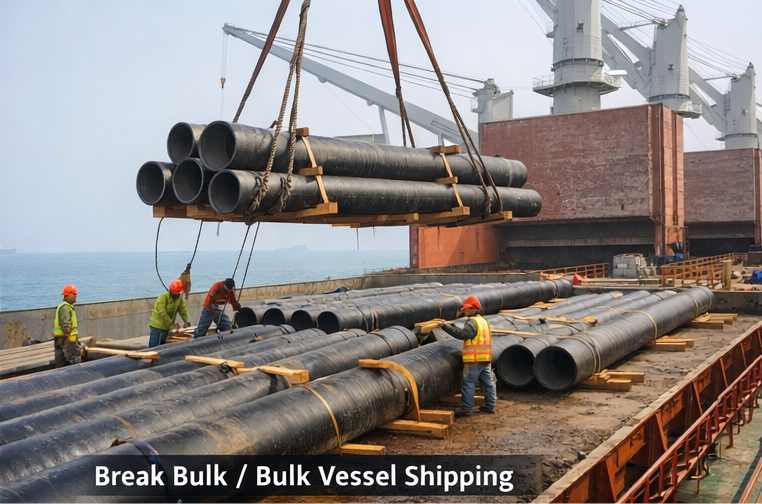
Bulk cargo shipping (DN400-DN2000): Large diameter pipe loaded directly onto bulk cargo vessels at Chinese port. Standard method for bulk water transmission mains and large municipal projects. Typical capacity: 300-1,000 tonnes per vessel depending on diameter.
Port Selection
Durban port: Preferred port for most South African projects. Ocean transit 25-30 days from China. Excellent container and bulk cargo handling capacity. Efficient inland transport to Johannesburg/Gauteng (~600km, 1-2 days by truck).
Cape Town port: Suitable for Western Cape projects. Ocean transit 28-35 days from China. Good container handling, limited bulk cargo capacity. Greater inland transport distance to Johannesburg (~1,400km, 2-3 days by truck).
Total Logistics Cost
Total logistics cost from China to South African project site is typically 15-25% of pipe purchase price. This includes ocean freight (10-18%), marine insurance (0.3-0.5%), customs duty (0-5%), VAT (15%), port handling fees (0.5-1%), and inland transport (2-4%).
Key Takeaway: Plan for 10-14 weeks total procurement timeline and budget 15-25% of pipe price for total logistics cost. Learn about shipping DI pipe from China to South Africa →
11. Total Cost of Ownership Analysis
Total Cost of Ownership (TCO) evaluates the complete cost of a pipeline over its entire service life — not just the initial purchase price. For South African water projects, TCO is typically evaluated over a 50-year analysis period.
TCO Components
Purchase cost (25-35% of TCO): Pipe, fittings, gaskets, coating, lining — the initial material cost.
Installation cost (20-30% of TCO): Trenching, bedding, joint assembly, backfilling, restoration — the cost to install pipe in the ground.
Maintenance cost (15-25% of TCO): Leak repairs, joint resealing, coating repair — the cost to maintain pipeline integrity.
Replacement cost (10-20% of TCO): Complete pipe replacement when service life expires — the cost to remove old pipe and install new pipe.
Failure cost (5-15% of TCO): Water loss, property damage, traffic disruption, emergency repair — the cost of unexpected failures.
50-Year TCO Comparison (DN400 Municipal Water Main)
| Material | 50-Year TCO (per linear meter) | Service Life |
|---|---|---|
| DI Pipe (K9) | $130-175/lm | 50-100+ years (no replacement required) |
| HDPE Pipe (PE100) | $180-245/lm | 30-50 years (partial/complete replacement may be required) |
| PVC Pipe (PVC-U) | $200-275/lm | 20-30 years (complete replacement required within 50 years) |
Key Finding: DI pipe delivers 30-50% lower total cost of ownership over 50 years compared to HDPE and PVC. While DI pipe has 10-20% higher initial purchase cost, this is more than offset by zero replacement cost, lower maintenance cost, and lower failure cost.
Key Takeaway: DI pipe delivers 30-50% lower TCO over 50 years vs HDPE and PVC, making it the most cost-effective choice for South African water pipeline projects. Read our complete TCO analysis →Total Cost of Ownership: Why DI Pipe Saves Money Over 50 Years
12. Next Steps & Resources
This complete guide covers the essential aspects of South Africa water pipeline projects — from material selection and standards compliance to quality verification, logistics, and cost analysis. For project teams planning DI pipe procurement, the following next steps are recommended:
Immediate Actions
Review tender specifications: Ensure specifications include ISO 2531/SANS 14394 standard, correct pressure class (K9 for most applications), coating/lining requirements, SABS certification (for government projects), and third-party inspection requirement.
Conduct soil testing: Collect soil samples along the pipeline route (500m intervals) and test for resistivity, pH, chloride, and sulfate content to determine correct external coating specification.
Verify supplier capabilities: Request ISO 2531 and SABS certificates, conduct factory audit (on-site, third-party, or video), check reference projects, and evaluate communication quality during quotation phase.
Plan logistics timeline: Allow 10-14 weeks total procurement timeline (3-4 weeks manufacturing + 25-35 days ocean transit + 1-3 days inland transport). Budget 15-25% of pipe price for total logistics cost.
Long-Term Strategy
Evaluate TCO, not just purchase cost: DI pipe delivers 30-50% lower TCO over 50 years vs HDPE and PVC. Select material based on lifecycle cost, not initial purchase price.
Build supplier relationships: Develop long-term partnerships with verified Chinese DI pipe suppliers for consistent quality, competitive pricing, and reliable delivery.
Invest in quality verification: Third-party pre-shipment inspection ($300-$800) prevents $10,000-$100,000+ in replacement costs and project delays. Never skip this step.
Supply Chain Coordination for South African Projects
Tiegu supports South African EPC contractors and municipal engineers with end-to-end procurement coordination. We verify ISO 2531 compliance, confirm SABS certification status, arrange third-party inspection, and coordinate ocean freight booking and customs documentation from Chinese factory to South African project site.
This means project teams receive pipe that meets specifications exactly — with complete documentation, verified quality, and coordinated delivery to Durban, Cape Town, or project site.
You can share your project specifications, tender documents, or pipeline requirements for specification review, TCO analysis, and competitive quotation.
📋 Get Free Project Consultation & Quotation
Share your project specifications — receive TCO analysis, risk assessment, and competitive pricing within 24 hours

✅ Final Recommendation
For South Africa water pipeline projects: Ductile iron pipe (K9 class, ISO 2531/SANS 14394) is the standard material for DN200+ municipal water mains at PN16+ pressure, delivering 50-100 year service life and 30-50% lower total cost of ownership vs HDPE and PVC.
Project success checklist:
✅ Specify ISO 2531/SANS 14394 with correct pressure class (K9 for most applications, PMA 50 bar)
✅ Conduct soil testing along pipeline route and specify correct external coating (zinc + bitumen or epoxy + PE encasement)
✅ Require SABS certification for government-funded projects (verify on SABS website before order)
✅ Arrange third-party pre-shipment inspection (SGS/BV/TÜV) before loading — costs $300-$800, prevents $10,000-$100,000+ in replacement costs
✅ Plan 10-14 weeks total procurement timeline and budget 15-25% of pipe price for total logistics cost
✅ Evaluate pipe material on 50-year TCO, not just initial purchase cost (purchase cost = 25-35% of TCO)
Frequently Asked Questions
What standards must DI pipe meet for South African projects?
ISO 2531 is the international standard for ductile iron pipe in water applications. SANS 14394 is the South African national standard, substantially equivalent to ISO 2531 but requiring SABS certification for government-funded projects. Additional standards include ISO 4179 (cement mortar lining), ISO 8179 (zinc coating), and ISO 12234 (polyethylene encasement for aggressive soils). Always verify SABS certificate validity on the SABS website (www.sabs.co.za) before placing orders for government projects.
How long does it take to procure DI pipe from China to South Africa?
Total procurement timeline is 10-14 weeks from order placement to site delivery. This includes 3-5 days for order processing, 3-4 weeks for manufacturing, 3-5 days for pre-shipment inspection, 25-35 days for ocean transit to Durban or Cape Town, 1-2 days for customs clearance, and 1-3 days for inland transport to project site. Durban is the preferred port for most projects (25-30 days transit, excellent facilities, efficient inland transport to Johannesburg).
What is the total cost of ownership for DI pipe over 50 years?
For a typical DN400 municipal water main, DI pipe (K9 class) total cost of ownership over 50 years is $130-175 per linear meter. This includes purchase cost ($65-80/lm), installation cost ($45-55/lm), maintenance cost ($15-25/lm), replacement cost ($0 — no replacement required within 50 years), and failure cost ($5-10/lm). This is 30-50% lower than HDPE ($180-245/lm) and PVC ($200-275/lm). Purchase cost represents only 25-35% of total TCO — evaluating pipe based on purchase price alone misses 65-75% of total cost.
📞 Contact Us for South Africa Water Pipeline Projects
Tiegu — Professional Casting Export Partner
📱 WhatsApp / WeChat: +86 152 5613 5588
📧 Email: zbw@tiegu.net
🌐 Website: www.ductileironpipe2600.com
💬 Inquiry Form: Submit Your Requirements
Response Time: We typically respond within 24 hours with technical specifications, pricing, and delivery timelines for your project.
Summary: Key Takeaways
South Africa's water infrastructure market requires DI pipe (K9 class, ISO 2531/SANS 14394) as the standard material for DN200+ municipal water mains at PN16+ pressure ratings.
DI pipe delivers 50-100+ year service life and 30-50% lower total cost of ownership over 50 years vs HDPE and PVC ($130-175/lm vs $180-245/lm vs $200-275/lm for DN400).
SABS certification is mandatory for government-funded projects — verify certificate validity on SABS website before placing orders.
Third-party pre-shipment inspection ($300-$800) prevents $10,000-$100,000+ in replacement costs and project delays — never skip this step.
Plan 10-14 weeks total procurement timeline and budget 15-25% of pipe price for total logistics cost (ocean freight + insurance + customs + inland transport).
Evaluate pipe material on 50-year TCO, not just initial purchase cost — purchase cost represents only 25-35% of total TCO.
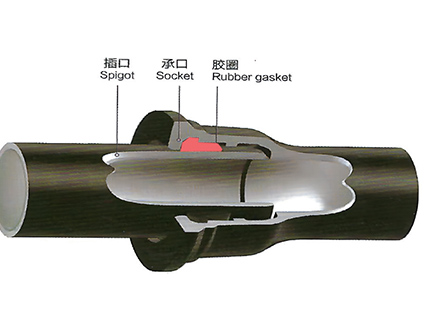 GT-type Joint Ductile Iron Pipe
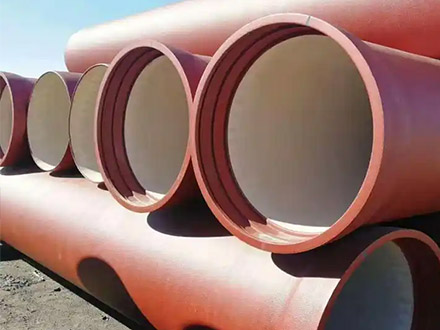
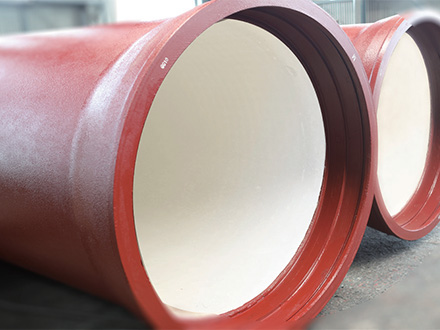 Sewage Pipe (Ductile Iron Sewage Pipe)
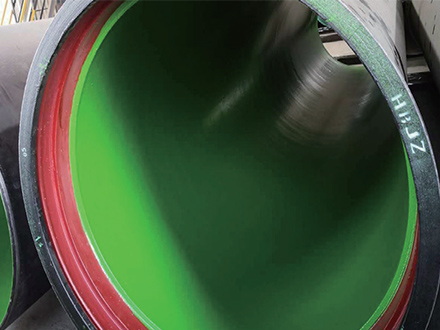 Special Coating Pipe (Ductile Iron Pipe with Special Coatings)