

Indonesia Ductile Iron Pipe Corrosion Protection and Coating Selection Guide
Indonesia Ductile Iron Pipe Corrosion Protection and Coating Selection Guide
(For Coastal and High-Humidity Environments)
In Indonesia’s water supply, hydraulic, and flood control projects, climatic and environmental conditions impose higher requirements on pipeline systems. According to public data released by the Indonesian Agency for Meteorology, Climatology, and Geophysics (BMKG), most regions in Indonesia maintain an average annual relative humidity of approximately 70%–90%, with frequent and prolonged rainfall. These conditions create a persistent corrosion risk for buried metallic pipelines.
For ductile iron pipes (DIP), the selection of corrosion protection and coating systems directly affects service life, operational safety, and long-term maintenance costs. In coastal and island regions, corrosion-related issues typically do not emerge in the short term, but rather accumulate and become evident several years into operation.
Practical Impact of Indonesian Environmental Conditions on Corrosion Protection
In coastal areas of northern Java, eastern Sumatra, and parts of Kalimantan, underground pipelines are often installed in high groundwater tables or intermittently submerged conditions. Field experience indicates that when conventional corrosion protection systems are exposed to such environments, localized external corrosion may begin to appear within 5–8 years, earlier than the intended design life.
During rehabilitation of aging water networks in some coastal cities, inspections have revealed that ductile iron pipes installed with single-layer external coatings—without supplementary protection—exhibited concentrated corrosion at joints and in soils with elevated salinity. These findings have led recent Indonesian projects to adopt more conservative and robust corrosion protection designs.
Engineering Application of Internal Linings for Ductile Iron Pipes
In Indonesian municipal water supply systems, cement mortar lining remains the most widely adopted internal lining solution. This lining system has been used extensively across Southeast Asia for decades. Operational data from completed projects show that under stable water quality conditions and normal pH ranges, cement mortar lining can maintain satisfactory internal pipe conditions for more than 20 years.
For newer water supply schemes, industrial parks, and reclaimed water projects, epoxy internal linings are increasingly specified. This trend is primarily driven by higher water quality requirements and the need for longer design service life. In practice, epoxy linings demonstrate reliable long-term performance when coating thickness and adhesion are properly controlled.
External Corrosion Protection Systems for Coastal and Humid Areas
In inland regions of Indonesia, traditional zinc coating combined with an external layer such as bitumen or epoxy continues to meet the requirements of many projects. However, this system is being applied less frequently in coastal and island environments.
In recent years, several coastal water supply and hydraulic projects have adopted zinc-aluminum alloy spray coatings with an additional topcoat, forming a dual-layer corrosion protection system. Project feedback indicates that this approach offers improved durability in saline and highly corrosive soils, while significantly reducing long-term maintenance requirements.
In areas with high groundwater levels or uncertain soil corrosivity, polyethylene (PE) sleeving is sometimes added as a supplementary protective measure. This solution is not intended to function independently, but rather to provide an additional safety margin under adverse environmental conditions.
Role of Construction Quality in Corrosion Protection Performance
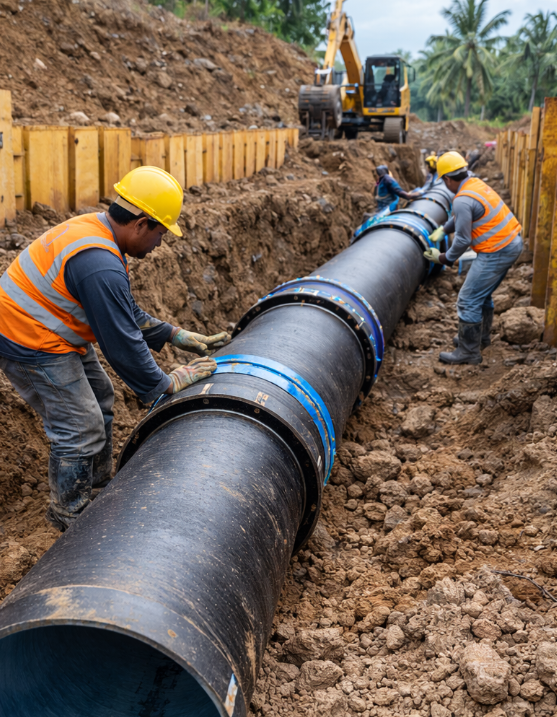
Engineering experience in Indonesia shows that a considerable proportion of corrosion-related issues are not caused by inappropriate coating selection, but by deficiencies in construction and site management.
For example, under high-humidity conditions, delays between surface preparation and coating application, or exposure to moisture during curing, can significantly reduce coating adhesion. In other cases, external coating damage during transportation or installation—if not properly repaired—has become the starting point for localized corrosion during operation.
As a result, effective corrosion protection in Indonesian projects depends heavily on strict site inspection procedures and proper treatment of joints and cut sections.
Inspection and Acceptance of Corrosion Protection Coatings
In practical projects, corrosion protection systems are typically verified through multiple inspection methods, including:
-
Coating thickness measurement to confirm compliance with design specifications
-
Adhesion testing to assess bonding quality between coating and pipe surface
-
Holiday testing to identify pinholes or invisible coating defects
For coastal and high-risk projects, these inspections are often conducted not only at the manufacturing stage, but also after on-site installation, in order to minimize operational risks.
Conclusion
Under Indonesia’s coastal and high-humidity conditions, there is no single corrosion protection solution suitable for all ductile iron pipe projects. Engineering practice demonstrates that matching the coating system to environmental conditions, combined with proper execution and inspection, is essential for ensuring long-term, safe, and reliable pipeline operation.
📩 For corrosion protection inspection SOPs or related technical documentation, technical support appointments are available upon request.
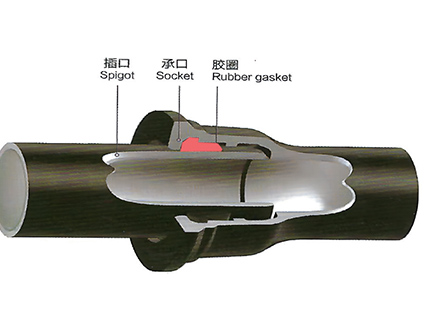 GT-type Joint Ductile Iron Pipe
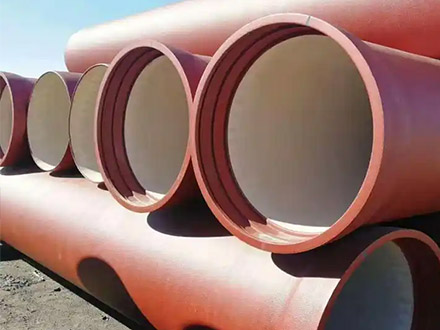
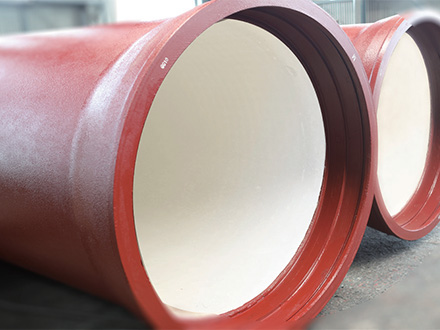 Sewage Pipe (Ductile Iron Sewage Pipe)
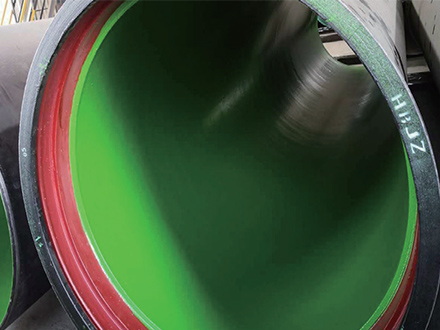 Special Coating Pipe (Ductile Iron Pipe with Special Coatings)