

ISO 2531, EN 545 or AWWA C151: Which Standard Should You Specify?

ISO 2531, EN 545, and AWWA C151 are the three standards that govern most ductile iron pipe (DIP) supplied worldwide. So when your project calls for DIP, which one should you actually put in the specification? At Tiegu, we supply ductile iron pipes to all three standards and help international buyers match the right one to their project before they commit to a purchase order.
The three standards at a glance
Most DIP used in water and wastewater projects falls under one of these three standards. They overlap heavily on base material properties but diverge on pressure notation, dimensional system, and conformity marking.
| Standard | Origin | Typical application | Pressure notation |
|---|---|---|---|
| ISO 2531 | International (ISO) | Global reference standard; accepted by most multilateral funding agencies | K-class (K7–K12) |
| EN 545 | Europe (CEN) | Potable water pipelines in Europe and many Middle East / North Africa projects | C-class (C25–C40) |
| AWWA C151 | North America (AWWA) | Water and wastewater in the US and parts of Latin America | Thickness Class (50–56) |
Two more appear on the edges: EN 598 covers sewer and drainage pipe in Europe, and AS/NZS 2280 covers Australia and New Zealand. They are outside the core three but worth naming if your project sits in those regions.
Where they actually differ (and why it matters to buyers)
The mechanical base requirements — tensile strength, elongation, nodular microstructure — are similar across all three. The differences that bite buyers are practical, not theoretical.
Pressure classification is not interchangeable. A DN300 pipe rated K9 (ISO/EN family) does not have the same wall thickness as a DN300 pipe rated C40 (EN 545) or Thickness Class 51 (AWWA). If your specification says only "DN300" without a class, suppliers will quote different wall thicknesses — and you will compare prices that are not comparable.
Dimensional systems do not line up. ISO 2531 and EN 545 use the metric DN system. AWWA C151 uses an inch-based nominal size. A nominally "equivalent" 12-inch AWWA pipe and a DN300 ISO pipe have different outside diameters. They are not directly interchangeable at the joint, and mixing them on one pipeline without verified transition pieces causes gasket and coupling failures. See our dimensional reference for the actual OD numbers by standard.
Coating and certification expectations differ. EN 545 specifies more detailed requirements for potable-water contact materials, including zinc coating mass and cement mortar lining. AWWA C151 projects typically require NSF/ANSI 61 certification for drinking water contact. ISO 2531 leaves more room for project-specific coating specs. If your project serves drinking water, the standard you choose drives which certification your supplier must hold.
How to choose: a decision framework
Do not start from the technical tables. Start from the project itself.
Step 1 — Where is the project, and who is the funding or approving authority?
North America (US, and parts of Latin America that follow US practice) → AWWA C151
Europe, Middle East, Africa, most of Asia and South America → ISO 2531 or EN 545
Australia / New Zealand → AS/NZS 2280
Step 2 — What does the end client's specification or the funding agency require?
World Bank, Asian Development Bank, UN agencies, and many government tenders → usually accept ISO 2531
European utilities and EPC contractors → typically EN 545
US municipal utilities → AWWA C151
Step 3 — Match the supply chain.
If you are sourcing from China or a global export base, ISO 2531 is the most universally accepted and avoids OD-compatibility problems with fittings and valves. AWWA pipe is best sourced when the project is genuinely North American, because the inch-based OD needs matching AWWA fittings.
The one rule that overrides everything else: do not mix standards on a single pipeline. Pick one and keep pipe, fittings, joints, and valves on the same dimensional system.
Common mistakes buyers make
"ISO and EN are basically the same, so it doesn't matter." They share the metric DN system, but EN 545 carries stricter potable-water coating and marking rules. For a European drinking-water project, that distinction is real.
"AWWA is only used in the US." Parts of Latin America follow US practice, and some international EPCs default to it. Confirm the project's actual requirement, not the continent.
Writing only "DN300 ductile iron pipe" in the spec. That is an incomplete specification — it omits the standard, the pressure class, and the lining. Suppliers will fill the gap with whatever is cheapest.
Assuming fittings from a different standard will fit. They often will not, because the socket dimensions and OD differ.
What to write in your purchase order
Make the standard explicit so quotes are comparable:
Standard and year — e.g., "EN 545:2010" not just "EN 545"
Pressure class — K9, C40, or Thickness Class 51
Lining and external coating — cement mortar lining, zinc + bitumen, epoxy, or PE, with the relevant mass/thickness
Certification — WRAS, NSF/ANSI 61, or third-party inspection as required
Dimensional system — confirm DN (metric) or inch (AWWA) and request OD/ID by class
If you are writing a full tender specification, our tender specification guide walks through turning these points into enforceable clauses.
FAQ
Can I use ISO 2531 and EN 545 pipe on the same pipeline?
Usually yes for the pipe body, because both use the metric DN system and similar OD. But confirm socket dimensions and joint compatibility, and keep fittings and valves on the same system. For drinking-water projects, EN 545's stricter coating rules may still make it the safer single choice.
Is AWWA C151 accepted outside the US?
It is primarily a North American standard. Some Latin American projects follow it, and certain international EPCs default to it. Outside those cases, ISO 2531 or EN 545 is the more universally accepted choice and avoids OD mismatch with globally sourced fittings.
Which standard does Tiegu supply?
We supply ductile iron pipes to ISO 2531, EN 545, and AWWA C151 depending on the project. We confirm the required standard, pressure class, lining, and certification at the specification stage so the pipe matches your tender and your receiving inspections.
Does the standard change the price?
It can. AWWA Thickness Class pipe and EN 545 C-class pipe may carry different wall thickness than a given K-class ISO pipe at the same DN, which changes material weight. Certification (NSF/ANSI 61, WRAS) and coating requirements also add cost. Specifying the standard clearly is what makes supplier quotes comparable in the first place.
What if my local standard is none of these three?
Many national standards (e.g., SANS in South Africa, GB/T in China) are aligned with or derived from ISO/EN. Map your local standard to its ISO/EN equivalent, then specify the international standard in cross-border procurement so suppliers can quote against a known baseline.
Tiegu is a China-based ductile iron pipe sourcing and export partner serving international water infrastructure, wastewater, and industrial projects.
We supply DN80–DN2600 ductile iron pipes and fittings manufactured according to ISO 2531, EN 545, EN 598, and AWWA standards, with cement mortar lining, epoxy lining, and various external coating options.
From technical specification confirmation and supplier coordination to quality inspection, export documentation, and logistics support, Tiegu provides a reliable one-stop sourcing solution under a single commercial contract.
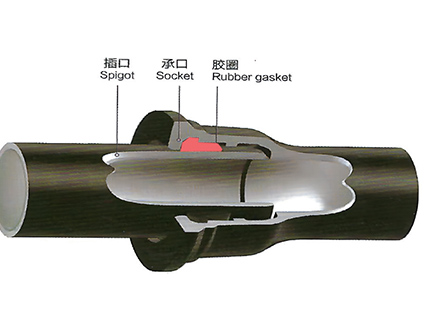 GT-type Joint Ductile Iron Pipe
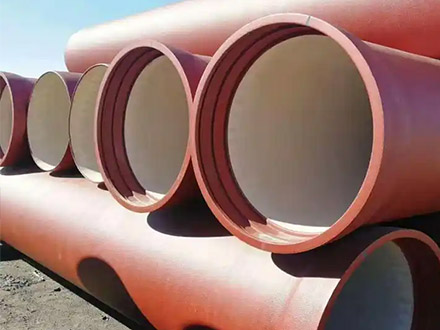
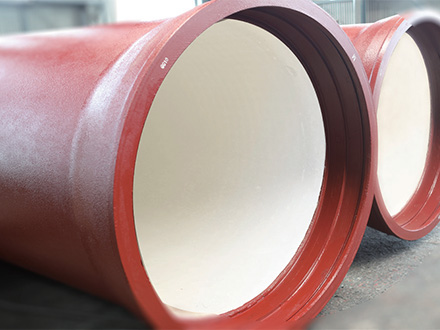 Sewage Pipe (Ductile Iron Sewage Pipe)
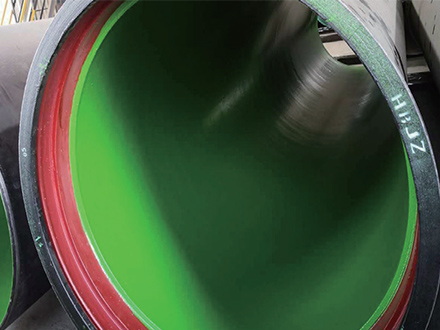 Special Coating Pipe (Ductile Iron Pipe with Special Coatings)