

Pipe Rehabilitation Methods: Ductile Iron vs alternatives
Table of Contents
Aging water infrastructure requires rehabilitation or replacement to maintain service reliability and water quality. Municipalities face critical decisions: rehabilitate existing pipes using trenchless methods, or replace with new ductile iron pipe? Each approach has distinct advantages, costs, and performance characteristics.
Sliplining offers fast installation with reduced diameter. CIPP (cured-in-place pipe) restores structural integrity with minimal excavation. Pipe bursting replaces old pipe with new while maintaining diameter. Open-cut replacement with ductile iron provides long-term reliability. This comprehensive comparison analyzes methods, costs, downtime, and lifecycle performance to support informed decision-making.
Rehabilitation vs Replacement Decision Factors
When to Rehabilitate
| Condition | Recommendation |
|---|---|
| Pipe age <30 years | Rehabilitate (still has useful life) |
| Minor leaks (1-2 per km) | Spot repair or CIPP |
| Surface disruption critical | Trenchless rehabilitation |
| Budget constrained | Rehabilitate (lower initial cost) |
| Short-term solution needed | Rehabilitate (10-15 year extension) |
When to Replace
| Condition | Recommendation |
|---|---|
| Pipe age >50 years | Replace (end of useful life) |
| Frequent breaks (>5 per km/year) | Replace (systemic failure) |
| Severe corrosion (>30% wall loss) | Replace (structural integrity compromised) |
| Capacity increase needed | Replace (rehab reduces diameter) |
| Long-term solution required | Replace (100+ year design life) |
Rehabilitation Methods
Method 1: Sliplining
Process: Insert smaller-diameter HDPE or GRP pipe into existing host pipe. Annular space grouted or left open.
| Parameter | Specification |
|---|---|
| Host Pipe DN | DN100-1200 |
| Liner Material | HDPE, GRP, or steel |
| Diameter Reduction | 15-25% (significant flow loss) |
| Design Life | 50+ years (liner only) |
| Installation Speed | 100-300m/day |
| Cost | $150-300/m (DN300) |
Advantages:
✅ Fast installation
✅ Proven technology
✅ Structural independence (host pipe not required)
✅ Long design life
Limitations:
❌ Reduced flow capacity (diameter loss)
❌ Requires excavation at insertion/extraction points
❌ Lateral reconnection required
❌ Annular space may allow migration
Method 2: CIPP (Cured-In-Place Pipe)
Process: Insert resin-impregnated felt liner, inflate, and cure with hot water or steam. Liner conforms to host pipe shape.
| Parameter | Specification |
|---|---|
| Host Pipe DN | DN100-600 |
| Liner Material | Resin-impregnated felt or fiberglass |
| Thickness | 5-15mm (depends on design) |
| Diameter Reduction | 5-10% (minimal flow loss) |
| Design Life | 50 years |
| Installation Speed | 50-150m/day |
| Cost | $200-400/m (DN300) |
Advantages:
✅ Minimal diameter reduction
✅ Conforms to irregular shapes
✅ Seals cracks and holes
✅ Minimal excavation
Limitations:
❌ Requires host pipe structural integrity
❌ Resin handling (safety concerns)
❌ Curing time (8-12 hours)
❌ Lateral reconnection required
Method 3: Pipe Bursting
Process: Fracture existing pipe while simultaneously pulling in new HDPE or DI pipe. Maintains or increases diameter.
| Parameter | Specification |
|---|---|
| Host Pipe DN | DN100-600 |
| New Pipe Material | HDPE or ductile iron |
| Diameter Change | Same size or +1-2 sizes larger |
| Design Life | 50-100 years (depends on material) |
| Installation Speed | 30-80m/day |
| Cost | $250-450/m (DN300) |
Advantages:
✅ Maintains or increases diameter
✅ Removes old pipe
✅ New pipe has full structural capacity
✅ Minimal excavation (entry/exit pits only)
Limitations:
❌ Slower than sliplining
❌ Requires larger entry/exit pits
❌ May damage nearby utilities
❌ Not suitable for all soil conditions
Replacement with Ductile Iron Pipe
Open-Cut Replacement
| Parameter | Specification |
|---|---|
| Pipe Material | Ductile iron (GGG40/GGG50) |
| Diameter Range | DN80-2000 |
| Design Life | 100+ years |
| Installation Speed | 80-150m/day (DN300) |
| Cost | $300-500/m (DN300, including restoration) |
| Trench Width | OD + 600mm (both sides) |
Advantages:
✅ Longest design life (100+ years)
✅ Full diameter (no flow loss)
✅ Proven performance
✅ Easy future maintenance
✅ Can upsize if needed
Limitations:
❌ Maximum surface disruption
❌ Traffic control required
❌ Higher initial cost
❌ Longer installation time
Trenchless Replacement (Pipe Bursting with DI)
Process: Same as pipe bursting above, but using ductile iron pipe instead of HDPE.
| Advantage vs HDPE | Note |
|---|---|
| Higher stiffness | Better resistance to ground movement |
| Higher pressure rating | PN16-PN25 vs PN10-16 for HDPE |
| Fire resistance | Does not melt or burn |
| Joint integrity | Push-on joints vs fused HDPE joints |
Cost Comparison (DN300, 1km)
Initial Cost
| Method | Material Cost | Installation Cost | Restoration Cost | Total Initial |
|---|---|---|---|---|
| Sliplining (HDPE) | $80,000 | $100,000 | $20,000 | $200,000 |
| CIPP | $150,000 | $150,000 | $30,000 | $330,000 |
| Pipe Bursting (HDPE) | $100,000 | $200,000 | $50,000 | $350,000 |
| Open-Cut (DI) | $180,000 | $200,000 | $120,000 | $500,000 |
Lifecycle Cost (50 Years, NPV at 5%)
| Method | Initial Cost | Maintenance (50y) | Replacement | Total NPV |
|---|---|---|---|---|
| Sliplining (HDPE) | $200,000 | $50,000 | $150,000 (year 40) | $421,000 |
| CIPP | $330,000 | $40,000 | $200,000 (year 45) | $593,000 |
| Pipe Bursting (HDPE) | $350,000 | $45,000 | $180,000 (year 45) | $600,000 |
| Open-Cut (DI) | $500,000 | $30,000 | $0 (100+ year life) | $530,000 |
Performance Comparison
Hydraulic Performance
| Method | Diameter Loss | Roughness (C-factor) | Flow Capacity |
|---|---|---|---|
| Sliplining | 15-25% | 140-150 (HDPE) | 70-80% of original |
| CIPP | 5-10% | 130-140 | 85-90% of original |
| Pipe Bursting | 0% (or increase) | 140-150 (HDPE), 140 (DI) | 100%+ of original |
| Open-Cut (DI) | 0% (can upsize) | 140 (cement lined) | 100%+ of original |
Structural Performance
| Method | Pressure Rating | External Load | Ground Movement |
|---|---|---|---|
| Sliplining | Depends on liner | Liner only (host pipe ignored) | Good (flexible) |
| CIPP | PN10-16 | Composite with host pipe | Limited (rigid) |
| Pipe Bursting (HDPE) | PN10-16 | Full structural capacity | Excellent (flexible) |
| Open-Cut (DI) | PN16-25 | Full structural capacity | Good (rigid but strong) |
Decision Matrix
Selection Criteria by Project Type
| Project Priority | Recommended Method | Rationale |
|---|---|---|
| Minimize disruption | CIPP or sliplining | Trenchless, minimal surface impact |
| Maximize flow | Pipe bursting or open-cut | No diameter reduction |
| Lowest initial cost | Sliplining | $200k/km vs $300-500k for others |
| Lowest lifecycle cost | Open-cut (DI) | 100+ year life, minimal maintenance |
| Long-term reliability | Open-cut (DI) | Proven 100-year performance |
| Emergency repair | CIPP | Fast installation (50-150m/day) |
Supply Chain Perspective
Material Availability and Lead Times
Rehabilitation materials (HDPE, CIPP resin, GRP) have different supply chains than ductile iron pipe. HDPE is widely available with 2-4 week lead times. CIPP requires specialized contractors with 4-8 week scheduling. Ductile iron pipe for replacement may require 8-16 weeks for manufacturing and delivery.
By integrating production capacity across qualified Chinese foundries, Tiegu delivers compliant and high-quality casting products to buyers worldwide while coordinating with rehabilitation contractors to compare options and ensure material availability aligns with project schedules.
Submit your project requirements and timeline to compare rehabilitation vs replacement options and confirm material availability.
Conclusion
Pipe rehabilitation vs replacement requires balancing initial cost, lifecycle cost, surface disruption, and long-term performance. Trenchless methods (sliplining, CIPP, pipe bursting) minimize disruption but have 30-50 year design life. Open-cut replacement with ductile iron has higher initial cost but 100+ year design life and lower lifecycle cost.
Key Points:
Sliplining: Lowest cost, fastest, but 15-25% diameter loss
CIPP: Minimal diameter loss, conforms to shape, 50-year life
Pipe bursting: Maintains diameter, removes old pipe, moderate cost
Open-cut (DI): Highest initial cost, but 100+ year life, best lifecycle value
Decision: Consider total cost, not just initial investment
For critical infrastructure in high-traffic areas, trenchless rehabilitation may be preferred despite higher lifecycle cost. For long-term asset management, replacement with ductile iron provides best value over 100 years.
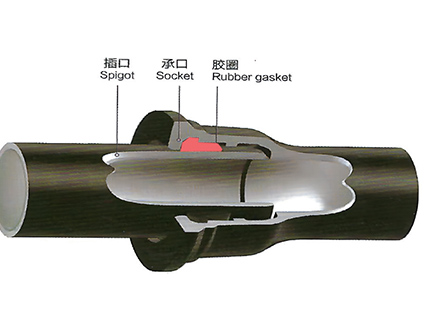 GT-type Joint Ductile Iron Pipe
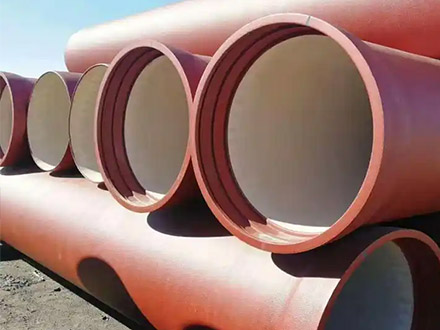
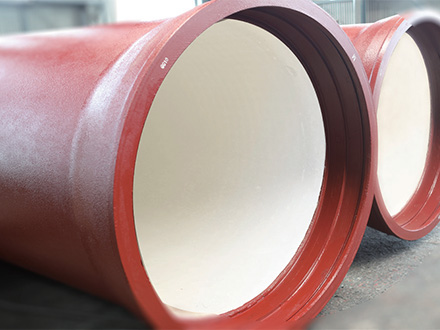 Sewage Pipe (Ductile Iron Sewage Pipe)
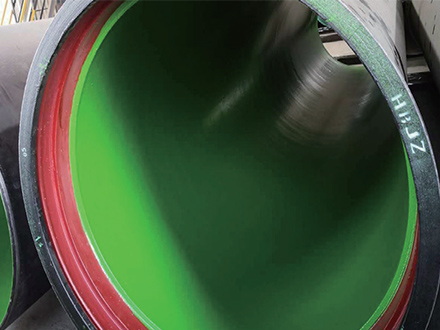 Special Coating Pipe (Ductile Iron Pipe with Special Coatings)