

Which External Anti-Corrosion Coating Is Best for Ductile Iron Pipe? Complete Comparison Guide 2026


Table of Contents
Understanding External Corrosion Mechanisms
Standard Coating: Zinc + Bitumen (ISO 8179)
Epoxy Coating Systems
Polyethylene (PE) Encasement
Bitumen Coating (Traditional)
Combined Coating Systems
Soil Corrosivity Assessment
Performance Comparison by Coating Type
Cost Analysis: Initial vs Lifecycle
Application Methods: Factory vs Field
Installation and Handling Guidelines
Quality Control and Testing
Common Mistakes to Avoid
Selection Decision Matrix
Conclusion and Recommendations
External corrosion is the leading cause of ductile iron pipe degradation in buried water infrastructure. Without proper anti-corrosion coating, pipe service life can be reduced from 50-100 years to 10-20 years in aggressive soil conditions.
Multiple coating systems are available, each with different performance characteristics, application methods, and cost implications. Selecting the right coating requires understanding soil conditions, project requirements, and long-term maintenance expectations.
This comprehensive guide compares all major external anti-corrosion coating types for ductile iron pipe, providing technical specifications, performance data, and selection criteria to support informed procurement decisions.
Understanding External Corrosion Mechanisms
Before selecting a coating, it's essential to understand the corrosion mechanisms that affect buried ductile iron pipe:
Primary Corrosion Types
Electrochemical Corrosion: Galvanic action between pipe and surrounding soil electrolyte
Chemical Corrosion: Direct reaction between iron and soil chemicals (acids, salts)
Microbiologically Influenced Corrosion (MIC): Bacterial activity accelerating corrosion
Stray Current Corrosion: External electrical currents from railways, utilities
For detailed explanation of corrosion types and mechanisms, refer to our comprehensive corrosion guide.
Key Soil Parameters Affecting Corrosion
| Parameter | Low Corrosivity | High Corrosivity |
|---|---|---|
| Soil Resistivity | >10,000 Ω·cm | <1,000 Ω·cm |
| pH Level | 6.5-8.5 | <5.5 or >9.5 |
| Chloride Content | <50 mg/kg | >200 mg/kg |
| Sulfate Content | <100 mg/kg | >500 mg/kg |
| Groundwater | Deep (>3m below pipe) | Shallow (within 1m of pipe) |
Standard Coating: Zinc + Bitumen (ISO 8179)
Specification
Zinc coating is the standard external protection for ductile iron pipe, specified in ISO 8179 and EN 545:
Zinc Layer: ≥130g/m² (approximately 70μm thickness)
Bitumen Topcoat: ≥70g/m² (approximately 40μm thickness)
Application: Factory-applied by centrifugal casting
Standard: ISO 8179-1:2019 / EN 545:2022
How Zinc Coating Works
Zinc provides cathodic protection through sacrificial action:
Barrier Protection: Zinc layer physically isolates pipe from soil
Sacrificial Protection: Zinc corrodes preferentially to iron (galvanic action)
Self-Healing: Minor scratches are protected by zinc's sacrificial action
Long-Term Durability: Zinc consumption rate is 1-5μm/year in most soils
Service Life = Coating Thickness / Annual Consumption Rate
Example: 70μm / 2μm/year = 35 years minimum protection
Actual service life: 50-100+ years (conservative estimates)
Advantages and Limitations
| Factor | Advantages | Limitations |
|---|---|---|
| Cost | Lowest cost option (included in standard pipe price) | Not sufficient for aggressive soils alone |
| Application | Factory-applied, consistent quality | Field joints require touch-up |
| Performance | Self-healing, cathodic protection | Consumes over time in aggressive soils |
| Compatibility | Compatible with all soil types | pH <5.5 or >9.5 accelerates consumption |
Epoxy Coating Systems
Specification
Epoxy coating provides enhanced external protection through thick, chemically resistant barrier:
Coating Thickness: 250-300μm (minimum)
Application: Factory-applied by electrostatic spraying
Curing: Heat-cured at 200-250°C
Standard: ISO 12234 / AWWA C116 / EN 14916
Color: Typically blue or gray (easily identifiable)
Epoxy Coating Benefits
Chemical Resistance: Excellent resistance to acids, alkalis, salts
Physical Protection: High impact resistance during handling and installation
Long Service Life: 50+ years in most environments
Uniform Thickness: Factory application ensures consistent coverage
Adhesion: Strong bond to pipe surface (>10 MPa)
When to Specify Epoxy Coating
Soil resistivity <3,000 Ω·cm (highly corrosive)
pH <5.5 or >9.5 (outside zinc compatibility range)
High chloride content (>200 mg/kg)
High sulfate content (>500 mg/kg)
Industrial areas with chemical contamination
Coastal areas with salt spray influence
Projects requiring 100+ year design life
Polyethylene (PE) Encasement
Specification
PE encasement is the most widely used external corrosion protection method for ductile iron pipe:
Material: Polyethylene film (HDPE or LDPE)
Thickness: ≥0.2mm (200μm)
Application: Factory-wrapped or field-applied
Standard: ISO 8179-3 / AWWA C105 / ANSI A21.5
Wrap Type: Spiral wrap with overlap
Sealing: Adhesive tape at joints and overlaps

How PE Encasement Works
PE encasement creates a physical barrier between pipe and soil:
Barrier Protection: Impermeable PE film isolates pipe from soil electrolyte
Electrolyte Isolation: Prevents direct contact between zinc coating and corrosive soil
Reduced Consumption: Zinc consumption rate reduced by 80-90%
Extended Life: Combined zinc + PE system provides 100+ year protection
For detailed PE encasement installation procedures and quality requirements, refer to our installation guide.
PE Encasement Advantages
Cost-Effective: Lowest cost enhanced protection option
Easy Installation: Simple wrapping process, minimal training required
Flexible: Conforms to pipe shape and joint movement
Chemical Resistance: Inert to most soil chemicals
Proven Performance: 50+ years of field service data
Bitumen Coating (Traditional)
Specification
Bitumen (asphalt) coating is the traditional external protection method, typically applied over zinc coating:
Material: Coal tar bitumen or petroleum bitumen
Thickness: ≥40μm (applied over zinc)
Application: Factory-applied by dipping or spraying
Standard: ISO 8179-1 / EN 545
Color: Black
Bitumen Coating Characteristics
| Factor | Assessment |
|---|---|
| Protection Level | Moderate (barrier protection only) |
| Cost | Low (included in standard pipe) |
| Durability | Moderate (may crack during handling) |
| Environmental | Coal tar restricted in some regions |
| Current Usage | Declining (replaced by epoxy/PE) |
Combined Coating Systems
Maximum Protection Configurations
For severe corrosion environments, combined systems provide layered protection:
| System | Layers | Application | Service Life | Cost Premium |
|---|---|---|---|---|
| Standard | Zinc + Bitumen | Factory | 50+ years | Standard |
| Enhanced | Zinc + PE Encasement | Factory/Field | 100+ years | +5-10% |
| High Performance | Epoxy + PE Encasement | Factory/Field | 100+ years | +15-25% |
| Maximum | Zinc + Epoxy + PE | Factory/Field | 100+ years | +20-35% |
Soil Corrosivity Assessment
Testing Requirements
Before selecting coating system, conduct soil corrosivity testing:
Soil Resistivity: Four-electrode method (minimum 3 tests per km)
pH Level: Laboratory analysis of soil samples
Chloride Content: Chemical analysis (titration method)
Sulfate Content: Chemical analysis (gravimetric method)
Redox Potential: Indicator of anaerobic conditions (MIC risk)
Groundwater Level: Seasonal variation assessment
For complete soil corrosivity testing procedures and interpretation guidelines, refer to our testing guide.
Corrosivity Classification
| Corrosivity Class | Resistivity (Ω·cm) | pH | Recommended Coating |
|---|---|---|---|
| Low | >10,000 | 6.5-8.5 | Zinc + Bitumen (Standard) |
| Moderate | 3,000-10,000 | 5.5-6.5 | Zinc + PE Encasement |
| High | 1,000-3,000 | <5.5 or >9.5 | Epoxy + PE Encasement |
| Severe | <1,000 | Extreme pH | Epoxy + PE + Cathodic Protection |
Performance Comparison by Coating Type
Comprehensive Performance Matrix
| Coating Type | Chemical Resistance | Impact Resistance | Flexibility | Service Life | Cost |
|---|---|---|---|---|---|
| Zinc + Bitumen | ⭐⭐⭐ | ⭐⭐⭐ | ⭐⭐⭐⭐ | 50+ years | $ |
| Epoxy | ⭐⭐⭐⭐⭐ | ⭐⭐⭐⭐ | ⭐⭐⭐ | 50+ years | $$ |
| PE Encasement | ⭐⭐⭐⭐⭐ | ⭐⭐⭐ | ⭐⭐⭐⭐⭐ | 100+ years | $ |
| Epoxy + PE | ⭐⭐⭐⭐⭐ | ⭐⭐⭐⭐ | ⭐⭐⭐⭐ | 100+ years | $$$ |
Cost Analysis: Initial vs Lifecycle
Coating Cost Comparison (per meter, DN300)
| Coating System | Initial Cost (USD/m) | Installation Cost | Maintenance Cost | 50-Year NPV |
|---|---|---|---|---|
| Zinc + Bitumen | $0 (included) | $0 | $2-5/m/year | $50-125 |
| PE Encasement | $3-5 | $1-2 | $0.5-1/m/year | $15-35 |
| Epoxy | $8-12 | $0 | $0.5-1/m/year | $20-40 |
| Epoxy + PE | $10-15 | $1-2 | $0.2-0.5/m/year | $18-35 |
Application Methods: Factory vs Field
Factory-Applied Coatings
Advantages: Controlled environment, consistent quality, automated application, certified processes
Limitations: Transportation damage risk, joint areas require field touch-up
Best For: Zinc coating, epoxy coating, factory-wrapped PE encasement
Field-Applied Coatings
Advantages: Complete coverage including joints, adaptable to site conditions
Limitations: Weather-dependent, requires skilled labor, quality control challenges
Best For: PE encasement wrapping, joint touch-up, repairs
Quality Control and Testing
Required Tests by Coating Type
| Test | Zinc | Epoxy | PE Encasement |
|---|---|---|---|
| Thickness | ≥130g/m² | ≥250μm | ≥200μm |
| Adhesion | Cross-cut test | Pull-off test (>10MPa) | Peel test |
| Continuity | Visual inspection | Holiday detector | Visual inspection |
| Impact | Not required | Drop test (500g, 1m) | Not required |
For information about corrosion protection standards and certification requirements, refer to our standards guide.
Common Mistakes to Avoid
Assuming standard zinc coating is sufficient without testing soil corrosivity can lead to premature failure in aggressive conditions.
Soil conditions can change over time (industrial development, groundwater changes). Design for 50-100 year conditions, not just current state.
80% of corrosion failures occur at joints. Ensure proper joint coating and PE tape sealing at every connection.
Coating damage during transportation and installation compromises protection. Inspect and repair all damage before backfilling.
Selection Decision Matrix
Quick Selection Guide
| Project Type | Soil Condition | Recommended Coating | Cost Level |
|---|---|---|---|
| Residential water main | Normal soil | Zinc + Bitumen | Standard |
| Municipal water main | Moderate corrosivity | Zinc + PE Encasement | Low |
| Industrial water supply | High corrosivity | Epoxy + PE Encasement | Medium |
| Critical infrastructure | Severe corrosivity | Epoxy + PE + CP | High |
Conclusion and Recommendations
Key Takeaways
Standard Zinc + Bitumen: Sufficient for 70-80% of projects with normal soil conditions and moderate corrosivity.
PE Encasement: Most cost-effective enhanced protection for moderate corrosivity, extending service life to 100+ years at minimal cost premium.
Epoxy Coating: Best choice for high corrosivity environments with chemical resistance requirements and impact protection needs.
Combined Systems: Maximum protection for severe conditions, critical infrastructure, and 100+ year design life requirements.
Soil Testing: Essential before finalizing coating specification - don't guess, test.
Lifecycle Cost: Consider 50-year total cost, not just initial material cost.
Selection Checklist
☐ Soil corrosivity testing completed (resistivity, pH, chlorides, sulfates)
☐ Groundwater level and seasonal variation assessed
☐ Project design life defined (50 vs 100 years)
☐ Budget constraints and lifecycle cost priorities established
☐ Field application capabilities and weather conditions considered
☐ Joint protection strategy defined (most critical area)
☐ Quality control and inspection procedures specified
Next Steps
Share your project specifications (DN, soil conditions, burial depth, project type) to receive:
✅ Coating recommendation with technical justification
✅ Complete bill of quantities with coating specifications
✅ Quality control and testing requirements
✅ Competitive quotation for specified coating system
✅ Delivery timeline and logistics planning
✅ Technical drawings and certification documents
📞 Contact Information
WhatsApp/WeChat: +86 152 5613 5588
Email: zbw@tiegu.net
Website: www.ductileironpipe2600.com
Response Time: Within 24 hours
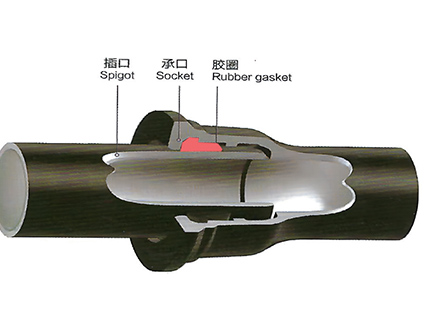 GT-type Joint Ductile Iron Pipe
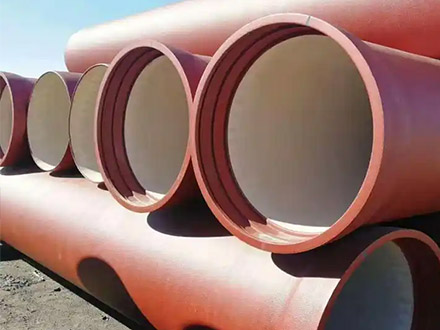
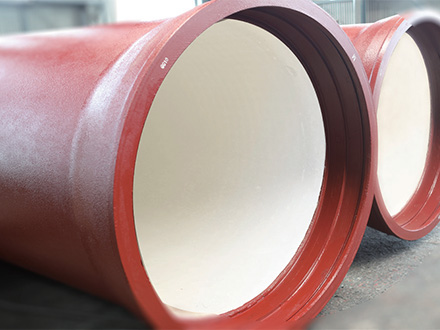 Sewage Pipe (Ductile Iron Sewage Pipe)
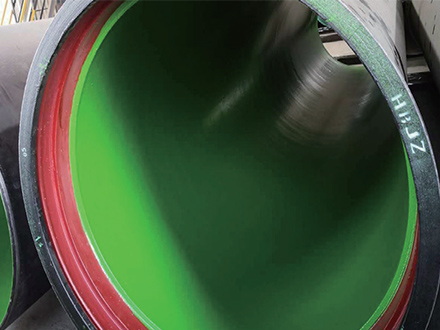 Special Coating Pipe (Ductile Iron Pipe with Special Coatings)