

How to Import Ductile Iron Pipe from China: Risk Control & SABS Compliance
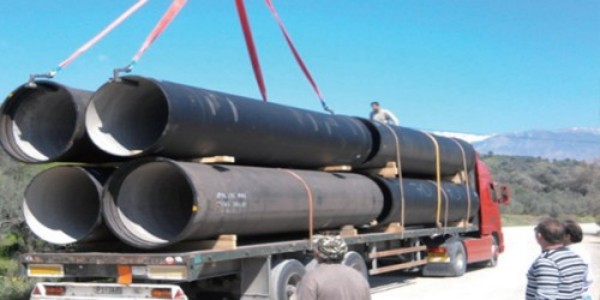
Why Are South African Contractors Sourcing Pipe from China?
China has become a major supplier of ductile iron pipe to South Africa, driven by several factors that make Chinese sourcing increasingly attractive for municipal and commercial water projects:
Manufacturing capacity: China produces over 50% of the world's ductile iron pipe, with multiple foundries holding ISO 2531 certification and SABS approval for South African exports.
Cost competitiveness: Chinese-manufactured ductile iron pipe typically costs 15-25% less than European equivalents (Saint-Gobain PAM, Kubota) while meeting identical technical specifications.
Shipping accessibility: Regular container and bulk carrier services connect major Chinese ports (Qingdao, Tianjin, Shanghai) to South African ports (Durban, Cape Town, Richards Bay) with transit times of 25-35 days.
Technical capability: Leading Chinese foundries produce to ISO 2531, EN 545, and AWWA C151 standards simultaneously, with in-house testing laboratories and automated production lines.
However, importing pipe from China also introduces risks that South African contractors must manage proactively — certification gaps, quality inconsistencies, shipping delays, and customs clearance complications. This guide covers the critical control points.
For a complete overview of South Africa water pipeline projects including material selection, standards, procurement, and logistics, see our South Africa Water Pipeline Complete Guide 2026 →
What SABS Certification Requirements Must Be Met?
SABS (South African Bureau of Standards) certification is the single most important compliance requirement when importing ductile iron pipe for South African projects. Without valid SABS certification, pipe can be rejected at site inspection, causing project delays and replacement costs.
When Is SABS Certification Required?
Government-funded municipal water projects (national, provincial, and metropolitan)
Projects managed by water boards (Rand Water, Umgeni Water, Bloemwater, Magalies Water)
Tender documents that specify SANS 14394 with SABS mark requirement
Projects funded by the South African national treasury or Development Bank of Southern Africa
What Documentation Is Required for SABS Compliance?
| Document | Purpose | Issued By |
|---|---|---|
| SABS Certificate | Proof of product certification per SANS 14394 | South African Bureau of Standards (SABS) |
| Material Test Report (MTR) | Chemical composition, mechanical properties, pressure testing results | Foundry quality control + third-party laboratory |
| Certificate of Origin | Proof of Chinese origin for customs clearance | China Council for Promotion of International Trade (CCPIT) |
| Packing List | Itemized list of pipe, fittings, accessories, and gaskets | Supplier / shipping agent |
| Commercial Invoice | Transaction value for customs duty assessment | Supplier |
| Bill of Lading | Shipping document proving cargo ownership | Shipping line / freight forwarder |
How to Control Quality Before Shipment?
Pre-shipment inspection is your last opportunity to identify quality issues before the pipe leaves China. Once the pipe arrives in South Africa, resolving quality disputes becomes significantly more expensive and time-consuming.
Third-Party Inspection Checklist
Engage an accredited third-party inspection company (SGS, Bureau Veritas, TÜV, or China Inspection & Testing) to conduct the following checks at the foundry before loading:
Dimensional verification: Confirm outer diameter, wall thickness, and pipe length per ISO 2531 Table 2. Tolerance: ±1% for OD, wall thickness within specified range.
Cement mortar lining thickness: Measure lining thickness at 3 points per pipe (per ISO 4179). Minimum 2.0mm for DN80-DN300, 2.4mm for DN350-DN1200.
Zinc coating weight: Weigh zinc coating per ISO 8179-2. Minimum 130g/m². Verify uniform application with no bare spots.
Bitumen paint thickness: Measure dry film thickness. Minimum 70μm. Check for uniform coverage and adhesion.
Hydrostatic pressure test: Verify that each pipe has passed hydrostatic testing at specified test pressure (per ISO 2531 Table 5). Review test records for any failures or re-tests.
Joint dimensions: Verify push-on joint dimensions (T-type, K-type, or SN-type) per ISO 2531. Check gasket groove dimensions and surface finish.
Packing and marking: Confirm pipe marking includes manufacturer name, standard (ISO 2531), pressure class, diameter, and heat number. Verify packing secures pipe against movement during ocean transit.

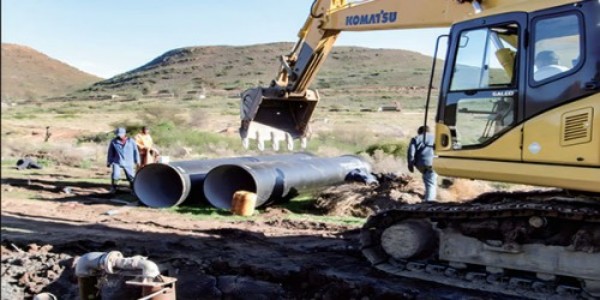
Inspection Timing
Schedule inspection when 100% of the order is manufactured and at least 80% is packed. This allows the inspector to verify both finished pipe quality and packing adequacy. Inspection typically requires 1-2 days for orders up to 500 tonnes.
What Shipping and Logistics Options Are Available?
Shipping ductile iron pipe from China to South Africa requires careful planning around vessel type, port selection, and delivery timelines.
Vessel Type Selection
Bulk carrier: Most cost-effective for large orders (500+ tonnes). Pipe is loaded directly into the ship's hold with dunnage (timber blocking) to prevent movement. Typical transit time: 25-35 days to Durban, 30-40 days to Cape Town.
Container shipping: Suitable for smaller orders (50-300 tonnes) or when pipe needs to be mixed with fittings and accessories. Standard 40-foot containers hold approximately 20-25 tonnes of DN300-DN600 pipe. Transit time: 28-35 days.
Incoterms and Cost Responsibility
| Incoterm | Seller Responsibility | Buyer Responsibility | Best For |
|---|---|---|---|
| FOB (Free on Board) | Manufacturing, inspection, Chinese export customs, loading at Chinese port | Ocean freight, insurance, South African import customs, port-to-site delivery | Buyers with established freight forwarding relationships |
| CFR (Cost and Freight) | Everything in FOB + ocean freight to South African port | Insurance, South African import customs, port-to-site delivery | Most common choice for South African contractors |
| CIF (Cost, Insurance, Freight) | Everything in CFR + marine insurance | South African import customs, port-to-site delivery | Buyers wanting maximum supplier responsibility |
South African Port Options
Durban (DUR): Largest port, highest shipping frequency. Best for projects in KwaZulu-Natal, Gauteng, and Mpumalanga.
Cape Town (CPT): Secondary port option. Best for Western Cape projects.
Richards Bay (RYH): Bulk cargo port near Durban. Suitable for very large orders (1,000+ tonnes).
Common Problems When Importing DI Pipe from China & How to Avoid Them
Supplier presents SABS certificate that has expired or belongs to a different foundry. Pipe is rejected at South African customs or site inspection.
Solution: Verify SABS certificate number on SABS website before ordering. Request current certificate copy. Confirm certificate covers the specific pipe diameter and pressure class you are ordering.
Pipe shifts during ocean voyage, causing damage to coating, joint surfaces, and gaskets. Repair costs and installation delays add 10-15% to project cost.
Solution: Specify wooden dunnage and steel strapping for bulk carrier loading. Require container loading photos before sealing. Include packing specifications in purchase contract.
Customs clearance delayed because supplier failed to provide certificate of origin, material test reports, or accurate packing list. Storage fees at South African port accumulate at R2,000-R5,000 per day.
Solution: Provide supplier with complete documentation checklist before production begins. Require document draft for review before shipment. Include documentation requirements in purchase contract with penalty clauses for delays.
End-to-End Coordination for South African Projects
Tiegu manages the entire import process for South African contractors — from foundry selection and SABS verification to pre-shipment inspection and ocean freight coordination. We verify certification documents, conduct factory audits, and arrange third-party inspection before every shipment.
This means South African buyers receive pipe with complete documentation, verified SABS compliance, and coordinated delivery to Durban, Cape Town, or Richards Bay — all managed through a single point of contact.
You can share your project timeline and pipe specifications for a detailed sourcing plan with delivery schedule.
📋 Get Free Technical Quotation
Share your project requirements — receive sourcing plan and delivery timeline within 24 hours
✅ Final Recommendation
For importing ductile iron pipe from China to South Africa: Follow a four-step process — verify SABS certification, arrange pre-shipment inspection, confirm shipping terms (CFR recommended), and prepare complete customs documentation.
Risk control checklist:
✅ Verify SABS certificate on SABS website before ordering
✅ Arrange third-party inspection (SGS/BV/TÜV) before loading
✅ Specify CFR Durban/Cape Town for balanced cost responsibility
✅ Prepare customs documentation package 2 weeks before arrival
Frequently Asked Questions
How long does it take to import ductile iron pipe from China to South Africa?
Typical delivery timeline is 6-8 weeks from order confirmation. This includes 2-3 weeks for manufacturing (depending on order size), 3-5 days for pre-shipment inspection and documentation, and 25-35 days for ocean transit to Durban or Cape Town. SABS certification (if required) adds 8-12 weeks but is typically arranged by the foundry, not per order.
What documents are needed for South African customs clearance?
Required documents include: (1) Bill of Lading, (2) Commercial Invoice, (3) Packing List, (4) Certificate of Origin (CCPIT certified), (5) SABS certificate copy, (6) Material Test Reports, and (7) Import permit (if required for specific products). Work with an experienced South African customs clearing agent to ensure all documents meet SARS (South African Revenue Service) requirements.
Is it safe to import ductile iron pipe from China?
Yes, importing ductile iron pipe from China is safe when proper risk control measures are followed. China supplies 40-50% of South Africa's DI pipe imports. Key safety measures include: verifying SABS certification before ordering, arranging third-party pre-shipment inspection, using CFR or CIF shipping terms, and working with experienced suppliers who understand South African standards and documentation requirements.
What is the typical cost of shipping pipe from China to South Africa?
Ocean freight costs vary based on vessel type, order size, and destination port. For bulk carrier shipments (500+ tonnes), freight costs typically range from $30-$50 per tonne to Durban and $40-$60 per tonne to Cape Town. Container shipping costs are higher per tonne but more economical for smaller orders. Total landed cost (pipe + freight + insurance + customs) typically adds 20-30% to the FOB price.
📞 Contact Us for China Import Support
Tiegu — Professional Casting Export Partner
📱 WhatsApp / WeChat: +86 152 5613 5588
📧 Email: zbw@tiegu.net
🌐 Website: www.ductileironpipe2600.com
💬 Inquiry Form: Submit Your Requirements
Response Time: We typically respond within 24 hours with technical specifications, pricing, and delivery timelines for your project.
Related reading: Why municipal projects prefer K9 DI pipe → | Shipping logistics timeline →
Summary: Key Takeaways
Importing ductile iron pipe from China requires SABS certification verification, third-party pre-shipment inspection, and complete customs documentation.
Typical delivery timeline is 6-8 weeks from order confirmation (2-3 weeks manufacturing + 25-35 days ocean transit).
CFR (Cost and Freight) is the most common shipping term for South African contractors, balancing cost responsibility between buyer and seller.
Third-party inspection (SGS, Bureau Veritas, TÜV) is essential for catching quality issues before pipe leaves China.
Working with an experienced supply chain integrator like Tiegu ensures SABS compliance, verified documentation, and coordinated delivery to South African ports.
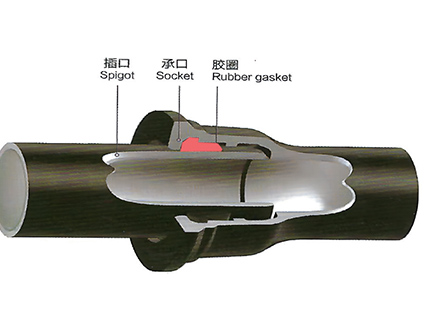 GT-type Joint Ductile Iron Pipe
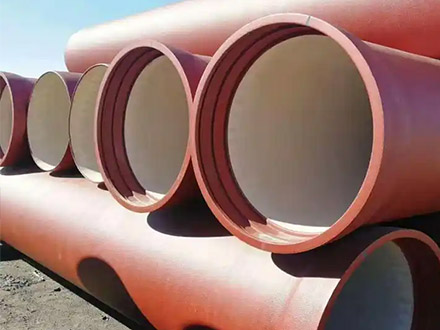
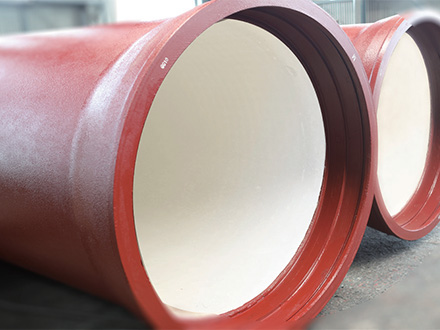 Sewage Pipe (Ductile Iron Sewage Pipe)
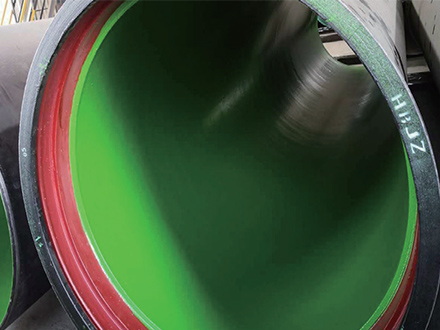 Special Coating Pipe (Ductile Iron Pipe with Special Coatings)