

What Are the Key Differences Between Ductile Iron and PVC Pipe for Municipal Water Systems? Complete Comparison Guide
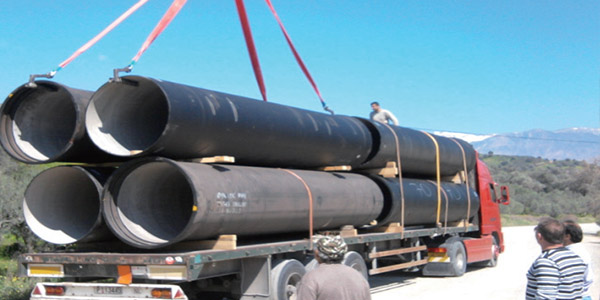
Table of Contents
Executive Summary: When to Choose Each Material
Mechanical Properties Comparison
Pressure Ratings and Design Standards
Corrosion Resistance Analysis
Installation Cost and Time Comparison
Lifecycle Cost Analysis (50 Years)
Maintenance Requirements
Environmental Impact Assessment
Application Scenarios by Project Type
Decision Matrix: Selection Checklist
Supply Chain and Material Availability
Conclusion and Recommendations
Municipal water infrastructure projects require careful material selection to balance initial cost, long-term performance, and total cost of ownership. The choice between ductile iron and PVC pipe represents one of the most common decisions facing water utility engineers, procurement managers, and municipal planners.
Ductile iron pipe has served municipal water systems for over 150 years with proven 100+ year performance. PVC pipe emerged in the 1960s as a lower-cost alternative with 50-year design life. Each material offers distinct advantages depending on project requirements, operating conditions, and budget constraints.
This comprehensive comparison analyzes mechanical properties, pressure ratings, corrosion resistance, installation costs, lifecycle expenses, and real-world performance to support informed decision-making for municipal water main projects.
Executive Summary: When to Choose Each Material
Choose Ductile Iron Pipe When:
✅ Pipe diameter exceeds DN200 (8 inches)
✅ Operating pressure requirements exceed PN16 (Class 150)
✅ Deep burial depth (>3 meters) with high external loads
✅ High-traffic areas with heavy vehicle loads
✅ Critical infrastructure requiring 100+ year design life
✅ Aggressive soil conditions requiring superior corrosion resistance
✅ Future capacity expansion may require higher pressure ratings
✅ Fire protection systems requiring non-combustible materials
Choose PVC Pipe When:
✅ Pipe diameter is DN80-DN200 (3-8 inches)
✅ Operating pressure requirements are PN10-PN16 (Class 100-150)
✅ Shallow burial depth (<2 meters) with light external loads
✅ Residential areas with minimal traffic loads
✅ Budget-constrained projects prioritizing initial cost
✅ Non-critical applications with 50-year design life acceptance
✅ Non-aggressive soil conditions with neutral pH
✅ Projects requiring fast installation with minimal equipment
Mechanical Properties Comparison
| Property | Ductile Iron (GGG50) | PVC (Class 150) | Advantage |
|---|---|---|---|
| Tensile Strength | ≥500 MPa | ≥50 MPa | 🏆 Ductile Iron (10x) |
| Yield Strength | ≥350 MPa | ≥40 MPa | 🏆 Ductile Iron (8.75x) |
| Elongation at Break | ≥10% | ≥40% | 🏆 PVC (more flexible) |
| Modulus of Elasticity | 170 GPa | 3 GPa | 🏆 Ductile Iron (stiffer) |
| Impact Strength | High (ductile) | Moderate (brittle below 0°C) | 🏆 Ductile Iron |
| Ring Stiffness | Very High | Moderate | 🏆 Ductile Iron |
Key Takeaway: Ductile iron demonstrates 8-10x higher tensile and yield strength compared to PVC, making it the superior choice for high-pressure applications, deep burial, and areas with heavy traffic loads. For detailed ductile iron pipe products specifications, refer to our product catalog.
Pressure Ratings and Design Standards
Ductile Iron Pressure Classes
| Class | PN Rating | Working Pressure (bar) | Surge Pressure (bar) | Typical Application |
|---|---|---|---|---|
| K9 | PN40 | 40 | 100 | Standard water mains |
| K10 | PN50 | 50 | 125 | High-pressure mains |
| K12 | PN63 | 63 | 157 | Special high-pressure |
PVC Pressure Classes
| Class | PN Rating | Working Pressure (bar) | Surge Pressure (bar) | Typical Application |
|---|---|---|---|---|
| Class 100 | PN10 | 10 | 25 | Low-pressure distribution |
| Class 150 | PN16 | 16 | 40 | Standard distribution |
| Class 200 | PN20 | 20 | 50 | Higher pressure (limited) |
Corrosion Resistance Analysis
External Corrosion
Ductile Iron: Requires external protection in aggressive soils. Standard protection includes zinc coating (130g/m²) plus bituminous or epoxy topcoat. For highly corrosive environments (soil resistivity <2000 ohm-cm, pH <6 or >9), additional corrosion protection methods such as polyethylene encasement or cathodic protection are recommended.
PVC: Inherently corrosion-resistant to most soils and groundwater. No external protection required. However, PVC is susceptible to UV degradation if stored outdoors and can be damaged by petroleum-based contaminants in soil.
Internal Corrosion
Ductile Iron: Standard cement mortar lining (ISO 4179) provides excellent protection for potable water. For aggressive water (pH <6.5, high CO₂, soft water), epoxy or polyurethane lining offers enhanced protection. Proper lining ensures 100+ year internal service life.
PVC: Inherently resistant to internal corrosion from water and most chemicals. No lining required. However, PVC can be affected by certain organic solvents and hydrocarbons in contaminated water sources.
Microbiological Resistance
Ductile Iron: Cement lining provides high pH environment (pH 11-12) that inhibits bacterial growth. Tuberculation is prevented with proper lining quality.
PVC: Smooth interior surface (C-factor 150) resists biofilm formation. However, some studies indicate certain bacteria can adhere to PVC surfaces under specific conditions.

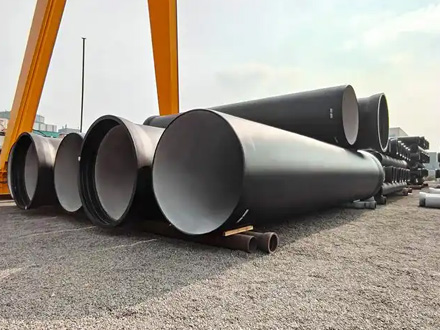
Installation Cost and Time Comparison
DN300 (12 inch) Installation Cost per Meter
| Cost Component | Ductile Iron | PVC Class 150 | Difference |
|---|---|---|---|
| Material Cost | $180-220/m | $80-120/m | PVC 55% lower |
| Installation Labor | $80-120/m | $50-80/m | PVC 40% lower |
| Equipment | $40-60/m | $20-30/m | PVC 50% lower |
| Bedding & Backfill | $30-50/m | $30-50/m | Similar |
| Restoration | $50-80/m | $40-60/m | PVC 20% lower |
| Total Installed Cost | $380-530/m | $220-340/m | PVC 42% lower |
Installation Speed Comparison
| Factor | Ductile Iron | PVC |
|---|---|---|
| Joining Method | Push-on TYTON joints (2-3 min/joint) | Solvent cement or gasket (3-5 min/joint) |
| Weight (DN300, 6m) | ~1,200 kg (requires excavator) | ~200 kg (manual handling possible) |
| Daily Installation Rate | 80-150 m/day (DN300) | 100-200 m/day (DN300) |
| Trench Width | OD + 600mm (both sides) | OD + 400mm (both sides) |
Installation Note: For information about different pipe joint types and their installation requirements, refer to our connections guide.
Lifecycle Cost Analysis (50 Years, NPV at 5%)
DN300, 1km Installation - Total Cost of Ownership
| Cost Category | Ductile Iron | PVC Class 150 |
|---|---|---|
| Initial Installation | $450,000 | $280,000 |
| Maintenance (50 years) | $30,000 | $45,000 |
| Leak Repair (50 years) | $20,000 | $50,000 |
| Replacement Cost | $0 (100+ year life) | $250,000 (year 45, NPV $28,000) |
| Water Loss (50 years) | $50,000 (0.5% loss) | $100,000 (1.0% loss) |
| Total Lifecycle Cost (NPV) | $550,000 | $753,000 |
| Cost per Year (50 years) | $11,000/year | $15,060/year |
Maintenance Requirements
Ductile Iron Maintenance
Year 1-10: Minimal maintenance (inspection only)
Year 10-20: Cathodic protection monitoring (if installed)
Year 20-50: Occasional joint inspection, valve maintenance
Year 50-100: Continue service with minimal degradation
Expected Leak Rate: 0.1-0.3 leaks/km/year
PVC Maintenance
Year 1-10: Minimal maintenance (inspection only)
Year 10-20: Monitor for joint separation, ground movement effects
Year 20-30: Increased inspection frequency, potential spot repairs
Year 30-50: Plan for replacement, increased leak frequency
Expected Leak Rate: 0.3-0.8 leaks/km/year (increases with age)
Environmental Impact Assessment
| Environmental Factor | Ductile Iron | PVC |
|---|---|---|
| Raw Material | Iron ore (abundant), recycled content 10-15% | Petroleum-based (finite resource) |
| Manufacturing Energy | High (smelting required) | Moderate (polymerization) |
| Recyclability | 100% recyclable (infinite cycles) | Recyclable but limited markets |
| End-of-Life | Scrap value positive ($150-200/ton) | Disposal cost or limited recycling |
| Carbon Footprint | Higher initial, amortized over 100 years | Lower initial, doubled with replacement |
Application Scenarios by Project Type
Municipal Water Transmission Mains
Recommendation: Ductile Iron
Rationale: High pressure (PN16-PN25), large diameter (DN300-DN1000), critical infrastructure requiring 100+ year reliability, high consequence of failure.
Residential Distribution Networks
Recommendation: Either (depends on budget and priorities)
Rationale: Lower pressure (PN10-PN16), smaller diameter (DN80-DN200), budget considerations may favor PVC, but ductile iron offers better long-term value.
Industrial Water Supply
Recommendation: Ductile Iron
Rationale: Higher pressure requirements, potential for water hammer, critical process requirements, fire protection integration.
Rural Water Projects
Recommendation: PVC (budget-constrained) or Ductile Iron (donor-funded)
Rationale: Initial cost often drives decision, but donor-funded projects should prioritize lifecycle value with ductile iron.
Decision Matrix: Selection Checklist
☐ Pipe diameter requirement (DN80-DN2000?)
☐ Operating pressure (PN10, PN16, PN25, PN40?)
☐ Burial depth and external loads (traffic, buildings?)
☐ Soil corrosivity (resistivity, pH, chlorides, sulfates?)
☐ Water quality (pH, aggressiveness, temperature?)
☐ Project budget (initial cost constraint or lifecycle focus?)
☐ Design life requirement (50 years or 100+ years?)
☐ Maintenance capability (in-house team or outsourced?)
☐ Environmental priorities (recyclability, carbon footprint?)
☐ Fire protection requirements (non-combustible material needed?)
☐ Future expansion plans (pressure increase, capacity increase?)
☐ Material availability and lead time (local supply chain?)
Supply Chain and Material Availability
Ductile Iron Pipe: Manufacturing requires specialized foundries with centrifugal casting capabilities. Lead times typically 8-16 weeks for standard specifications, 12-20 weeks for custom requirements. Global production concentrated in China, India, Europe, and North America. Tiegu integrates production capacity across qualified Chinese foundries, delivering compliant and high-quality casting products to buyers worldwide while coordinating manufacturing schedules to align with project timelines.
PVC Pipe: Widely manufactured with shorter lead times (2-6 weeks). More suppliers globally, including regional manufacturers. Raw material (PVC resin) subject to petroleum price volatility. Quality varies significantly between manufacturers - certification verification essential.
Conclusion and Recommendations
Key Findings
Initial Cost: PVC offers 40-60% lower initial cost, making it attractive for budget-constrained projects.
Lifecycle Cost: Ductile iron delivers 20-30% lower total cost of ownership over 50 years due to 100+ year lifespan and minimal maintenance.
Performance: Ductile iron provides 8-10x higher strength, superior pressure ratings, and better performance in demanding applications.
Reliability: Ductile iron's proven 150-year track record vs PVC's 50-year history favors ductile iron for critical infrastructure.
Flexibility: PVC offers easier handling and faster installation, advantageous for small-diameter residential projects.
Final Recommendations
Next Steps
Share your project specifications (diameter, pressure, length, soil conditions, timeline) to receive:
✅ Detailed material comparison for your specific application
✅ Lifecycle cost analysis with local pricing
✅ Technical specifications and certification documents
✅ Delivery timeline and logistics planning
✅ Competitive quotation for ductile iron pipe solution
📞 Contact Information
WhatsApp/WeChat: +86 152 5613 5588
Email: zbw@tiegu.net
Website: www.ductileironpipe2600.com
Response Time: Within 24 hours
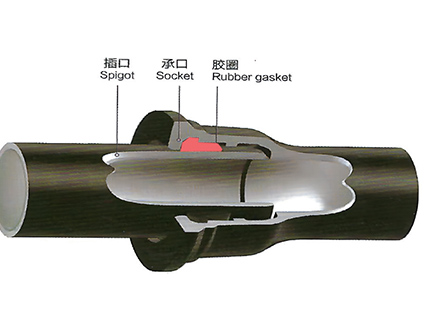 GT-type Joint Ductile Iron Pipe
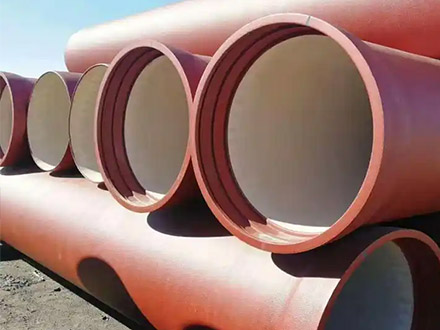
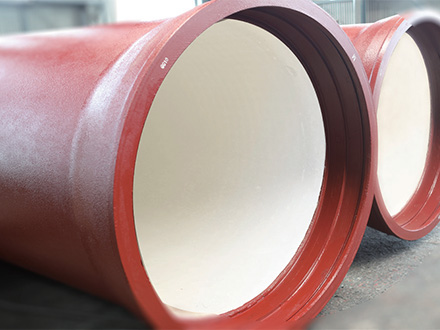 Sewage Pipe (Ductile Iron Sewage Pipe)
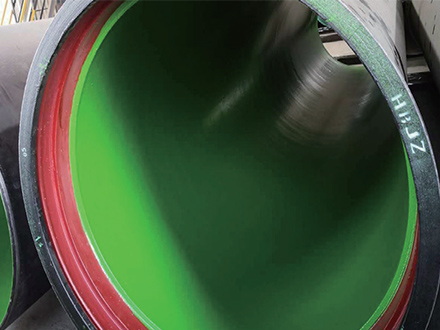 Special Coating Pipe (Ductile Iron Pipe with Special Coatings)