

How to Select Ductile Iron Pipe Pressure Ratings? K9 vs PN16 vs Class 50 Complete Guide
How to Select Ductile Iron Pipe Pressure Ratings? K9 vs PN16 vs Class 50 Complete Guide

Table of Contents
What Are the Three Pressure Rating Systems?
What Is Working Pressure?
What Is Surge Pressure and Why Does It Matter?
How Is Pressure Class Determined?
Which Standard Uses Which Pressure System?
How to Select Correct Pressure Class for Your Project?
How to Specify Pressure Requirements for Your Project?
What Are the Three Pressure Rating Systems?
Ductile iron pipes use different pressure rating systems depending on the governing standard:
ISO 2531 K-Class System (International)
K values represent pressure class coefficient used in wall thickness calculation:
| Pressure Class | Working Pressure | Surge Allowance | Design Pressure | Typical Application |
|---|---|---|---|---|
| K7 | 6 bar | 2 bar | 8 bar | Low-pressure gravity systems |
| K8 | 8 bar | 4 bar | 12 bar | Sewer force mains |
| K9 | 10 bar | 6 bar | 16 bar | Standard municipal water (90% of applications) |
| K10 | 12 bar | 8 bar | 20 bar | High-pressure transmission |
| K11 | 14 bar | 10 bar | 24 bar | Special high-pressure applications |
| K12 | 16 bar | 12 bar | 28 bar | Industrial high-pressure systems |
EN 545 PN-Class System (European)
PN (Pressure Nominal) values represent maximum working pressure in bar:
| Pressure Class | Working Pressure | Test Pressure | Typical Application |
|---|---|---|---|
| PN10 | 10 bar | 15 bar | Low-pressure distribution |
| PN16 | 16 bar | 24 bar | Standard municipal (equivalent to K9) |
| PN25 | 25 bar | 37.5 bar | High-pressure transmission |
| PN40 | 40 bar | 60 bar | Industrial applications |
ANSI/AWWA Class System (North American)
ANSI classes represent working pressure in psi (pounds per square inch):
| Pressure Class | Working Pressure (psi) | Working Pressure (bar) | Typical Application |
|---|---|---|---|
| Class 50 | 50 psi | 3.4 bar | Low-pressure gravity systems |
| Class 100 | 100 psi | 6.9 bar | Sewer force mains |
| Class 150 | 150 psi | 10.3 bar | Standard municipal (≈ K9/PN16) |
| Class 200 | 200 psi | 13.8 bar | High-pressure transmission |
| Class 250 | 250 psi | 17.2 bar | Special high-pressure |
| Class 300 | 300 psi | 20.7 bar | Industrial applications |
What Is Working Pressure?
Working pressure is the maximum continuous operating pressure the pipe will experience during normal service.
Components of Working Pressure
Static pressure: Pressure from elevation head (1 meter head = 0.098 bar)
Pump discharge pressure: Pressure at pump outlet during operation
System pressure: Pressure maintained by pressure-reducing valves or elevated tanks
How to Calculate Static Pressure
Static pressure is determined by elevation difference:
Static Pressure (bar) = Elevation Difference (m) × 0.098
Example:
If pipeline runs from elevation 100m to elevation 50m:
Elevation difference = 100 - 50 = 50m
Static pressure = 50 × 0.098 = 4.9 bar
Maximum Working Pressure Scenarios
| Scenario | Typical Working Pressure | Recommended Class |
|---|---|---|
| Gravity distribution (flat terrain) | 3-5 bar | K9 / PN16 / Class 150 |
| Pumped distribution | 6-10 bar | K9 / PN16 / Class 150 |
| High-rise building supply | 10-16 bar | K10-K12 / PN25 / Class 200-250 |
| Transmission from mountain source | 15-25 bar | K12 / PN40 / Class 300 |
What Is Surge Pressure and Why Does It Matter?
Surge pressure (water hammer) is the pressure spike caused by sudden flow velocity changes.
What Causes Surge Pressure?
Pump startup: Sudden flow initiation creates pressure wave
Pump shutdown: Sudden flow stoppage creates negative pressure followed by positive surge
Valve closure: Rapid valve closing creates pressure wave traveling at sonic velocity
Valve opening: Rapid opening can create negative pressure surge
Air pocket collapse: Trapped air compressing and expanding
Surge Pressure Calculation
Joukowsky equation for surge pressure:
ΔP = ρ × a × ΔV
Where:
ΔP = Surge pressure (Pa)
ρ = Fluid density (1000 kg/m³ for water)
a = Wave velocity (m/s) — typically 1000-1200 m/s for DI pipe
ΔV = Change in flow velocity (m/s)
Simplified:
Surge Pressure (bar) ≈ 10 × Pipeline Length (km) × Flow Velocity (m/s) / Closure Time (s)
Typical Surge Allowances by Pressure Class
| ISO Class | Working Pressure | Surge Allowance | Design Pressure |
|---|---|---|---|
| K7 | 6 bar | 2 bar | 8 bar |
| K8 | 8 bar | 4 bar | 12 bar |
| K9 | 10 bar | 6 bar | 16 bar |
| K10 | 12 bar | 8 bar | 20 bar |
| K11 | 14 bar | 10 bar | 24 bar |
| K12 | 16 bar | 12 bar | 28 bar |
Surge Mitigation Methods
If calculated surge exceeds pressure class allowance:
Slow-closing valves: Extend valve closure time to 5-10 seconds minimum
Surge tanks: Install at high points to absorb pressure waves
Air release valves: Prevent air pocket formation
Soft starters/VFD: Gradual pump acceleration/deceleration
Check valves with dampers: Prevent reverse flow water hammer
Higher pressure class: Upgrade from K9 to K10/K11/K12

How Is Pressure Class Determined?
Pressure class selection follows this design process:
Step 1: Determine Maximum Working Pressure
Calculate static pressure from elevation profile
Add pump discharge pressure (if pumped system)
Consider maximum system pressure from PRV settings
Account for future system expansions
Step 2: Calculate Surge Pressure
Determine maximum flow velocity (typically 1-2 m/s for municipal)
Estimate valve closure time (fastest expected)
Calculate surge using Joukowsky equation or simplified formula
Consider pump trip scenarios
Step 3: Select Pressure Class
Design Pressure = Working Pressure + Surge Pressure
Select pressure class where:
Design Pressure ≤ Pressure Class Rating
Example:
Working pressure: 8 bar
Calculated surge: 5 bar
Design pressure: 8 + 5 = 13 bar
Select K10 (16 bar design) or K11 (20 bar design)
K9 (16 bar design with 6 bar surge allowance) may be marginal
Step 4: Verify Wall Thickness
ISO 2531 wall thickness formula:
Where:
e = Wall thickness (mm)
K = Pressure class coefficient (7, 8, 9, 10, 11, 12)
DN = Nominal diameter (mm)
Example for DN300 K9:
e = 9 × (0.5 + 0.001 × 300) / 10
e = 9 × 0.8 / 10 = 7.2 mm (minimum)
Standard K9 DN300: 8.1 mm (includes corrosion allowance)
Which Standard Uses Which Pressure System?
| Standard | Pressure System | Standard Class | Region |
|---|---|---|---|
| ISO 2531 | K-class (K7-K12) | K9 | International (except EU/NA) |
| EN 545 | PN-class (PN10-PN40) | PN16 | European Union |
| ANSI/AWWA C150 | Class (50-300 psi) | Class 150 | North America |
| AS/NZS 2280 | PN-class | PN16 | Australia/New Zealand |
| IS 8329 | K-class | K9 | India |
| KS D 4102 | K-class | K9 | South Korea |
How to Select Correct Pressure Class for Your Project?
Use this decision matrix for pressure class selection:
| Application Type | Working Pressure | Recommended Class (ISO) | Equivalent (EN) |
|---|---|---|---|
| Gravity distribution (flat) | 3-5 bar | K9 | PN16 |
| Pumped distribution | 6-10 bar | K9 | PN16 |
| Sewer force main | 6-8 bar | K8 or K9 | PN10 or PN16 |
| High-rise building supply | 10-14 bar | K10-K11 | PN25 |
| Long-distance transmission | 12-16 bar | K11-K12 | PN25-PN40 |
| Industrial process water | 15-25 bar | K12 | PN40 |
| Mountain source transmission | 20-30 bar | Special design | PN40+ |
How to Specify Pressure Requirements for Your Project?
Proper pressure class selection requires hydraulic analysis, surge calculations, and understanding of local standards.
Tiegu integrates production capacity across qualified Chinese foundries, delivering compliant and high-quality casting products to buyers worldwide. For ductile iron pipe projects, we coordinate manufacturing with appropriate pressure classes (K9, K10, PN16, PN25, Class 150) based on working pressure, surge analysis, and project specifications.
Share your hydraulic profile, pump specifications, and valve closure times to receive pressure class recommendations and supplier quotations with compliant products.
📋 Get Free Technical Quotation
Summary Answer
Three pressure systems: K-class (ISO 2531), PN-class (EN 545), ANSI class (AWWA C150)
Standard municipal: K9 ≈ PN16 ≈ Class 150 (10 bar working, 6 bar surge allowance)
Working pressure: Maximum continuous operating pressure from static head + pump discharge
Surge pressure: Pressure spike from sudden flow changes (pump trip, valve closure) — can exceed working pressure 2-4x
Design pressure: Working pressure + surge pressure = required pressure class rating
Selection process: Calculate working pressure → calculate surge → select class with adequate design pressure → verify wall thickness
Surge mitigation: Slow-closing valves, surge tanks, air valves, VFD pumps, or upgrade to higher pressure class
📞 Contact Tiegu for Pipeline Solutions
WhatsApp / WeChat: +86 152 5613 5588
Email: zbw@tiegu.net
Website: www.ductileironpipe2600.com
Inquiry Form: Submit Your Requirements
Response Time: Within 24 hours
 GT-type Joint Ductile Iron Pipe
 Sewage Pipe (Ductile Iron Sewage Pipe)
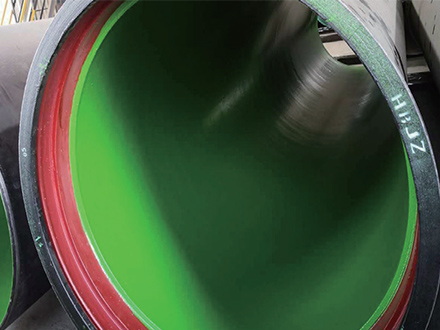 Special Coating Pipe (Ductile Iron Pipe with Special Coatings)